Industry News
Curation by industry experts
Hot Articles
Popular Tags
Industrial Sewing Needles: Small Specification Changes That Cause Big Downtime
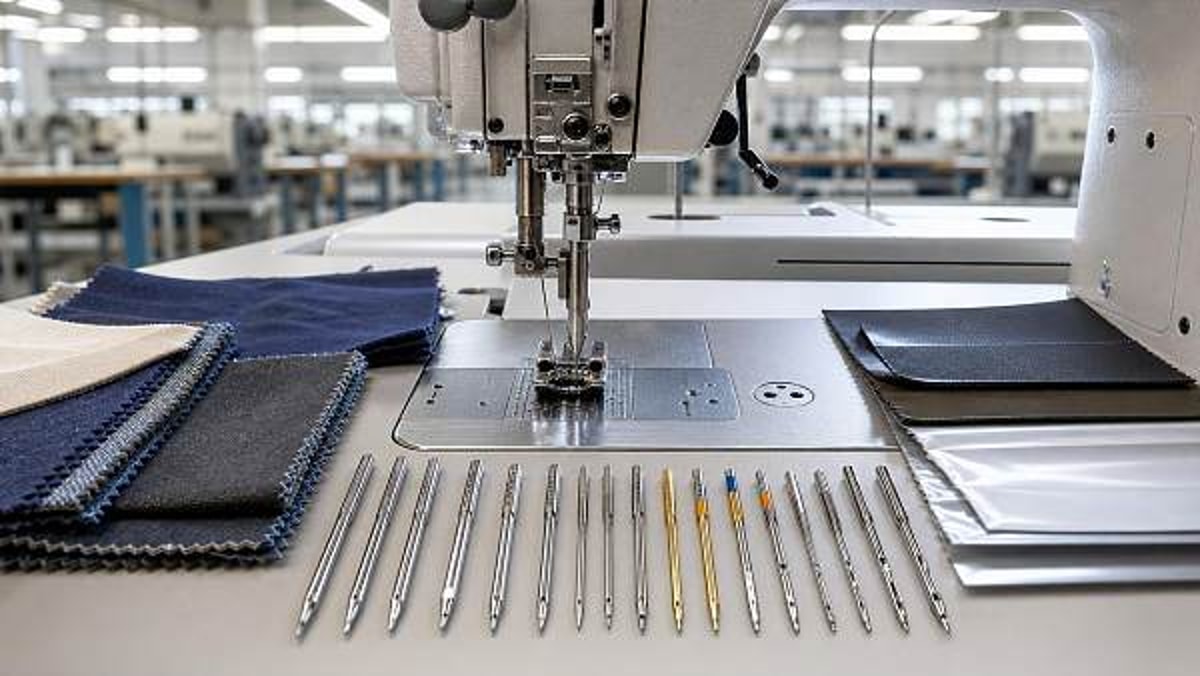
When downtime hits a sewing line, the cause is often smaller than expected. With industrial sewing needles, slight changes in point style, coating, diameter, or length can trigger skipped stitches, thread breaks, fabric damage, and repeated machine stops. For after-sales maintenance teams, understanding these hidden specification risks is essential to faster troubleshooting, more stable performance, and lower service costs.
Why small industrial sewing needles changes create major maintenance problems
In production environments, maintenance teams are often called only after the line has already lost output. Operators may report thread snapping, irregular stitch formation, or visible needle heat marks. The machine itself gets blamed first, yet the real trigger is frequently a minor mismatch in industrial sewing needles. A change of only one size, one coating, or one point geometry can upset the balance between fabric, thread, hook timing, and feed system.
This issue matters across textiles, technical fabrics, packaging-related sewn products, upholstered furniture covers, and light industrial assembly. In each case, the needle is a small, low-cost part that influences a high-value process. For after-sales maintenance personnel, the commercial pressure is immediate: restore stability fast, reduce repeat visits, and avoid unnecessary replacement of motors, hooks, loopers, or tension assemblies that may not be defective.
- A wrong point style may penetrate the material poorly, leading to fabric damage or missed loop pickup.
- A slightly different blade diameter can increase friction, enlarge needle holes, or alter thread protection.
- An incompatible coating may accelerate heat buildup during high-speed sewing and shorten needle life.
- A small variation in overall length or scarf geometry can affect hook clearance and stitch consistency.
For maintenance teams supporting multiple factories or product categories, the problem becomes more complex. Similar-looking industrial sewing needles can behave very differently in woven apparel, laminated packaging textiles, webbing, denim, upholstery, or coated synthetics. A reliable diagnosis requires specification-level thinking, not just part replacement.
What maintenance teams should check first
Before adjusting timing or replacing expensive machine parts, check whether the installed needle matches the machine system, material construction, thread ticket size, sewing speed, and seam requirement. This basic discipline often shortens troubleshooting time dramatically.
Which industrial sewing needles specifications matter most on the line
The table below highlights the needle variables that most often drive downtime. For after-sales maintenance staff, this is a practical fault-isolation tool. Instead of asking only whether the needle is “new,” ask whether the exact specification is correct for the sewing operation.
A key takeaway is that industrial sewing needles should be treated as process components, not generic spare parts. When a factory changes fabric supplier, thread source, seam density, or production speed, the existing needle specification may no longer be suitable even if the machine model remains unchanged.
Point style is often the hidden source of downtime
Rounded points, acute points, and cutting points are designed for different materials. Using a point intended for tightly woven fabric on knit or coated material can deform the seam area and increase skipped stitches. In leather-like or dense composite materials, the wrong point can raise penetration force, causing needle deflection and loop timing variation.
Diameter and coating change heat behavior
High-speed sewing generates friction between needle, thread, and material. If the needle diameter is too small for the thread, thread abrasion rises. If it is too large for the material, hole quality worsens. Coatings and special finishes can help with heat resistance and reduced friction, but only when matched to the application.
How to troubleshoot industrial sewing needles before replacing machine parts
After-sales maintenance personnel need a repeatable sequence that separates needle issues from machine faults. This avoids over-servicing and protects spare parts budgets. The goal is not just to solve the immediate stoppage, but to identify whether the installed industrial sewing needles are causing recurring instability.
- Verify the needle system against the machine manual and installed clamp configuration. Similar-looking needles may differ in length or shank details.
- Check the point style against the actual material stack, not only the nominal product name. Blended or coated materials behave differently from standard woven fabrics.
- Match needle size to thread size and seam density. An incorrect combination often causes fraying long before visible breakage.
- Inspect for burrs, bending, adhesive residue, and heat discoloration. These clues indicate friction or penetration issues rather than machine timing drift.
- Only after needle validation should you move to hook timing, feed synchronization, tension calibration, and presser foot pressure checks.
This sequence is especially useful in multi-site service environments where machine symptoms seem identical but material inputs differ. A skipped stitch problem in denim, upholstery, and technical webbing may look similar on the surface, yet require different industrial sewing needles solutions.
Field signs that point to needle mismatch
- Needle breakage occurs mainly during seam crossing or thick spots rather than at startup.
- Thread breaks increase after speed ramp-up, suggesting heat and abrasion rather than tension alone.
- Fabric damage appears localized around penetration points, indicating point or diameter mismatch.
- Operators report that the machine runs well on one product order but poorly on another without mechanical adjustment.
Application-based selection: what industrial sewing needles fit which service scenario
Because after-sales teams often support multiple product categories, application-based selection is more useful than general advice. The following comparison table organizes industrial sewing needles decisions by service context, helping maintenance staff narrow down the probable mismatch area quickly.
This application view helps maintenance teams communicate more effectively with procurement and production. Instead of requesting “better needles,” they can specify whether the issue relates to penetration, heat, fabric damage, seam appearance, or machine compatibility. That clarity supports better sourcing outcomes and fewer emergency purchases.
Why cross-industry service teams need a tighter specification process
In broad manufacturing environments, one service team may cover apparel units, soft packaging products, upholstery lines, and sewn industrial accessories. Each category has different material behavior, quality tolerances, and production speeds. A centralized needle approval list, linked to material and machine combinations, can prevent repeat downtime across plants.
Procurement and stock control: how maintenance teams can reduce repeat downtime
Many downtime events begin upstream in purchasing. When substitute industrial sewing needles are sourced only by price or visual similarity, maintenance teams inherit the risk. In after-sales environments, the challenge is practical: parts must be available quickly, but not at the cost of unreliable performance.
A practical selection checklist
- Confirm machine system designation and needle bar compatibility before approving alternatives.
- Document approved combinations by material type, thread size, SPI requirement, and sewing speed range.
- Ask suppliers for consistent specification sheets, not only carton labels or sales descriptions.
- Run controlled line trials when changing coating, finish, or source factory, even if nominal size remains the same.
- Track consumption against defect rates. A cheaper needle may raise total cost through stoppages, quality loss, and technician time.
This is where an intelligence-driven sourcing approach becomes valuable. Global Supply Review supports buyers and technical teams by connecting market visibility with application-level evaluation. For maintenance leaders, that means better benchmarking of supplier claims, more disciplined qualification workflows, and stronger coordination between service, procurement, and production.
Cost is not only unit price
A lower-priced needle can become a high-cost decision if it increases thread waste, rework, machine wear, technician visits, and late order risk. In service terms, the most useful metric is cost per stable operating hour, not cost per box. That shift helps justify specification discipline to purchasing teams under budget pressure.
Common misconceptions about industrial sewing needles
“If the size is the same, the needle is equivalent”
Size alone does not define equivalence. Point geometry, scarf design, finish, system tolerance, and straightness all influence stitch formation. Two needles with the same nominal size may perform very differently in high-speed or dense-material conditions.
“Skipped stitches always mean the timing is off”
Timing errors do cause skipped stitches, but so do needle deflection, wrong point selection, and incompatibility between needle and thread. Maintenance teams that re-time machines before validating industrial sewing needles may solve the symptom temporarily while missing the root cause.
“Any substitute works in an emergency”
Emergency substitutions may keep a line moving for a shift, but they should not become standard practice without validation. Small differences in geometry or finish can create quality drift that appears only after hours of continuous operation.
FAQ: what after-sales maintenance teams ask most often
How do I know whether industrial sewing needles are the real cause of downtime?
Start by checking whether the issue changes with product type, sewing speed, thread batch, or material thickness. If the problem appears only in certain orders or after a recent consumable change, the needle specification is a strong suspect. Physical signs such as burrs, hole damage, discoloration, and thread fray support that diagnosis.
Which specification should be reviewed first during service calls?
First confirm the machine needle system. After that, review point style and size against material and thread. These are the most common sources of mismatch. Coating and finish become especially important in high-speed, coated, adhesive, or heavy-duty sewing applications.
What should procurement provide to help maintenance teams?
Procurement should provide consistent specification records, approved alternate lists, supplier traceability, and documented trial results. This allows service teams to compare actual installed industrial sewing needles with the approved standard instead of troubleshooting blindly.
Are there common standards or compliance points to consider?
The exact requirement depends on the end market, but teams should pay attention to general product consistency, material suitability, and any customer-specific quality or restricted-substance expectations. In export-oriented production, documentation discipline matters as much as physical performance.
Why choose us for industrial sewing needles sourcing intelligence and support
Global Supply Review helps bridge the gap between technical troubleshooting and sourcing decisions. For after-sales maintenance teams, that means access to structured market insight, cross-industry specification awareness, and practical sourcing guidance relevant to real production conditions. Instead of reacting to recurring failures one service call at a time, teams can build a more stable approval and replacement framework.
You can contact us for support on parameter confirmation, industrial sewing needles selection by material and machine type, substitute evaluation, expected delivery windows, sample coordination, supplier comparison, documentation requirements, and quotation communication. If your team is facing recurring skipped stitches, unexplained thread breaks, or difficult line restarts after a needle source change, we can help you organize the decision criteria and shorten the path to a stable solution.
Recommended News
 Home DecorBlackout Curtain Manufacturer Comparison: Lead Times, Coating Quality, and RiskBlackout curtain manufacturer comparison guide: evaluate lead times, coating quality, compliance, and sourcing risk to choose reliable suppliers and avoid costly delays.Interior Sourcing LeadMay 02, 2026
 Garment MfgWholesale Raincoats: What to Review Before Expanding a Seasonal Product LineWholesale raincoats buyers: review materials, sizing, compliance, supplier reliability, and margins before expanding your seasonal product line. Reduce risk and choose smarter.Textile Industry AnalystMay 02, 2026
 Eco PackagingCustom Garment Bags: Materials and Print Choices That Shape Brand PerceptionCustom garment bags shape brand perception through material and print choices. Discover how to balance quality, sustainability, cost, and sourcing for stronger B2B packaging decisions.Packaging Supply ExpertMay 02, 2026
 Garment MfgIndustrial Sewing Needles: Small Specification Changes That Cause Big DowntimeIndustrial sewing needles can cause major downtime when point, size, coating, or length is mismatched. Learn how to spot hidden issues faster and reduce costly line stops.Textile Industry AnalystMay 02, 2026