Industry News
Curation by industry experts
Hot Articles
Popular Tags
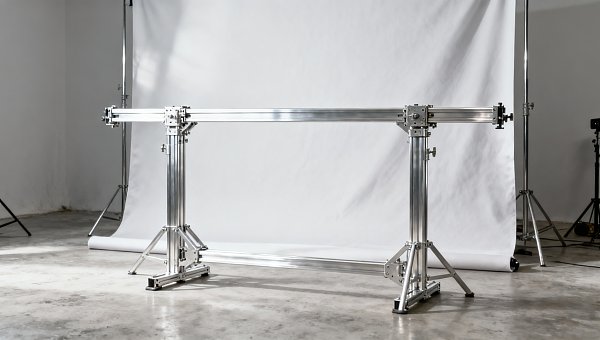
BIS Proposes Salt Spray & Load Tests for Aluminum Photo Backdrop Stands
India’s Bureau of Indian Standards (BIS) has issued a draft amendment to IS 15879:2026 — the General Safety Requirements for Photographic Equipment — on May 5, 2026. The proposed changes introduce mandatory neutral salt spray (NSS, 96h) and load stability testing for aluminum backdrop stands used in bridal photography. This development directly affects manufacturers, exporters, and distributors supplying these products to India — particularly those based in China, which holds 82% of India’s import market for such stands.
Event Overview
On May 5, 2026, BIS published a public consultation draft amending IS 15879:2026. The draft mandates two new test requirements for aluminum background support stands: (1) no red rust after 96 hours of neutral salt spray (NSS) exposure; and (2) maximum deformation of ≤3 mm under 1.5× rated load. The comment period closes on June 4, 2026. BIS expects formal implementation in Q3 2026.
Industries Affected
Direct Exporters (Especially Chinese Manufacturers)
These enterprises supply aluminum photo backdrop stands to Indian importers and retailers. With China accounting for 82% of India’s imports in this category, the new tests directly impact their product compliance status and market access. Non-compliant units may face rejection at customs or post-import verification, triggering delays, retesting costs, or shipment returns.
Aluminum Fabrication & Assembly Facilities
Factories producing finished stands — including extrusion, anodizing, welding, and mechanical assembly — must now verify material corrosion resistance and structural rigidity across production batches. Surface treatment processes (e.g., anodizing thickness, sealing quality) and joint design will come under tighter scrutiny to meet both NSS and load criteria.
Distribution & Branding Entities in India
Indian importers, brand owners, and e-commerce sellers sourcing from overseas suppliers must reassess technical documentation, test reports, and supplier declarations. They bear responsibility for conformity under India’s Compulsory Registration Scheme (CRS), meaning liability for non-compliance rests with the local responsible entity — not just the foreign manufacturer.
What Enterprises Should Monitor and Do Now
Track Official Updates Through BIS Portals
Monitor the BIS website and official gazette notifications for finalization timelines, test method references (e.g., ISO 9227 for NSS), and any clarification on load application procedures. Draft language may evolve before Q3 2026 implementation.
Prioritize Testing for High-Volume SKUs and Key Export Channels
Focus initial validation efforts on best-selling aluminum stand models destined for India — especially those sold via major online platforms or wedding-studio distributors. Confirm whether existing third-party lab reports (e.g., from CNAS- or ILAC-accredited labs) satisfy BIS’s anticipated acceptance criteria.
Distinguish Between Policy Signal and Enforceable Requirement
The current draft is not yet law. While it signals regulatory direction, enforcement depends on formal notification and inclusion in the CRS product list. Until then, voluntary pre-compliance is advisable but not mandatory — though early alignment reduces time-to-market risk once implemented.
Review Supplier Agreements and Technical Documentation
Update procurement contracts to include clauses requiring NSS and load stability data. Request updated Declaration of Conformity (DoC) templates aligned with IS 15879:2026’s revised Annexes. Ensure traceability of surface treatment parameters and structural weld certifications across batch records.
Editorial Perspective / Industry Observation
Observably, this amendment reflects BIS’s broader shift toward performance-based safety standards — moving beyond basic construction checks to measurable durability metrics. Analysis shows that the dual focus on corrosion resistance and mechanical stability suggests growing emphasis on real-world usage conditions, particularly in humid or coastal regions where bridal studios often operate. From an industry perspective, the timing — less than one month between draft release and comment deadline — indicates urgency, likely tied to rising consumer complaints or post-market surveillance findings. However, it remains a draft proposal: its significance lies not as an immediate barrier, but as a clear signal of tightening technical expectations for entry into India’s professional photography equipment market.

Conclusion
This draft amendment marks a targeted regulatory evolution for aluminum photo backdrop stands entering India — not a broad-sector overhaul, but a precise technical escalation affecting specific product categories and supply chain roles. It is better understood as a forward-looking compliance benchmark rather than an immediate operational disruption. Enterprises should treat it as a defined, time-bound preparation window — one that rewards proactive testing, documentation alignment, and cross-border coordination over reactive crisis management.
Source: Bureau of Indian Standards (BIS), Draft Amendment to IS 15879:2026, published May 5, 2026; public consultation open until June 4, 2026.
Note: Final standard text, effective date, and enforcement mechanisms remain pending BIS’s formal notification and CRS listing update — all subject to ongoing observation.
Recommended News
 Export UpdatesNingbo Port Launches 'Green Export Index' for Wedding Photography GoodsWedding photography goods exporters: Ningbo Port’s new Green Export Index reveals 98.2% customs pass rate for OEKO-TEX®/GOTS fabrics & IEC 62471 LED lights — boost your sustainability credibility now.May 09, 2026
 Carton & PlasticsECHA Adds D-Limonene to SVHC List: Impact on Bridal Photo Spray ExportsBridal photo spray exporters: ECHA’s D-Limonene SVHC listing (May 2026) triggers urgent SDS & label updates for EU-bound hair and fabric sprays.Packaging Supply ExpertMay 09, 2026
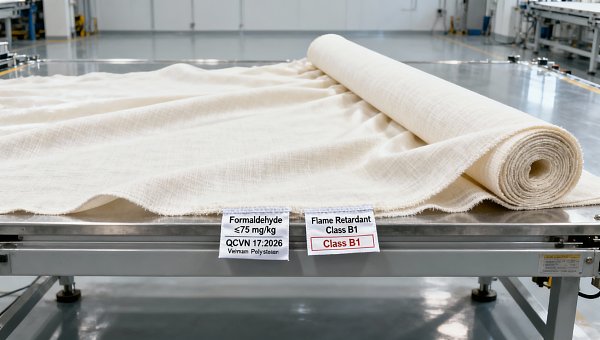
 Fabrics & YarnsVietnam Enforces QCVN 17:2026 for Wedding Photo BackdropsVietnam enforces QCVN 17:2026 for wedding photo backdrops—mandatory formaldehyde testing & B1 flame-retardant labeling. Ensure compliance now to avoid market access delays.Textile Industry AnalystMay 09, 2026
 Building HardwareIndia BIS Mandate: Aluminum Photo Backdrop Stands Must Pass Dual Testing by June 30, 2026Aluminum photo backdrop stands for wedding photography must pass BIS salt spray & load testing by June 30, 2026—secure certification now to avoid import bans in India.Tooling & Hardware LeadMay 09, 2026