Industry News
Curation by industry experts
Hot Articles
Popular Tags
LED Panel Light 60x60: UGR and Efficiency in Office Projects
In office lighting projects, selecting the right led panel light 60x60 is no longer just about brightness—it is about balancing UGR control, energy efficiency, and long-term performance. For technical evaluation in modern commercial environments, these fixtures affect visual comfort, compliance, maintenance cycles, and total operating cost. A well-specified led panel light 60x60 can support healthier workspaces, reduce glare-related complaints, and improve the overall efficiency of building lighting systems without compromising design consistency.
Understanding the Core Specification of LED Panel Light 60x60
The term led panel light 60x60 usually refers to a recessed, surface-mounted, or suspended panel luminaire sized for 600 x 600 mm ceiling grids, a common module in office interiors, education spaces, healthcare corridors, and administrative buildings. Its popularity comes from clean ceiling integration, wide light distribution, and compatibility with structured commercial ceilings. However, not all panels perform the same. In office projects, the most relevant parameters are lumen output, luminous efficacy, Unified Glare Rating (UGR), color consistency, flicker behavior, driver quality, and service life.
Among these, UGR and efficiency often define whether a fixture is simply acceptable or genuinely fit for professional use. UGR measures perceived discomfort glare in interior lighting. Lower values indicate better visual comfort, especially for tasks involving screens, reading, drafting, and prolonged concentration. Efficiency, usually expressed in lumens per watt, determines how much usable light the system delivers for the electricity consumed. A competitive led panel light 60x60 should therefore be evaluated as an optical and electrical system, not as a commodity panel selected only by price.
Market Priorities in Office Lighting Projects
Commercial fit-out standards have become stricter in recent years. Office projects now prioritize employee comfort, sustainable energy use, and easier compliance with regional building codes. This has shifted attention from basic lumen packages to more complete performance indicators. In practical terms, a led panel light 60x60 is expected to support not only illumination targets, but also workplace wellbeing and lifecycle value.
These priorities are especially relevant in multi-floor offices, business parks, co-working spaces, and public administration buildings, where fixture count is high and even small differences in specification can produce major changes in annual energy use and user satisfaction.
Why UGR Matters in LED Panel Light 60x60 for Offices
A low-glare led panel light 60x60 is essential in office environments because visual tasks are screen-based and continuous. Even when average lux levels are correct, poor glare control can cause discomfort, loss of focus, and complaints about overly harsh ceilings. UGR becomes particularly important in open-plan offices, meeting rooms, finance departments, design studios, and any workstation arrangement where people sit beneath or across from luminaires for long periods.
For many office applications, UGR<19 is a common target. This is often achieved through improved optic design, microprismatic diffusers, refined light distribution, and controlled luminance at high viewing angles. A lower UGR does not simply mean dimmer light; it means better management of brightness where the human eye is most sensitive. Therefore, comparing two panels with similar wattage and lumen output can still reveal significant differences in actual workspace comfort.
- Better comfort for monitor-based tasks
- Lower risk of reflected glare on screens and desks
- Improved fit with office lighting recommendations
- More consistent visual environment across large ceiling grids
It is also worth noting that glare performance should be validated through reliable photometric data rather than assumed from appearance alone. A panel with a smooth diffuser may still have poor glare behavior if luminance control is weak. For that reason, project review should include laboratory-backed files such as IES or LDT photometric data whenever possible.
Efficiency and Lifecycle Cost in Commercial Lighting
Energy efficiency is the second major decision factor for a led panel light 60x60 in office projects. In buildings with hundreds or thousands of luminaires, the difference between moderate and high efficacy can translate into substantial annual savings. Yet efficiency should not be interpreted narrowly. The best-performing panel is not merely the one with the lowest wattage, but the one that delivers the required illuminance with stable output, optical quality, and minimal performance loss over time.
A sound evaluation usually considers the following:
- System efficacy in lumens per watt
- Real installed power density per square meter
- Light loss over operating life
- Driver efficiency and compatibility with controls
- Maintenance frequency and replacement access cost
In this sense, an efficient led panel light 60x60 supports both ESG reporting and practical budget control. Lower energy demand reduces operating expenditure, while longer service intervals decrease labor disruption in occupied office buildings. When coupled with dimming systems and occupancy sensing, the savings potential becomes even stronger.
Application Value Across Office Space Types
Different workplace settings require slightly different panel characteristics. The same led panel light 60x60 family may serve multiple zones, but the preferred specification often changes according to visual task, ceiling height, occupancy pattern, and control strategy.
This zone-based approach helps maintain consistency while avoiding over-specification in low-demand areas or under-specification in task-focused zones. It also improves project scalability when future refurbishment or smart control upgrades are expected.
Practical Specification Guidance and Common Risks
When reviewing a led panel light 60x60, several practical checks can prevent later performance issues. First, confirm whether the quoted lumen output is fixture output or LED chip output, as these are not equivalent. Second, verify UGR claims against room conditions because glare values depend partly on application geometry. Third, review driver quality, especially if dimming, emergency compatibility, or long operating hours are expected.
Other important considerations include color temperature alignment with office design intent, CRI consistency, flicker performance, housing rigidity, and thermal management. Thin low-cost panels may look similar at first glance, but weak heat dissipation and unstable drivers can shorten life and reduce luminous maintenance. In large office installations, that risk multiplies quickly.
- Request photometric files and verified test reports
- Match UGR performance to real workstation layouts
- Check efficacy at full system level, not component level
- Review warranty terms together with driver brand and lifetime data
- Consider dimming and sensor integration at the start of design
Next-Step Evaluation for Reliable Office Lighting Outcomes
A successful office lighting scheme depends on choosing a led panel light 60x60 that balances low glare, high efficiency, reliable controls, and long-term consistency. Rather than comparing panels by unit price alone, the better method is to assess visual comfort, photometric transparency, lifecycle cost, and suitability for each office zone. This creates a stronger basis for specification and helps reduce the risk of complaints, retrofit costs, and avoidable energy waste.
For a more dependable decision path, build a short evaluation matrix that includes UGR target, efficacy target, dimming requirement, expected daily operating hours, and maintenance access conditions. That approach turns the led panel light 60x60 from a generic ceiling product into a measurable project asset—one that supports comfort, compliance, and cost efficiency throughout the life of the office environment.
Recommended News
 Export UpdatesNingbo Port Launches 'Green Export Index' for Wedding Photography GoodsWedding photography goods exporters: Ningbo Port’s new Green Export Index reveals 98.2% customs pass rate for OEKO-TEX®/GOTS fabrics & IEC 62471 LED lights — boost your sustainability credibility now.May 09, 2026
 Carton & PlasticsECHA Adds D-Limonene to SVHC List: Impact on Bridal Photo Spray ExportsBridal photo spray exporters: ECHA’s D-Limonene SVHC listing (May 2026) triggers urgent SDS & label updates for EU-bound hair and fabric sprays.Packaging Supply ExpertMay 09, 2026
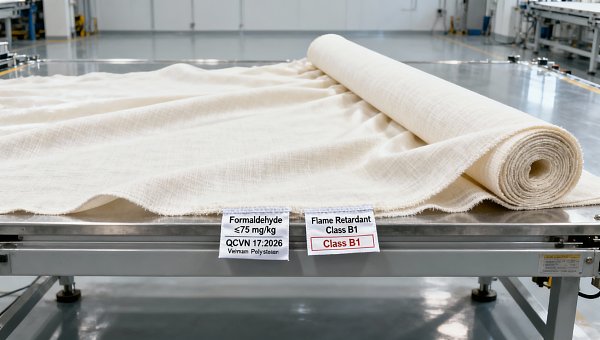
 Fabrics & YarnsVietnam Enforces QCVN 17:2026 for Wedding Photo BackdropsVietnam enforces QCVN 17:2026 for wedding photo backdrops—mandatory formaldehyde testing & B1 flame-retardant labeling. Ensure compliance now to avoid market access delays.Textile Industry AnalystMay 09, 2026
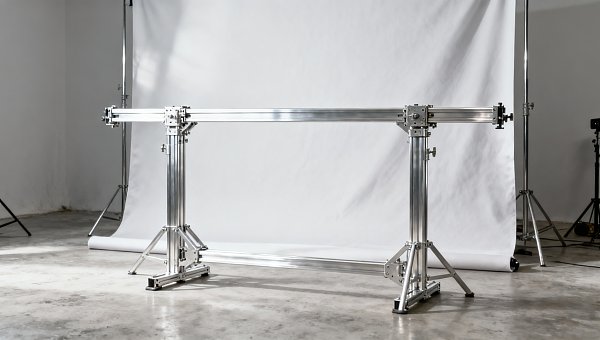
 Building HardwareIndia BIS Mandate: Aluminum Photo Backdrop Stands Must Pass Dual Testing by June 30, 2026Aluminum photo backdrop stands for wedding photography must pass BIS salt spray & load testing by June 30, 2026—secure certification now to avoid import bans in India.Tooling & Hardware LeadMay 09, 2026