Industry News
Curation by industry experts
Hot Articles
Popular Tags
Linear LED High Bay: Best Use Cases in Aisles and Open Areas
Choosing the right linear LED high bay layout can directly impact visibility, safety, and energy performance in large facilities. For project managers overseeing warehouses, production halls, or retail storage zones, understanding where linear LED high bay fixtures perform best—especially in aisles and open areas—helps streamline planning, reduce operating costs, and support long-term lighting efficiency.
In practical terms, the best layout depends on how the space is used. Linear LED high bay fixtures usually perform exceptionally well in racking aisles because their beam pattern aligns with long, narrow pathways and helps reduce wasted light. In open areas, they can also be highly effective, but only when spacing, mounting height, and activity requirements are planned carefully. For project leaders, the real question is not whether linear high bays are good, but where they deliver the best operational and financial return.
Why project managers often choose linear LED high bay for industrial and commercial sites
For project managers, lighting decisions are rarely just about illumination levels. They affect safety compliance, maintenance planning, energy budgets, installation complexity, and even workflow efficiency. A linear LED high bay is often selected because it offers a predictable distribution pattern that suits large rectangular spaces better than many point-source alternatives.
Compared with legacy HID systems or even some round UFO fixtures, linear high bays can create more uniform light across long floor plans. This matters in warehouses, logistics centers, assembly zones, and storage environments where operators need consistent visibility across travel routes, pick faces, and working surfaces.
Another reason they are attractive is controllability. Many modern fixtures support 0–10V dimming, occupancy sensing, daylight harvesting, and centralized controls. For facilities trying to balance ESG goals, utility rebates, and long-term operating efficiency, that combination can significantly improve the total project case.
Are linear LED high bays better for aisles than open areas?
In many facilities, yes. Aisles are often the strongest use case for linear LED high bay fixtures. Their elongated form factor and optical distribution are well matched to the geometry of warehouse rows, retail stock corridors, and industrial passageways. Instead of throwing light broadly in every direction, they can deliver illumination where it is needed most: down the aisle and onto vertical rack faces.
This is a major advantage for operations that rely on fast visual identification, barcode scanning, inventory checks, and forklift movement. Better vertical illumination helps workers see labels and stored goods more clearly, while improved horizontal uniformity reduces harsh bright-and-dark transitions that can create fatigue or safety concerns.
Open areas are different. In packaging lines, production halls, loading zones, or flexible work floors, the lighting requirement is usually broader and more balanced. Linear LED high bay fixtures can still work very well there, especially in rectangular buildings with moderate to high mounting heights. However, they need more deliberate layout design to avoid striping, dark gaps, or over-lighting in low-priority zones.
So the short answer is this: linear high bays are often the best-fit option for aisles, while for open areas they are a strong option when the room geometry, ceiling height, and task pattern support their distribution.
Best use cases for linear LED high bay in aisle lighting applications
Aisle environments are where linear high bays often provide the clearest value. In high-rack warehouses, the ability to direct light longitudinally helps improve both floor visibility and vertical rack illumination. This makes them particularly effective in distribution centers, e-commerce fulfillment facilities, wholesale storage buildings, and spare-parts warehouses.
Project managers should pay attention to three operational advantages in aisle applications. First, linear fixtures can reduce wasted spill light across the tops of racks or into unused adjacent zones. Second, they can improve visibility at lower energy input when optics are selected correctly. Third, they support more precise sensor zoning, which is helpful in facilities where occupancy varies by aisle.
Cold storage is another strong use case, provided the fixture is rated for the temperature range and environmental conditions. In refrigerated aisles, reliable instant-on performance and reduced maintenance compared with HID systems can produce a significant operational benefit. This is especially valuable where lift access is difficult or downtime is expensive.
Retail back-of-house storage and cash-and-carry formats also benefit. In these environments, aisle width, product turnover, and visual merchandising needs often require a clean, continuous lighting impression. Linear fixtures can support that goal while preserving energy efficiency.
When linear LED high bay works well in open areas
Open areas should not be treated as a secondary application. Many project teams assume linear high bays are mainly for aisles, but they can perform very effectively in open floor spaces when the design brief is clear. Manufacturing halls, assembly plants, sorting areas, gymnasiums, and large-format retail spaces may all benefit from linear layouts.
The most suitable open-area conditions usually include rectangular floor plates, organized work zones, and mounting heights where fixture spacing can be optimized without excessive overlap. In these cases, linear rows can create a tidy and consistent grid that simplifies installation and supports an orderly visual environment.
For example, in light manufacturing or packaging operations, workstations are often arranged in rows or process lanes. Linear LED high bay fixtures can mirror that structure and provide balanced illumination across benches, conveyors, and inspection points. The result is often better uniformity and easier lighting control by production zone.
In open logistics staging areas, the fixtures can also be useful, especially where goods are temporarily sorted before dispatch. The key is to confirm that the beam pattern supports both movement and task visibility, rather than simply meeting average lux targets on paper.
What project managers should evaluate before choosing the layout
The most common mistake in high-bay projects is selecting fixtures before defining the actual visual task. A project manager should begin with activity mapping, not just fixture count. Are workers picking from racks, operating forklifts, packing cartons, inspecting components, or moving pallets through transition zones? Each scenario changes the lighting priority.
Ceiling height is another critical variable. A linear LED high bay that performs well at one mounting height may not deliver the same uniformity at another. In taller spaces, optics become more important, especially if the goal is to maintain adequate vertical light in aisles or avoid harsh brightness contrasts in open areas.
Spacing and row alignment should also be reviewed carefully. In aisle applications, fixtures should usually follow the aisle direction. In open areas, row orientation should align with task flow, structural constraints, and control zones. Poor alignment can lead to uneven illumination, unnecessary fixture density, or complicated wiring paths.
Reflectance values matter more than many teams expect. Dark racks, exposed ceilings, and low-reflectance floor surfaces absorb light and can change perceived brightness substantially. A design that appears acceptable in simulation may feel underlit in reality if finishes are not considered early.
Finally, maintenance strategy should be part of the initial decision. Drivers, sensors, emergency backup integration, and cleaning access all affect lifecycle performance. For project owners, a lower initial unit cost can become less attractive if servicing is difficult in an active facility.
Aisle vs open area: how to make the right specification decision
If the facility is dominated by long racking corridors, narrow travel lanes, or shelf-based storage, linear LED high bay is usually a highly logical specification. In these environments, the fixture shape and optical control can help maximize useful light while supporting safer and faster operations.
If the facility is primarily a wide open production or staging environment, the decision should be based less on fixture category and more on performance criteria. Linear high bays can still be the right choice, but the project team should compare them against other high-bay formats based on uniformity, glare control, sensor strategy, target illuminance, and installation economics.
A useful rule for project managers is this: choose linear high bays for aisles when directional distribution adds measurable value; choose them for open areas when layout regularity, control integration, and optical performance produce a better lifecycle result than alternatives.
This approach shifts the discussion from product preference to project fit, which is where better procurement decisions are usually made.
Common risks that can reduce lighting performance
Even a high-quality fixture can underperform if the application logic is wrong. One frequent issue is over-reliance on average lux figures. A design may technically meet illuminance targets while still creating poor vertical visibility in aisles or inconsistent brightness in open work zones. Project managers should ask for point-by-point analysis and real-use scenario validation.
Another risk is glare. In both aisles and open areas, poorly selected optics or excessive output can create discomfort, especially for forklift operators or workers who frequently look upward toward racks, signs, or suspended equipment. Glare control should be reviewed alongside lumen output, not after the fixture is chosen.
Control strategy can also be mishandled. Occupancy sensors in aisle settings may save energy, but if timeout settings are too aggressive or zoning is too narrow, users can experience distracting light fluctuations. In open areas, poor sensor placement can create patchy operation that undermines both comfort and safety.
There is also the procurement risk of selecting based on nominal specification sheets without verifying real-world reliability, thermal management, surge protection, and driver quality. For large industrial projects, supplier credibility and documented performance are as important as fixture price.
How linear LED high bay supports cost control and long-term project value
From a project management perspective, the value of a linear LED high bay is not limited to energy savings. Its true advantage lies in how it can support lower total cost of ownership across the facility lifecycle. Better optical targeting can reduce the number of fixtures needed in some aisle applications. Integrated controls can trim operating hours. Long service life can cut maintenance disruption in high-ceiling environments.
There is also a planning benefit. Linear fixtures often support cleaner row-based layouts, which can simplify coordination with sprinklers, cable trays, HVAC elements, and racking lines. That can reduce on-site conflicts and speed up installation, particularly in new-build warehouse or light industrial projects.
For facilities with sustainability targets, LED upgrades can contribute to energy reduction goals and improved reporting metrics. When paired with durable components and smart controls, the solution can align with both financial and ESG priorities. This matters to enterprise decision-makers who are balancing immediate capital expenditure against long-term operational resilience.
In retrofit projects, the return can be especially compelling when replacing metal halide or fluorescent high-bay systems that suffer from poor maintenance cycles, slow start-up, or uneven output degradation. Here, linear LED high bays can improve both day-to-day usability and asset performance predictability.
Practical selection checklist for project leaders
Before finalizing a specification, project managers should confirm a few essentials. Define whether the primary use case is aisle, open area, or a hybrid layout. Verify required horizontal and vertical illuminance levels. Review mounting height, spacing assumptions, and beam distribution. Confirm glare expectations for the actual user environment.
Next, evaluate controls. Decide where occupancy sensing makes sense, whether daylight harvesting is relevant, and how zoning should follow facility operations. Check compatibility with building management systems if centralized monitoring is part of the broader site strategy.
Then assess durability. Look at thermal performance, ingress protection where needed, impact resistance in active industrial areas, and emergency lighting requirements. If the site operates continuously, prioritize driver reliability and serviceability.
Finally, request lighting simulation and layout validation based on the actual floor plan rather than generic templates. For large procurement decisions, pilot installations or mock-up zones can reveal issues that paper specifications miss.
Conclusion
For most project managers, the main takeaway is straightforward: linear LED high bay fixtures are often at their best in aisles, where their geometry and optics directly support visibility, safety, and efficiency. They are also highly viable in open areas, but only when the design reflects the real workflow, room proportions, and control strategy of the space.
The right decision should be driven by application fit, not product trend. In aisle-heavy facilities, linear high bays frequently deliver the clearest performance advantage. In open production or staging areas, they can still create excellent results when specified around uniformity, glare control, and lifecycle value.
For teams responsible for project delivery, budget performance, and operational continuity, that distinction matters. A well-planned lighting layout does more than illuminate a building—it supports safer movement, better productivity, lower maintenance burden, and smarter long-term asset use.
Recommended News
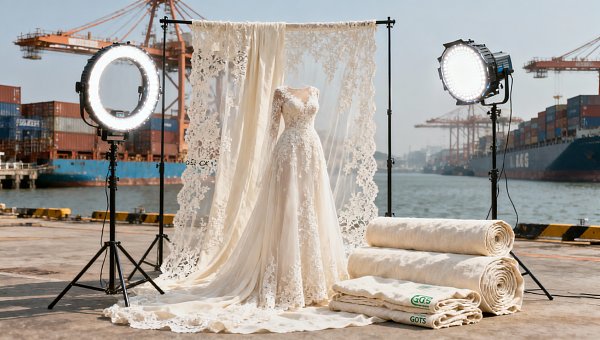
 Export UpdatesNingbo Port Launches 'Green Export Index' for Wedding Photography GoodsWedding photography goods exporters: Ningbo Port’s new Green Export Index reveals 98.2% customs pass rate for OEKO-TEX®/GOTS fabrics & IEC 62471 LED lights — boost your sustainability credibility now.May 09, 2026
 Carton & PlasticsECHA Adds D-Limonene to SVHC List: Impact on Bridal Photo Spray ExportsBridal photo spray exporters: ECHA’s D-Limonene SVHC listing (May 2026) triggers urgent SDS & label updates for EU-bound hair and fabric sprays.Packaging Supply ExpertMay 09, 2026
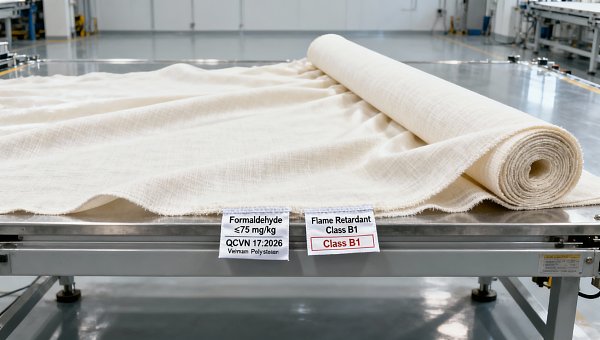
 Fabrics & YarnsVietnam Enforces QCVN 17:2026 for Wedding Photo BackdropsVietnam enforces QCVN 17:2026 for wedding photo backdrops—mandatory formaldehyde testing & B1 flame-retardant labeling. Ensure compliance now to avoid market access delays.Textile Industry AnalystMay 09, 2026
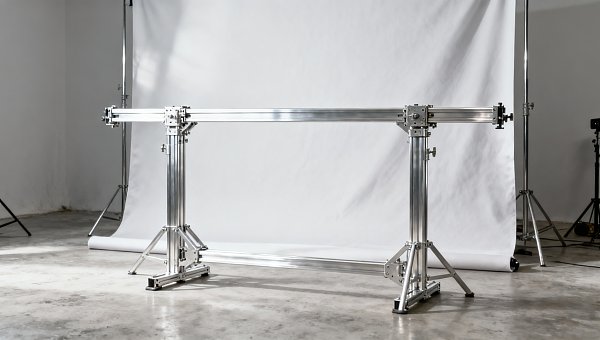
 Building HardwareIndia BIS Mandate: Aluminum Photo Backdrop Stands Must Pass Dual Testing by June 30, 2026Aluminum photo backdrop stands for wedding photography must pass BIS salt spray & load testing by June 30, 2026—secure certification now to avoid import bans in India.Tooling & Hardware LeadMay 09, 2026