Industry News
Curation by industry experts
Hot Articles
Popular Tags
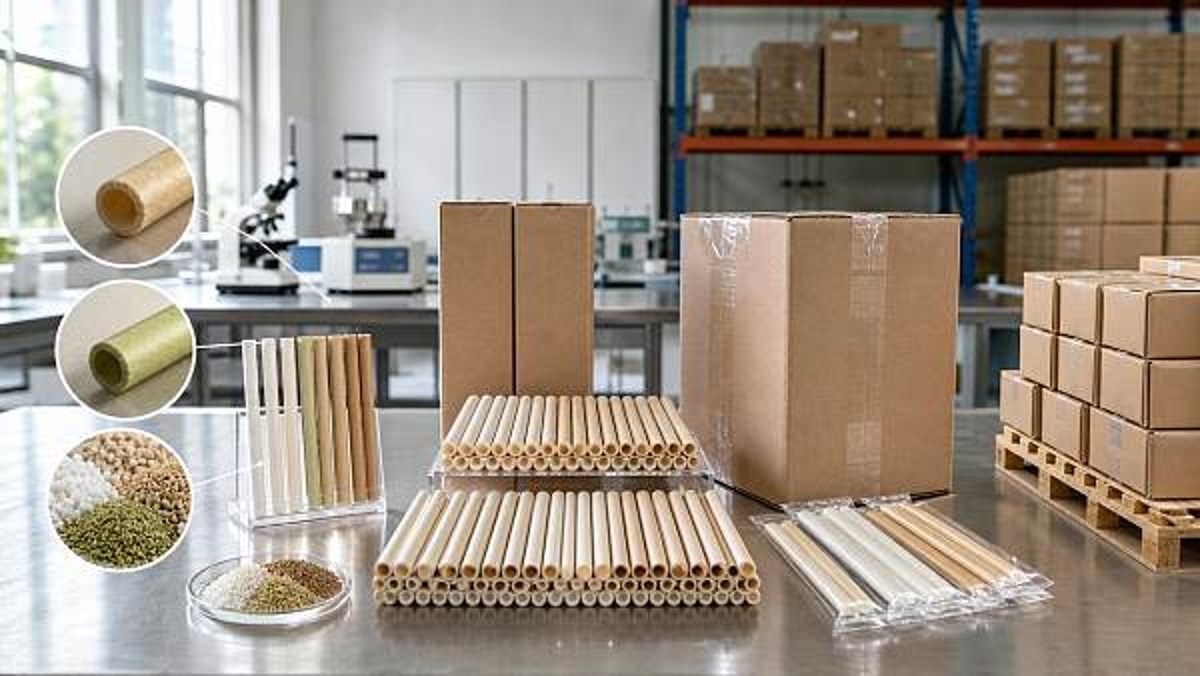
Biodegradable Straws Wholesale: What to Verify Before Switching Suppliers
Switching biodegradable straws wholesale suppliers can reduce costs and improve sustainability, but the wrong move may create compliance risks, quality issues, and delivery delays. Before making a change, procurement teams should verify certifications, material performance, production consistency, and export reliability to ensure the new partner supports both operational goals and long-term brand credibility.
Why scenario differences matter before changing a supplier
For procurement teams, biodegradable straws wholesale is not a single-product decision. The right supplier for a fast-food chain may be the wrong choice for a hotel group, beverage brand, event distributor, or importer serving multiple private-label clients. Usage conditions differ: cold drinks, smoothies, cocktails, takeaway orders, long dwell times, high humidity storage, or export transit can all affect straw performance. A supplier that looks competitive on unit price alone may fail on shelf-life, sealing compatibility, carton strength, or documentation.
That is why switching suppliers should be treated as a scenario-based sourcing review rather than a basic price negotiation. Buyers need to assess where the straws will be used, how long they must maintain structural integrity, which regulations apply in destination markets, and what level of packaging customization is required. In biodegradable straws wholesale, the procurement risk often sits in the gap between laboratory claims and real-world usage.
Typical business scenarios for biodegradable straws wholesale
Before approving a new supplier, categorize your demand by use case. This helps procurement, quality, and sustainability teams evaluate the right specifications instead of assuming all biodegradable options perform the same.
What to verify in each application scenario
1. For quick-service restaurants: consistency beats sample perfection
In chain restaurant programs, biodegradable straws wholesale usually depends on standardized output. A supplier may send excellent samples, but buyers should ask whether the same wall thickness, cut precision, and packing accuracy can be sustained at full production scale. If your operations rely on automatic cup-lid dispensing or tightly packed counter storage, minor size deviations can create daily friction.
Verify batch-to-batch consistency reports, tolerance ranges, and defect handling procedures. Ask for data on monthly capacity, normal lead time, and peak-season performance. If the supplier cannot show a stable quality control workflow, lower unit pricing may quickly be offset by store complaints, wastage, and emergency replenishment costs.
2. For cafes and beverage chains: performance in real drinks matters most
Cafes, juice brands, and bubble tea operators need scenario-specific testing. A straw used for iced coffee does not face the same stress as one used for thick smoothies or drinks consumed over 45 minutes. When sourcing biodegradable straws wholesale for these channels, ask the supplier to test by beverage type, temperature range, and usage duration, not just by generic “biodegradable” claims.
The key checks include diameter stability, resistance to softening, taste neutrality, and whether the material splits at the tip during use. If custom branding is required, verify whether inks, logos, or wrapper materials affect compostability or food-contact compliance. A good supplier should explain the trade-off between appearance, print coverage, and environmental claims with clear technical documentation.
3. For hotels, airlines, and catering: hygiene and presentation are central
Hospitality buyers often place equal weight on visual finish and sanitation. In this scenario, biodegradable straws wholesale should be reviewed together with wrapping format, packaging cleanliness, and carton presentation. Individually wrapped straws may be necessary for in-room service, banquet settings, or regulated hospitality environments, but not all wrappers support the same sustainability positioning.
Procurement should verify if wrappers are paper-based, compostable film, or conventional plastic, and whether the final pack still aligns with brand ESG goals. Also review storage behavior: some biodegradable materials are more sensitive to humidity, making long hotel inventory cycles a hidden risk. A supplier with controlled storage guidance and clear shelf-life labeling is far more valuable than one that only promotes eco-friendly messaging.
4. For importers and distributors: documentation is part of the product
For trading companies and regional distributors, biodegradable straws wholesale is a compliance and logistics project as much as a product purchase. One shipment may serve several customers with different labeling, pallet, and certification requirements. The supplier must prove they can manage export paperwork, master carton coding, barcode needs, and destination-specific declarations without repeated errors.
Check whether the factory can provide food-contact test reports, compostability certificates where relevant, material specifications, and statements on PFAS or other restricted substances if your market requires them. Also confirm whether the supplier has experience shipping to your destination country. A factory new to your market may underestimate inspection standards or labeling rules, causing customs delays that erase any initial savings.
Material choice: suitable for some scenarios, risky in others
One of the most common sourcing mistakes in biodegradable straws wholesale is assuming all “green” materials behave similarly. Paper, PLA-based options, and other plant-based blends may each work well in certain applications while underperforming in others. Procurement should match material to usage scenario rather than buying based on category labels alone.
In practical terms, buyers should request scenario-based samples, not generic sample packs. Ask for pilot quantities tested in your actual beverage menu, service environment, and storage conditions. This is especially important when evaluating biodegradable straws wholesale for private-label or multi-country distribution programs.
Critical supplier checks procurement teams should not skip
Regardless of scenario, several verification points should be part of every supplier switch decision.
- Certification relevance: confirm that food-contact, compostability, and sustainability claims are valid for your target market, not just for another region.
- Manufacturing consistency: review in-line QC records, defect rates, and sample retention practices.
- Packaging capability: verify bulk pack, retail pack, individual wrap, barcode, and private-label execution.
- Supply continuity: assess raw material sourcing, backup production planning, and capacity during demand spikes.
- Export reliability: review incoterms experience, palletization standards, document accuracy, and past on-time shipment performance.
In biodegradable straws wholesale, these factors shape the true landed value more than ex-works price alone. A slightly higher quote from a supplier with dependable compliance and stable output can reduce downstream cost significantly.
Common scenario-based mistakes when switching suppliers
Many procurement problems come from using the wrong evaluation lens for the scenario. Here are the most frequent errors:
- Comparing only unit price without testing in actual beverages or service duration.
- Accepting broad sustainability claims without checking whether certifications match destination regulations.
- Approving a supplier based on showroom samples instead of bulk production evidence.
- Ignoring outer carton strength and humidity sensitivity for long-distance shipping or warehouse storage.
- Overlooking wrapper material, label content, and retail packaging details that affect brand credibility and customs clearance.
These mistakes are especially costly in biodegradable straws wholesale because environmental claims attract closer scrutiny from both regulators and end customers. A supplier failure becomes a brand trust issue very quickly.
A practical switching process for procurement teams
A disciplined transition plan reduces risk. First, define the primary scenario: high-volume restaurant use, premium beverage service, hospitality hygiene, or distributor resale. Second, list the non-negotiable requirements for that scenario, including dimensions, durability window, compliance needs, and packaging format. Third, request documentation and pilot samples aligned to those conditions. Fourth, run a limited trial order before full supplier transfer. Fifth, track quality, complaint rate, and delivery performance over at least one repeat cycle.
For companies buying biodegradable straws wholesale across multiple channels, it may be wiser to approve more than one specification rather than force one straw to serve every scenario. This often improves user satisfaction and reduces hidden waste from poor fit.
FAQ for buyers evaluating biodegradable straws wholesale
How can we tell if a lower-cost supplier is actually competitive?
Compare total procurement value, not only unit price. Include defect risk, compliance cost, transit damage, testing requirements, and delivery reliability. In biodegradable straws wholesale, low pricing often hides inconsistency or documentation gaps.
Should we require all possible certifications?
No. Require the certifications that matter for your destination market and customer claims. Irrelevant certificates add noise, while missing market-specific evidence creates real exposure.
Is one material suitable for every use case?
Usually not. The best choice depends on drink type, service time, brand expectations, and disposal conditions. Scenario fit should guide the specification.
Final decision: match the supplier to the scenario, not just the quote
The smartest biodegradable straws wholesale decision is rarely the cheapest sample on the table. It is the supplier that can prove material suitability, compliance readiness, operational consistency, and export reliability for your exact business scenario. Procurement teams that evaluate by use case will make better switching decisions, protect brand credibility, and reduce disruption across the supply chain.
If your organization is planning a supplier change, begin with a scenario audit: where the straws are used, how they are stored, which markets they enter, and what claims your brand makes. That groundwork will make every supplier conversation more precise and will help you choose a partner built for long-term procurement success rather than short-term savings.
Recommended News
 Eco PackagingBiodegradable Straws Wholesale: What to Verify Before Switching SuppliersBiodegradable straws wholesale: verify certifications, drink performance, packaging, and export reliability before switching suppliers to cut risk, protect compliance, and improve sourcing results.Packaging Supply ExpertMay 04, 2026
 Policy & RegulationsChild Resistant Packaging: Common Testing Failures and How to Prevent ThemChild resistant packaging failures often stem from weak locks, tolerance drift, or poor reclosure. Learn how to prevent test issues, reduce recall risk, and improve compliance readiness.May 04, 2026
 Policy & RegulationsThermal Paper Receipts: BPA Rules and Compliance Questions in 2026Thermal paper receipts face tougher BPA scrutiny in 2026. Learn the key compliance questions, supplier checks, and risk-reduction steps buyers and safety teams should act on now.May 04, 2026
 Office FurnitureWholesale A4 Copy Paper: GSM, Brightness, and Jam Rate ExplainedWholesale A4 copy paper buying made simple: learn how GSM, brightness, and jam rate affect print quality, machine uptime, and sourcing costs across offices, schools, and print shops.Interior Sourcing LeadMay 04, 2026