Industry News
Curation by industry experts
Hot Articles
Popular Tags
Wholesale Tin Cans: Sizing, Coating, and MOQ Questions to Ask First
When sourcing wholesale tin cans, early decisions on size, internal coating, and minimum order quantity can directly affect product safety, unit cost, and supply flexibility. For procurement teams, asking the right questions first helps prevent costly delays, compliance issues, and packaging mismatches. This guide outlines the key considerations buyers should clarify before comparing suppliers or placing bulk orders.
Why procurement teams should use a checklist before requesting quotes
For buyers, wholesale tin cans are not a simple commodity purchase. Two containers that look similar can differ in metal thickness, lining compatibility, sealing method, print process, pallet efficiency, and regulatory readiness. If these details are not defined before quotation, suppliers may price different specifications, making cost comparisons unreliable. A checklist-based approach keeps the RFQ process structured, shortens evaluation time, and reduces the chance of approving packaging that fails during filling, transport, or shelf life testing.
This is especially important for procurement professionals managing cross-border sourcing. Lead times, tooling charges, sample approvals, and replenishment planning all depend on the initial specification quality. In practice, the first discussion about wholesale tin cans should focus less on “price per piece” and more on “fitness for use.” Once the use case is clear, cost negotiation becomes more meaningful.
First-pass checklist: the questions to ask before comparing suppliers
Before asking for a formal quotation, procurement teams should confirm the following points internally and with potential manufacturers:
- What product will go inside the tin can, and does it require food-grade, chemical-resistant, or corrosion-resistant lining?
- What net fill volume, headspace, and filling method are required?
- What diameter, height, shape, and opening type best fit the product and packing line?
- Is a standard mold acceptable, or will a custom size trigger tooling cost and higher MOQ?
- What internal and external coating systems are available, and which compliance documents can the supplier provide?
- What is the minimum order quantity for plain cans, printed cans, and custom embossed versions?
- How are cans packed for export, and what is the loading quantity per carton, pallet, and container?
- What are the sample lead time, production lead time, and reorder lead time?
- What quality control checkpoints cover leakage, coating adhesion, dimensional tolerance, and print consistency?
Using this list early creates a common specification basis. That is the fastest way to evaluate wholesale tin cans on an apples-to-apples basis.
How to confirm the right size without creating hidden costs
Size selection affects more than product appearance. It influences filling accuracy, freight efficiency, warehouse utilization, and shelf presentation. Procurement teams should first confirm the target fill weight or volume, then ask whether the can size must support manual filling, semi-automatic filling, or high-speed automated lines. A can that fits the product may still be unsuitable if it jams on conveyors or creates excessive headspace.
When reviewing wholesale tin cans, buyers should check whether the supplier offers standard diameters and heights already in mass production. Standard sizes usually reduce tooling cost, shorten lead times, and support lower MOQ. Custom dimensions can improve brand differentiation, but they often increase mold expense, approval time, and replenishment complexity. If a custom format is necessary, ask the supplier who owns the tooling, whether it can be used exclusively, and how future production is protected if the relationship changes.
It is also useful to verify stacking strength and cube efficiency. Slight changes in diameter or height can alter how many units fit per export carton and shipping container. For large-volume purchases, this can materially affect landed cost.
Size questions worth prioritizing
- What is the exact usable capacity, not just the nominal can size?
- What dimensional tolerance applies to diameter, height, and opening?
- Will the lid, closure, or seam type change the effective filling volume?
- Can the supplier provide line trial samples before mass production?
How to evaluate internal coating for product safety and compatibility
Internal coating is one of the most important factors in wholesale tin cans, yet it is often under-specified in early sourcing discussions. The correct lining depends on what the can will hold: dry food, tea, confectionery, powder, wax, oil-based products, solvents, or promotional items. Not every product requires the same barrier performance. For example, acidic, oily, or reactive contents may need a specific lacquer or epoxy-free system, while dry goods may allow a simpler coating structure.
Procurement teams should ask suppliers to define the coating by type, intended application, and compliance scope rather than using vague terms like “food safe.” Request migration-related documents, substrate specifications, and information on odor neutrality if the packaging is used for aroma-sensitive products such as tea, coffee, or confectionery. If the wholesale tin cans will be exported to multiple markets, confirm whether the coating system aligns with destination regulations and customer testing protocols.
Another practical issue is curing quality. A good coating specification can still fail if process control is weak. Ask how the supplier verifies coating uniformity, adhesion, scratch resistance, and cure performance. If possible, include real product compatibility testing before final approval.
Coating review checklist
- Product contact type: direct contact, indirect contact, or secondary packaging only
- Contents characteristics: acidic, oily, dry, powdered, fragranced, or solvent-sensitive
- Required compliance documents for destination markets
- Shelf life expectations and storage temperature conditions
- Testing needs: odor, migration, corrosion, abrasion, and filling-line trials
How MOQ changes cost, flexibility, and inventory risk
MOQ is not just a factory rule; it is a signal of how the supplier manufactures wholesale tin cans. Minimum order quantity may vary by size, artwork, coating, lithographic printing setup, embossing, and lid style. Plain stock cans may support relatively low volumes, while custom printed cans often require higher runs because setup and plate costs must be absorbed. Procurement teams should separate three questions: the MOQ for sampling, the MOQ for initial production, and the MOQ for repeat orders.
A low MOQ can be useful for launches and seasonal promotions, but buyers should check whether unit cost rises sharply, whether color consistency is harder to maintain, or whether production slots become limited. On the other hand, a high MOQ may lower piece price while creating excess inventory and cash-flow pressure. The right decision depends on forecast stability, SKU count, and product lifecycle.
MOQ questions that reveal the true commercial picture
Ask whether MOQ is based on pieces per item, pieces per artwork, or total metal sheet utilization. Confirm if mixed SKUs can be combined within one production run. For wholesale tin cans with custom graphics, verify plate cost, cylinder cost if applicable, and whether revised artwork restarts the MOQ threshold. Also ask about overrun and underrun tolerance, because actual delivered quantity may not exactly match the PO quantity.
Compare suppliers using operational criteria, not price alone
Once size, coating, and MOQ are defined, supplier evaluation becomes more disciplined. Buyers should compare wholesale tin cans suppliers on production capability, documentation quality, communication speed, and repeatability. A lower price loses value quickly if approvals are slow, artwork errors occur, or lead times are unpredictable.
Commonly overlooked issues that create downstream problems
Several issues are easy to miss when sourcing wholesale tin cans. First, buyers sometimes approve appearance samples but not production samples from the actual line and coating batch. Second, they may confirm outer dimensions without verifying internal capacity. Third, they may focus on print quality while overlooking scuff resistance during transport. Fourth, they may forget to align packaging with destination labeling or recycling expectations. Finally, they may accept supplier claims about food contact safety without requesting test evidence tied to the specific coating and application.
Another frequent problem is poor change control. If artwork, varnish, embossing depth, or metal gauge changes after initial quotation, cost and lead time can shift. Procurement should document revision history and require updated approvals for every major change.
Practical execution steps before issuing a purchase order
A disciplined buying process helps procurement teams move from inquiry to order with fewer surprises. Start by preparing a concise specification sheet covering dimensions, use case, coating requirement, print requirement, closure type, annual volume, and target market. Then request samples for physical review and compatibility testing. Compare wholesale tin cans suppliers using the same data sheet and the same commercial assumptions. After shortlist selection, confirm final tolerance, approved artwork, packaging method, and inspection criteria in writing.
Before issuing the PO, verify one more time the agreed MOQ, acceptable quantity variance, production lead time, shipping plan, and quality claim procedure. These details are often more important than a small unit-price difference, especially for international procurement programs that depend on stable replenishment.
FAQ for buyers sourcing wholesale tin cans
Is the lowest MOQ always the best choice?
Not necessarily. Lower MOQ can reduce inventory pressure, but it may increase unit cost, limit print options, or reduce schedule priority. Buyers should balance launch flexibility against long-term cost efficiency.
Can one internal coating work for all products?
No. Product chemistry, shelf life, odor sensitivity, and destination compliance can all change the coating requirement. Wholesale tin cans should be matched to actual contents, not selected by generic description alone.
What should buyers ask for during sampling?
Ask for dimensional data, material details, coating description, print reference, and if possible a pilot run sample that reflects real production conditions. This gives a more reliable basis for approval.
What to prepare for the next supplier conversation
If your team is moving forward with wholesale tin cans, the most useful next step is to prepare a supplier brief with five priority items: required size range, intended product use, coating expectation, estimated annual demand, and acceptable MOQ range. Also include target destination markets, artwork status, and expected launch timing. With these points defined early, suppliers can provide more accurate pricing, better technical guidance, and a sourcing proposal that fits both operational needs and budget discipline.
For procurement teams, the goal is not simply to buy wholesale tin cans at a competitive price. The goal is to secure packaging that is compliant, functional, scalable, and commercially manageable from first order through repeat production. Asking the right questions first is the fastest route to that outcome.
Recommended News
 Home DecorLuxury Watch Packaging: Details That Shape the Unboxing ExperienceLuxury watch packaging defines first impressions, perceived value, and brand prestige. Discover the key details that elevate unboxing, protection, and sustainable appeal.Interior Sourcing LeadMay 05, 2026
 Eco PackagingAluminum Beverage Cans: Cost Factors Behind Lightweight Can FormatsAluminum beverage cans cost more than unit price alone—explore how lightweight formats impact material spend, freight, efficiency, and ESG value to support smarter sourcing decisions.Packaging Supply ExpertMay 05, 2026
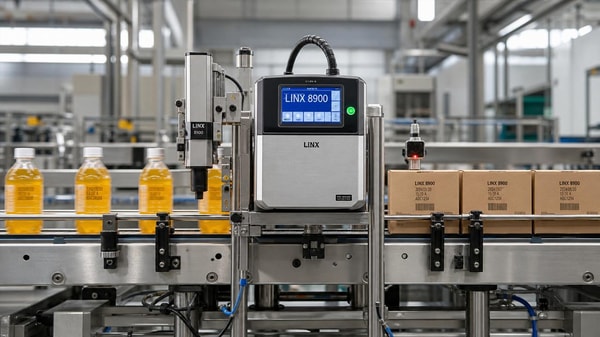
 Printing EquipmentContinuous Inkjet Printer Selection Tips for High-Speed Packaging LinesContinuous inkjet printer selection tips for high-speed packaging lines: compare uptime, ink adhesion, integration, maintenance, and total cost to choose the right coding solution.Packaging Supply ExpertMay 05, 2026
 Industrial FastenersStainless Steel Carriage Bolts: Where They Work Better Than Hex BoltsStainless steel carriage bolts work better than hex bolts in wood, outdoor, and public-facing projects. Learn when they improve safety, appearance, and corrosion resistance.Tooling & Hardware LeadMay 05, 2026