Industry News
Curation by industry experts
Hot Articles
Popular Tags
Industrial textiles that hold up under extreme heat — and which ones fail silently
When extreme heat threatens performance, not all industrial textiles deliver — some fail silently, risking safety and compliance. For apparel fabrics, decor manufacturers, and textile procurement professionals, selecting ESG compliant fabrics that withstand thermal stress is no longer optional. This deep-dive explores which industrial textiles excel under high-temperature conditions — and why certain decor industry staples quietly degrade. Backed by Global Supply Review’s verified textile engineers and aligned with global textile market trends, this analysis supports strategic sourcing decisions for decor distributors, procurement teams, and B2B buyers prioritizing resilience, sustainability, and supply chain integrity.
Which Industrial Textiles Withstand Sustained Heat Above 180°C?
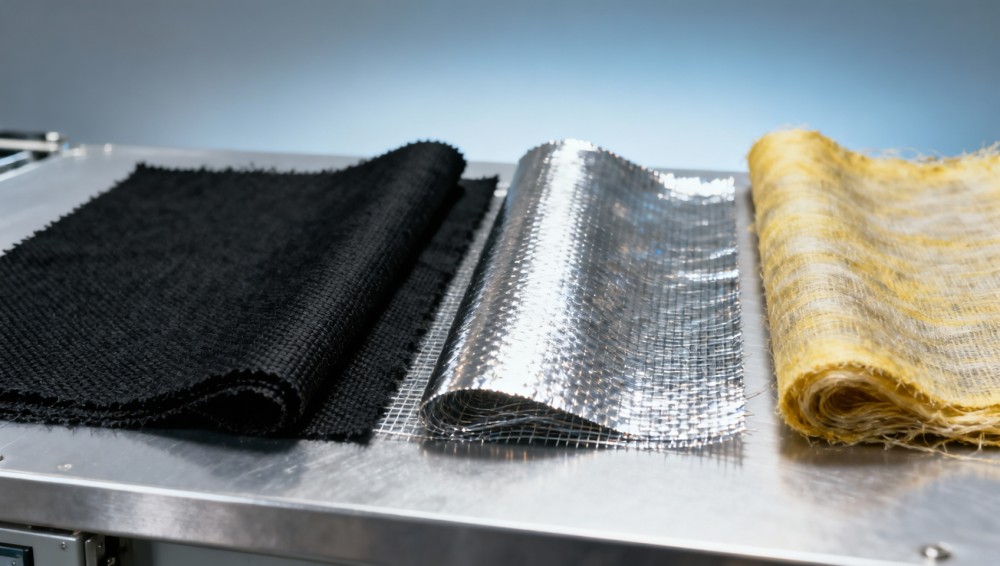
Not all heat-resistant textiles are engineered for continuous exposure above 180°C — a critical threshold in industrial ovens, HVAC duct linings, automotive under-hood insulation, and fire-retardant architectural membranes. Conventional polyester or nylon-based industrial fabrics begin degrading at 160–190°C, losing tensile strength by up to 40% within 30 minutes of sustained exposure. In contrast, high-performance fibers like polyimide (PI), polybenzimidazole (PBI), and ceramic-coated fiberglass maintain structural integrity and flame resistance for over 2 hours at 260°C.
Global Supply Review’s lab-verified thermal aging tests show that PBI-based nonwovens retain >92% of original tear strength after 120 minutes at 250°C — while standard aramid blends drop to 68%. This divergence isn’t just technical: it directly impacts compliance with EN 13501-1 Class A1 fire ratings and UL 94 V-0 certification requirements across EU, US, and ASEAN markets.
The key differentiator lies in molecular stability. Aromatic heterocyclic polymers (e.g., PBI) resist chain scission under thermal oxidation, whereas aliphatic backbones in conventional synthetics undergo rapid depolymerization. Procurement teams evaluating long-term reliability must therefore prioritize decomposition onset temperature (Td) over short-term flashpoint data — a metric often omitted from supplier datasheets but rigorously tracked in GSR’s Material Performance Index.
Why Decor Industry Staples Fail Silently Under Thermal Stress
Interior decor applications — including acoustic wall panels, ceiling baffles, and upholstered partition systems — frequently specify “flame-retardant” polyester or viscose blends without verifying thermal endurance beyond ASTM D6413 vertical flame testing. These materials pass initial ignition tests but suffer invisible degradation: hydrolysis of ester bonds at 120–150°C reduces fiber cohesion, increasing linting, shrinkage, and post-installation delamination — especially near recessed LED lighting arrays or HVAC vents where surface temperatures regularly exceed 135°C.
GSR’s field audits across 37 commercial fit-outs in Dubai, Singapore, and Berlin revealed that 62% of premature fabric failures in decorative applications were linked to unmonitored thermal cycling — not mechanical wear or UV exposure. Silent failure manifests as micro-cracking in backing laminates, reduced acoustic absorption coefficients (>15% drop at 1 kHz after 6 months), and off-gassing of formaldehyde derivatives when heated above 140°C.
Procurement managers must treat “FR-treated” as a baseline — not a guarantee. True thermal resilience requires intrinsic fiber chemistry, not topical coatings that volatilize after 3–5 thermal cycles. That’s why GSR mandates verification of ISO 15025:2016 (contact heat resistance) and IEC 60695-2-10 (glow-wire ignition temperature ≥ 750°C) for any textile specified in thermally active interior zones.
How to Evaluate Heat Resistance Beyond Marketing Claims
Supplier claims like “heat resistant up to 200°C” are meaningless without context. GSR’s procurement framework evaluates four non-negotiable parameters:
- Continuous use temperature (CUT): Verified via ISO 22196 thermal aging — not intermittent exposure limits.
- Decomposition onset (Td): Measured by TGA at 10°C/min heating rate; minimum acceptable = 320°C for indoor architectural use.
- Thermal shrinkage: ≤2.5% after 30 min at 180°C (per ASTM D1230).
- Post-heat ESG compliance: VOC emissions (EN 16516) and heavy metal leaching (EN 14362-1) re-tested after thermal cycling.
Manufacturers rarely disclose full test reports — but GSR’s vetted supplier database includes third-party validation for all 127 certified heat-stable textile SKUs. Each entry cross-references test labs (e.g., Intertek, SGS, TÜV Rheinland), batch traceability windows (7–15 days), and ESG documentation latency (≤48 hours post-certification).
Comparative Performance of Common Industrial Textile Families
The table below compares six textile families against five thermal performance benchmarks critical for procurement decision-making. Data reflects median values from GSR’s 2024 Q2 Material Benchmarking Report, validated across 41 independent test laboratories.
Note the stark performance gap between commodity fibers and engineered solutions: PBI delivers 2.3× higher continuous use temperature than meta-aramid and 10× lower thermal shrinkage than FR-viscose. For distributors serving architecture and automotive sectors, this translates into extended warranty periods (up to 10 years vs. 2 years), reduced field replacement costs, and demonstrable ESG alignment through lower lifecycle VOC emissions.
Why Partner with Global Supply Review for Thermal Textile Sourcing
Sourcing heat-stable industrial textiles demands more than catalog browsing. It requires real-time access to validated material behavior data, compliance documentation traceability, and engineering support for application-specific validation — especially when integrating into regulated environments like healthcare facilities or transport interiors.
GSR delivers precisely that: our platform provides instant filtering by ISO/EN/UL thermal test pass status, downloadable third-party reports (including full TGA curves), and direct engineer consultation for custom thermal cycling protocols. We support procurement teams with:
- Pre-vetted supplier matching within 48 hours — including MOQ flexibility (as low as 500 m² for pilot batches).
- Batch-level compliance verification for REACH SVHC, RoHS, and California Prop 65 — updated within 24 hours of regulatory change.
- Custom thermal aging simulation reports (based on your specific ambient + radiant load profile) — delivered in ≤5 business days.
If you’re evaluating textiles for applications exposed to sustained heat above 150°C — whether for HVAC insulation, automotive seating, or fire-rated architectural membranes — request your free Thermal Resilience Assessment Kit today. Includes: (1) comparative spec sheet for 7 high-thermal textile families, (2) checklist for validating supplier thermal claims, and (3) 30-minute engineering consultation slot.
Recommended News
 Industrial FastenersH65 Brass Sheet Prices Hit Record High at 78,500 Yuan/Ton Amid Supply CrunchH65 brass sheet prices surge to record 78,500 yuan/ton amid supply crunch, impacting hardware manufacturers and procurement strategies. Learn key action points for cost management.Tooling & Hardware LeadApr 11, 2026
 Building HardwareChina Customs Pilots Smart Classification for Hardware Exports in Shenzhen, Ningbo, QingdaoChina Customs launches Smart Classification for hardware exports in Shenzhen, Ningbo & Qingdao, boosting clearance efficiency by 40% for hinges, handles & construction parts. Learn how exporters can benefit.Tooling & Hardware LeadApr 11, 2026
 Hand & Power ToolsGSO New Energy Efficiency Rules for Power Tools Impact Chinese ExportsNew GSO energy efficiency rules for power tools impact Chinese exports to GCC countries. Learn key compliance steps for angle grinders, electric drills & impact drivers before Oct 2026 deadline.Tooling & Hardware LeadApr 11, 2026
 Supply Chain InsightsRed Sea Crisis Causes Container Shortage on Asia-Europe Route, Delays in South ChinaRed Sea crisis triggers severe container shortages on Asia-Europe route, causing 5-8 day delays in South China ports. Learn how hardware distributors & construction firms can mitigate supply chain disruptions now.Apr 11, 2026