Industry News
Curation by industry experts
Hot Articles
Popular Tags
Three Ministries Issue Action Plan for Textile Industry Upgrade via Standards
On March 31, 2026, China's Ministry of Industry and Information Technology (MIIT), Ministry of Ecology and Environment (MEE), and State Administration for Market Regulation (SAMR) jointly released the "Standard-led Textile Industry Optimization and Upgrade Action Plan." The plan aims to systematically enhance the compliance of Chinese textile products in key international markets while reducing technical barriers for overseas buyers. Textile manufacturers, exporters, and supply chain stakeholders should closely monitor this development as it directly impacts global trade competitiveness.
Event Overview
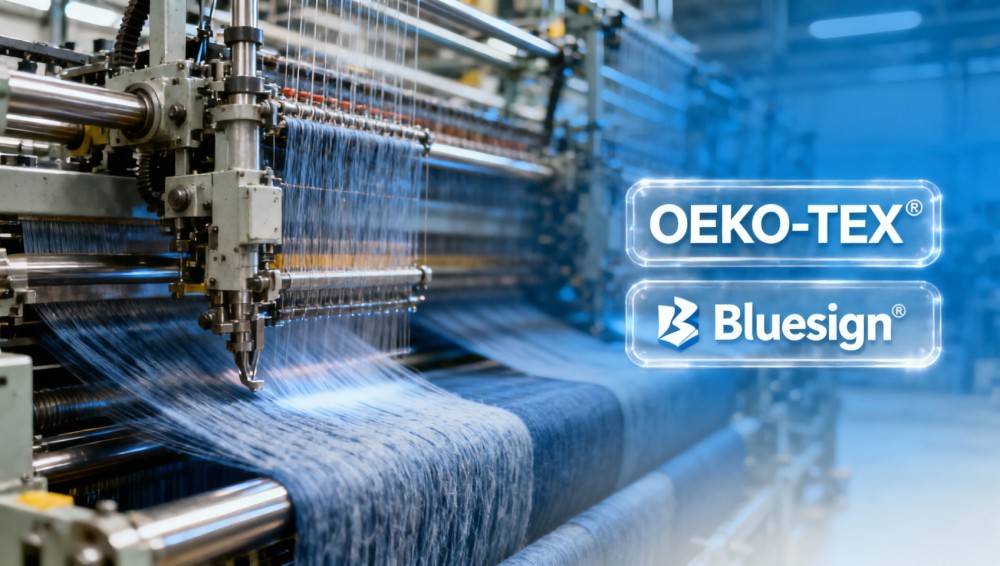
The newly issued plan sets concrete targets by 2028: revising/establishing over 300 standards covering green low-carbon production, digital transformation, and health safety; leading the formulation of 10+ ISO/IEC international standards; and achieving 100% alignment of key product categories with OEKO-TEX®, Bluesign®, and other international benchmarks. This initiative will improve compliance efficiency under EU ESPR, US CPSC, and Japan JIS regulatory frameworks.
Impact on Sub-sectors
Export-Oriented Manufacturers
Companies supplying to EU/US/Japan markets must accelerate process upgrades. The plan's mandatory alignment with OEKO-TEX® means chemical management systems require immediate review, particularly for dyeing/finishing units.
Raw Material Suppliers
Fiber and chemical providers will face stricter documentation requirements. From industry perspective, traceability systems for recycled polyester and organic cotton may become audit priorities.
Testing & Certification Services
Demand for third-party conformity assessment will surge. Current data shows only 38% of Chinese textile labs currently hold ILAC accreditation for all referenced standards.
Key Action Points
Monitor Standard Rollout Timeline
First batch of revised standards (covering 17 product categories) is expected by Q3 2027. Export-focused firms should track SAMR's quarterly updates.
Prioritize EU Market Preparations
With ESPTR enforcement starting 2029, analyzing the plan's Appendix B reveals 23 chemical restrictions mirroring EU regulations - suggesting early compliance reduces future reformulation costs.
Leverage Government Support
Provincial-level subsidies (up to ¥500k per enterprise) for testing equipment upgrades will be available through 2027 under MIIT's matching fund program.
Industry Observation
This plan signals China's strategic shift from passive compliance to proactive standard-setting. While immediate operational impacts are limited, its long-term implications warrant attention: 1) Potential reduction in buyer audit redundancies; 2) Emerging advantage for early adopters in B2B negotiations; 3) Possible ripple effects on Southeast Asian supply chains lacking equivalent frameworks.
Conclusion
The policy represents a coordinated effort to elevate China's textile industry through standards convergence. Rather than viewing this solely as a compliance burden, manufacturers should consider its potential to streamline cross-border trade processes. The coming 12-18 months will be critical for building technical capacity ahead of full implementation.
Sources
- MIIT Official Release (2026-03-31)
- SAMR Standards Development Roadmap
- Note: Provincial subsidy details pending local implementation rules (expected Q2 2026)
Recommended News
 Fabrics & YarnsThree Ministries Issue Action Plan for Textile Industry Upgrade via StandardsChina's Three Ministries launch Textile Industry Upgrade Action Plan via standards, targeting 300+ new standards by 2028. Learn how this impacts global trade compliance for manufacturers & exporters.Textile Industry AnalystApr 14, 2026
 Fabrics & YarnsJilin Chemical Fiber Launches 15,000-Ton High-End Artificial Silk Production, Boosting Green Supply ChainsJilin Chemical Fiber launches 15,000-ton high-end artificial silk production with 17 green certifications, offering sustainable solutions for global brands. Boost your eco-friendly supply chain now!Textile Industry AnalystApr 14, 2026
 Fabrics & YarnsEU Imposes Provisional Anti-Dumping Duties on Chinese Polyamide YarnEU imposes 18.2%-32.7% anti-dumping duties on Chinese polyamide yarn (PA6/PA66), impacting textile & sportswear supply chains. Learn key actions for exporters and importers to mitigate costs and compliance risks.Textile Industry AnalystApr 14, 2026
 Outdoor FurnitureChina Expands Smart Classification Pilot for Furniture Exports, Boosting EfficiencyChina expands smart classification pilot for furniture exports (HS codes 9401-9403) to Dongguan & Yiwu, boosting customs efficiency by 35% and reducing return rates. Essential for JIT supply chains.Interior Sourcing LeadApr 14, 2026