Industry News
Curation by industry experts
Hot Articles
Popular Tags
EU's Revised EN 13432:2026 Takes Effect: Stricter Recycling Labeling Requirements for Plastic Composite Packaging
EU's Revised EN 13432:2026 Takes Effect: Stricter Recycling Labeling Requirements for Plastic Composite Packaging
Introduction
On March 22, 2026, the EU Official Journal (OJEU) published the updated EN 13432:2026 standard, mandating stricter recycling labeling requirements for aluminum foil/coated composite flexible packaging. Products failing to meet the new 'recyclability grading test' (R1–R4) will be banned from the EU market starting January 2027. This development particularly impacts China's soft packaging exporters, who now face a critical adaptation period. The food, pharmaceutical, and consumer goods packaging industries should closely monitor these changes, as non-compliant products risk losing access to the EU market.
Event Overview
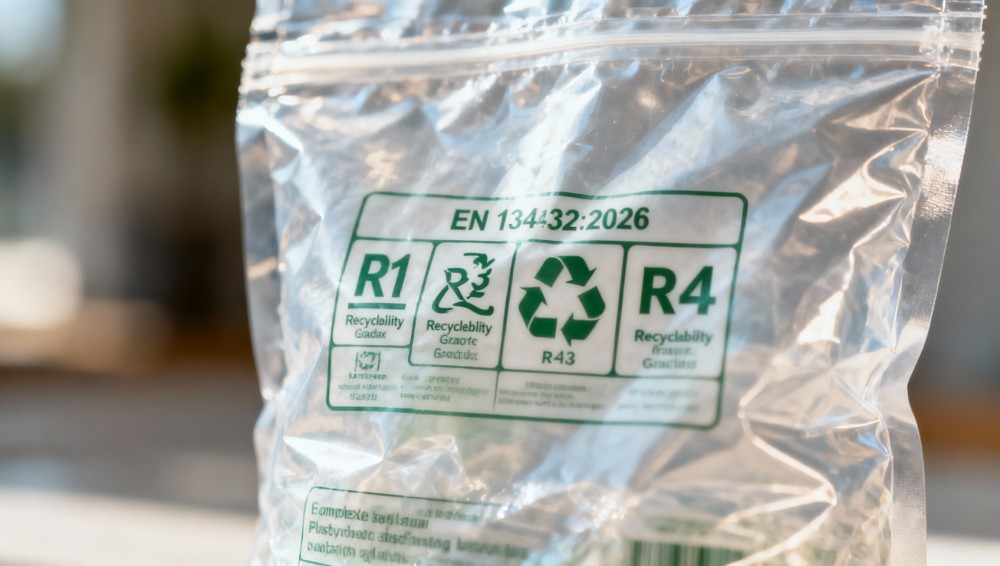
The EN 13432:2026 revision introduces mandatory recyclability grading for composite flexible packaging containing aluminum foil or coatings. Key confirmed facts include:
- Effective date: March 22, 2026
- Implementation deadline: January 2027
- Scope: All aluminum-containing composite soft packaging entering EU markets
- Requirement: Packaging must undergo standardized testing and display R1–R4 recyclability grades
Impact on Sub-sectors
1. Direct Export Enterprises
Companies exporting composite packaging materials or finished packaged goods to the EU will face immediate compliance challenges. The regulation affects approximately 38% of China's current flexible packaging exports to Europe that contain aluminum layers. These businesses must either reformulate materials or implement new testing protocols.
2. Raw Material Suppliers
Suppliers of aluminum-based barrier materials and composite adhesives will experience demand shifts. From an industry perspective, there may be increased interest in mono-material solutions that can achieve equivalent barrier properties while meeting higher recyclability standards.
3. Packaging Converters
Manufacturers producing laminated packaging structures face the most significant technical adjustments. Current production lines using traditional aluminum foil bonding may require process modifications to achieve R2 (mechanically recyclable) or higher classifications.
Key Focus Areas and Recommended Actions
1. Technical Adaptation Timeline
Companies should immediately verify their packaging's potential recyclability grade through accredited EU laboratories. The 10-month window until enforcement requires parallel testing and production adjustments.
2. Supply Chain Communication
Current priorities include clarifying material specifications with European buyers and confirming testing methodologies with notified bodies. Particularly for pharmaceutical packaging where barrier requirements are stringent, early dialogue with end-users is critical.
3. Certification Strategy
Rather than waiting for 2027 enforcement, proactive companies are pursuing pre-certification under the new standard. This is especially relevant for products with longer shelf lives that may still be in circulation post-deadline.
Editorial Perspective
Analysis suggests this revision represents more than incremental change—it signals the EU's accelerating shift toward circular packaging economies. While presenting immediate compliance challenges, the regulation may ultimately drive innovation in sustainable packaging technologies. The industry should view this as part of a broader regulatory trend, with similar requirements likely to emerge in other developed markets.
Conclusion
The EN 13432:2026 update establishes concrete recyclability benchmarks for composite packaging in the EU market. For affected industries, the regulation creates both technical hurdles and opportunities for market differentiation through sustainable design. Companies should approach this as a strategic materials innovation challenge rather than mere compliance exercise, particularly given the potential for these standards to influence global packaging norms.
Source Information
- Primary source: EU Official Journal (OJEU) publication dated March 22, 2026
- Pending clarification: Specific testing protocols for R3/R4 classifications
- Ongoing monitoring: Potential national-level implementation variations within EU member states
Recommended News
 Carton & PlasticsWhat drives breakage rates in bulk wine bottles wholesale orders?Bulk wine bottles wholesale buyers: discover what drives breakage rates, from glass quality and packaging to pallet loading, and reduce costly claims.Packaging Supply ExpertSep 27, 2026
 Office FurnitureHow supplier scorecards reduce risk in furniture procurementFurniture procurement supplier management becomes more resilient with supplier scorecards that track quality, delivery, compliance, and corrective actions. Learn how to reduce sourcing risk.Interior Sourcing LeadSep 26, 2026
 Office Paper & Printing PaperHow roll diameter affects downtime when using jumbo paper rollsJumbo paper rolls can cut changeovers and downtime—if your unwinder, handling, and tension control can support them. Find the optimal roll diameter for smoother output.Packaging Supply ExpertSep 25, 2026
 Office Paper & Printing PaperWhen does carbonless paper for invoices reduce billing errors?Carbonless paper for invoices reduces billing errors by creating clear, consistent copies for deliveries, service calls, and approvals. Learn when it strengthens billing control.Packaging Supply ExpertSep 24, 2026