Industry News
Curation by industry experts
Hot Articles
Popular Tags
India BIS Launches Spot Checks on LED Wedding Photography Lights
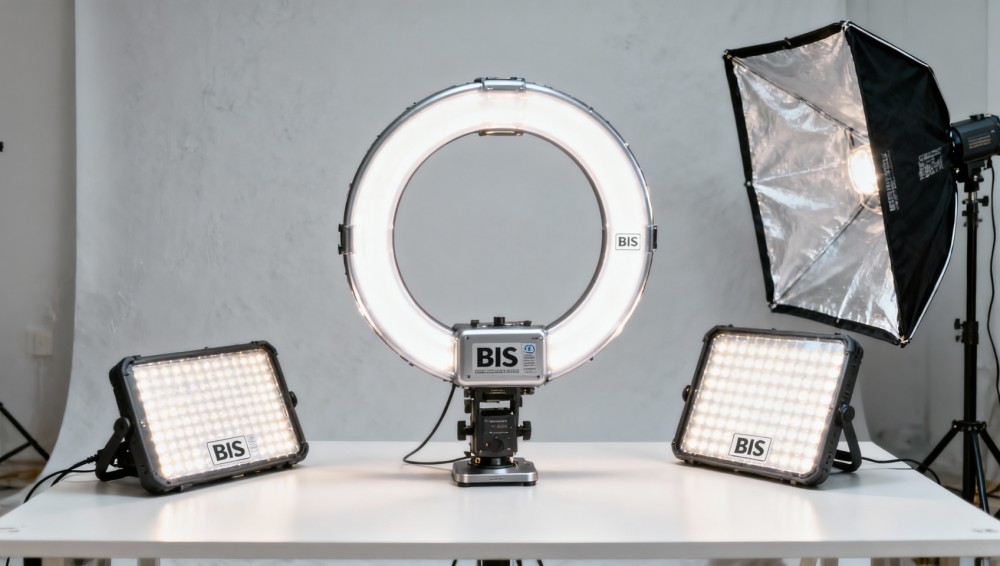
On May 13, 2026, the Bureau of Indian Standards (BIS) initiated a three-month market surveillance campaign targeting all LED lights marketed for wedding photography across India—covering both online and offline sales channels. This action directly affects manufacturers, exporters, and distributors of LED photographic lighting equipment, particularly those supplying from China and other export-oriented production bases. It signals a tightening of regulatory enforcement in a high-growth niche segment where safety compliance has historically been inconsistently applied.
Event Overview
On May 13, 2026, the Bureau of Indian Standards (BIS) announced a targeted market surveillance program for LED lights used in wedding photography. The initiative runs for three months and applies to all models currently available for sale across India’s e-commerce platforms and physical retail outlets. Testing focuses exclusively on two standards: IEC 62471 (Photobiological Safety of Lamps and Lamp Systems) and IS 13252 Part 1:2022 (General Safety Requirements for Luminaires). Results will be publicly disclosed and serve as a core criterion for BIS certification renewal.
Industries Affected
Direct Exporters and Trading Companies
These entities face immediate exposure because BIS certification is mandatory for import clearance—and non-compliant units may be detained or rejected at customs. Since the抽查 covers all sold models, even previously certified products must now demonstrate ongoing conformity, increasing post-market liability risk.
LED Lighting Manufacturers (Especially OEM/ODM Suppliers)
Manufacturers supplying private-label or white-label wedding photography lights to Indian brands are affected indirectly but critically: product redesigns or retesting may be required if legacy designs lack documented IEC 62471 classification reports or fail updated IS 13252 Part 1:2022 mechanical/thermal testing criteria.
Distribution and E-commerce Platform Operators
Online sellers and multi-brand retailers must verify BIS certification status for every listed model—and retain evidence of compliance (e.g., test reports, certificate validity dates). Non-compliant listings risk takedown under BIS’s new enforcement protocol, potentially disrupting inventory turnover and promotional cycles.
What Stakeholders Should Monitor and Do Now
Track official BIS notifications and updated compliance guidance
BIS has not yet published detailed sampling methodology or pass/fail thresholds for IEC 62471 classification (e.g., whether Risk Group 1 is acceptable or RG0 is mandated). Stakeholders should monitor BIS’s official portal and designated regional offices for technical clarifications issued during the campaign.
Verify current BIS certification scope and expiry dates for all active SKUs
Many existing certifications may cover broader “LED studio lights” categories but omit explicit reference to wedding photography use cases—or may predate IS 13252 Part 1:2022. Companies should cross-check certificate scope language and revision dates against the 2022 standard edition.
Prepare documentation for photobiological safety assessment
IEC 62471 compliance requires lab-tested classification (RG0–RG3), including spectral irradiance measurement and exposure time analysis. Firms without recent test reports should initiate third-party verification—especially if products use high-CCT LEDs, UV-emitting phosphors, or unshielded optics common in compact wedding ring lights.
Review supply chain handover points for compliance evidence transfer
For OEM arrangements, ensure contracts specify responsibility for maintaining up-to-date IEC 62471 and IS 13252 Part 1:2022 documentation. Distributors importing under their own BIS license must receive full technical files—not just certificates—to meet audit readiness requirements.
Editorial Observation / Industry Perspective
Observably, this is not a new regulation rollout but an enforcement escalation—leveraging existing standards to tighten post-market control. Analysis shows that BIS is prioritizing a consumer-facing, high-visibility product category where safety incidents (e.g., retinal exposure from intense, close-range LED sources) could trigger broader public concern. It functions less as a one-off inspection and more as a signal that photobiological safety is now a non-negotiable baseline—not just an optional design consideration—for any LED luminaire entering India with direct human proximity use cases. From an industry perspective, this reflects a shift toward outcome-based compliance monitoring, where certification alone no longer suffices without demonstrable, sustained conformity.
This development is best understood not as an isolated audit, but as an early indicator of how BIS may approach other application-specific LED categories—including video conferencing lights, beauty devices, and portable ring lights—in upcoming fiscal years.
In summary, the BIS action raises the operational and documentation burden for LED lighting suppliers targeting India’s wedding photography segment—not by introducing novel requirements, but by enforcing long-standing standards with greater rigor and transparency. It underscores that compliance is increasingly dynamic: valid certification at point of entry does not guarantee market access over time. Current practice suggests treating BIS certification as a living requirement—requiring periodic revalidation, use-case-specific testing, and proactive alignment with India’s evolving interpretation of international standards.
Source: Bureau of Indian Standards (BIS) official announcement, dated May 13, 2026. Note: Sampling methodology, pass/fail criteria, and timeline for result publication remain pending official clarification and are subject to ongoing observation.
Recommended News
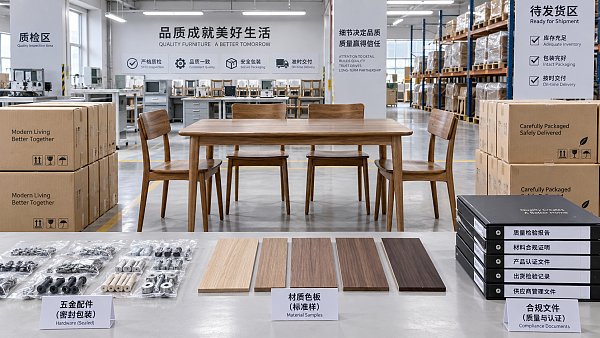
 Office FurnitureHow supplier scorecards reduce risk in furniture procurementFurniture procurement supplier management becomes more resilient with supplier scorecards that track quality, delivery, compliance, and corrective actions. Learn how to reduce sourcing risk.Interior Sourcing LeadSep 26, 2026
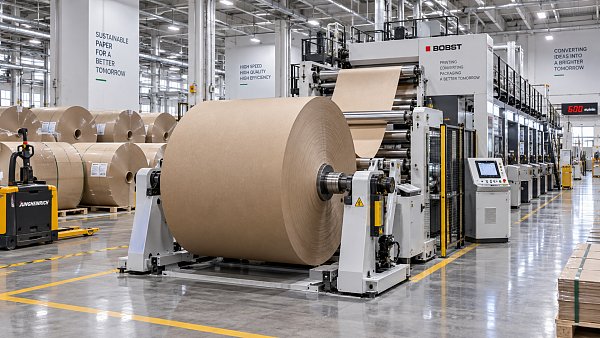
 Office Paper & Printing PaperHow roll diameter affects downtime when using jumbo paper rollsJumbo paper rolls can cut changeovers and downtime—if your unwinder, handling, and tension control can support them. Find the optimal roll diameter for smoother output.Packaging Supply ExpertSep 25, 2026
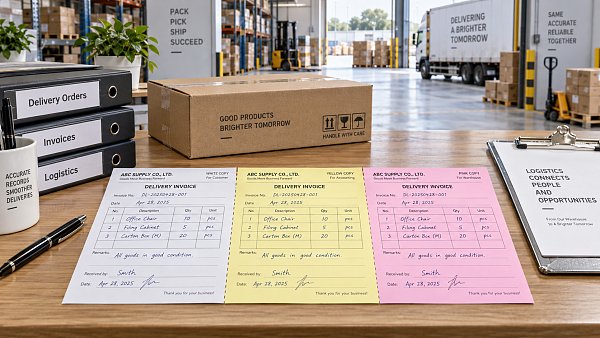
 Office Paper & Printing PaperWhen does carbonless paper for invoices reduce billing errors?Carbonless paper for invoices reduces billing errors by creating clear, consistent copies for deliveries, service calls, and approvals. Learn when it strengthens billing control.Packaging Supply ExpertSep 24, 2026
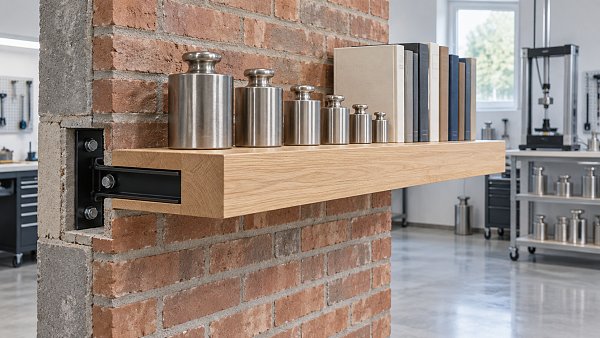
 Home DecorHow to compare floating wall shelves suppliers for consistent load capacityFloating wall shelves supplier comparison guide: evaluate load capacity, brackets, wall fixings, testing, and production consistency before you buy.Interior Sourcing LeadSep 23, 2026