Industry News
Curation by industry experts
Hot Articles
Popular Tags
SASO Updates IEC 62471: Arabic Labels Required for LED Photography Lights in Saudi Arabia
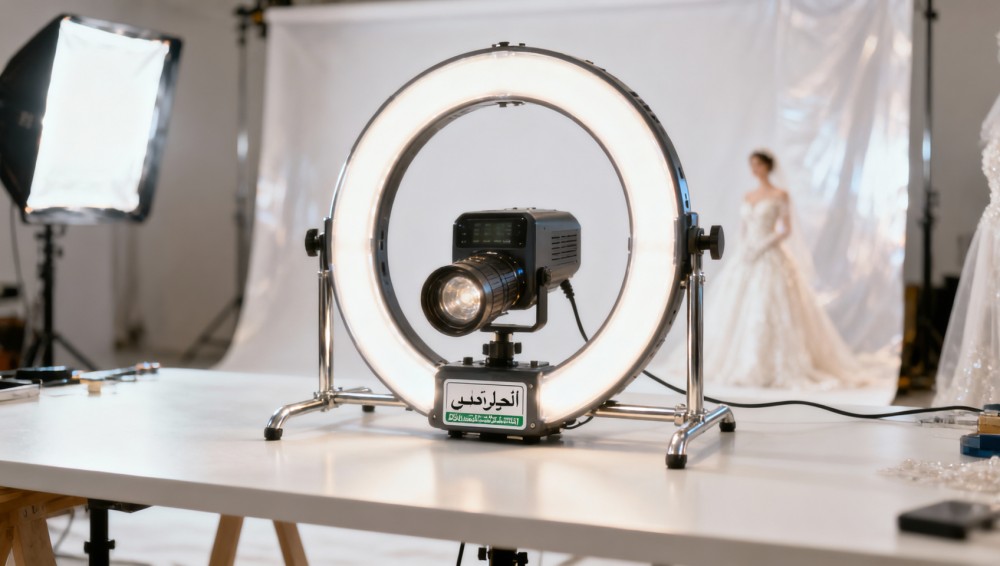
On May 15, 2026, the Saudi Standards, Metrology and Quality Organization (SASO) will enforce a revised version of SASO IEC 62471:2026, mandating permanent, wash-resistant Arabic-language photobiological safety labels on all imported LED photography lights used in bridal photography—including ring lights, softbox light sources, and portable fill lights. This requirement directly impacts global LED lighting exporters, especially manufacturers and distributors serving the Middle Eastern market.
Event Overview
On May 13, 2026, SASO published SASO IEC 62471:2026, an updated national adoption of the IEC 62471 standard on photobiological safety of lamps and lamp systems. The revision explicitly requires that all LED photography lights intended for bridal photography applications must bear a non-removable, abrasion-resistant Arabic-language label on the device itself. The label must include the radiation risk group classification, recommended minimum operating distance, and protective usage instructions. Enforcement begins May 15, 2026. Non-compliant products will be detained at Jeddah and Dammam ports. Chinese LED photography light exporters—which supply over 73% of the global market—are required to update packaging and nameplate manufacturing processes accordingly.
Industries Affected by This Regulation
Direct Exporters and Trading Companies
These entities face immediate customs clearance risks if shipments lack compliant labeling. Since the requirement applies to the product body—not just packaging—labeling must be integrated into final assembly or post-production finishing. Detention at port implies delays, storage fees, and potential rework or destruction of non-conforming units.
LED Light Manufacturers (OEM/ODM)
Manufacturers supplying white-label or private-label LED photography lights to international brands must revise their production line labeling protocols. The mandate applies regardless of brand origin, meaning facilities producing for EU-, US-, or GCC-based clients must now incorporate Arabic-language photobiological warnings as part of unit-level marking—impacting stencil, laser etching, or adhesive label application workflows.
Supply Chain and Logistics Service Providers
Third-party logistics providers handling pre-clearance labeling, customs brokerage, or last-mile compliance verification must now verify physical label presence and durability—not just documentation—prior to Saudi-bound consignments. Port detention data from Jeddah and Dammam suggests increased scrutiny of label adhesion and legibility under humid or high-temperature conditions.
Packaging and Labeling Material Suppliers
Vendors supplying nameplates, durable decals, or direct-part-marking solutions must confirm material compatibility with SASO’s ‘non-removable and wash-resistant’ requirement. Standard paper or PVC labels may not meet durability thresholds; certified polyester, polyimide, or laser-engraved metal tags may now be necessary for affected SKUs.
Key Considerations and Recommended Actions for Stakeholders
Monitor Official SASO Clarifications and Enforcement Guidance
SASO has not yet published detailed technical specifications for label font size, contrast ratio, or substrate testing methods. Exporters should track updates via the SASO e-Services portal and registered conformity assessment bodies (CABs), particularly any guidance on acceptable label placement (e.g., whether internal chassis surfaces qualify).
Identify and Prioritize High-Risk Product Categories
Focus first on LED ring lights, compact softbox kits, and battery-powered fill lights—categories most commonly used in mobile bridal photography studios and frequently shipped in mixed-carton consignments. These items often lack dedicated labeling space and may require design adjustments to accommodate mandatory Arabic text without compromising usability or aesthetics.
Distinguish Between Regulatory Signal and Operational Readiness
The May 15, 2026 enforcement date reflects a hard deadline for new shipments—but does not retroactively apply to inventory already cleared through Saudi customs before that date. However, warehouse stock held in GCC free zones or bonded warehouses must still comply upon release for domestic sale after May 15. Companies should audit current inventory status and release timelines accordingly.
Update Internal Production and QA Checkpoints Immediately
Integrate Arabic photobiological labeling verification into final assembly inspection checklists. Confirm that label application occurs after all thermal, vibration, or humidity testing steps—since durability requirements imply resistance to post-labeling environmental stress. Document label batch traceability alongside CE or IEC test reports for future audits.
Editorial Perspective / Industry Observation
Observably, this update signals SASO’s increasing emphasis on end-user safety communication—not just technical compliance—in consumer-facing lighting products. While IEC 62471 has long governed photobiological risk classification, the mandatory on-device Arabic labeling represents a shift toward enforceable, linguistically accessible hazard disclosure. Analysis shows this is less a technical revision than a localization enforcement measure: it mirrors similar language-specific labeling trends in GCC cosmetic and electrical appliance regulations. From an industry perspective, it reflects growing regulatory convergence across Gulf Cooperation Council markets, where Saudi Arabia often sets de facto implementation benchmarks. Current enforcement appears focused on port-level detention rather than pre-market certification expansion—suggesting near-term impact is operational rather than procedural.
Conclusion: This regulation underscores how regional language requirements are becoming integral—not ancillary—to product compliance strategies for export-oriented lighting manufacturers. It is best understood not as a standalone safety update, but as a localized implementation layer atop existing IEC 62471 assessments. For stakeholders, readiness hinges less on new testing and more on adapting labeling execution, supply chain checkpoints, and documentation alignment to meet explicit linguistic and physical durability expectations.
Source: Saudi Standards, Metrology and Quality Organization (SASO), official notice dated May 13, 2026, referencing SASO IEC 62471:2026. Note: Technical implementation details—including label substrate standards, font specifications, and approved CAB verification procedures—remain pending official publication and are subject to ongoing monitoring.
Recommended News
 Carton & PlasticsWhat drives breakage rates in bulk wine bottles wholesale orders?Bulk wine bottles wholesale buyers: discover what drives breakage rates, from glass quality and packaging to pallet loading, and reduce costly claims.Packaging Supply ExpertSep 27, 2026
 Office FurnitureHow supplier scorecards reduce risk in furniture procurementFurniture procurement supplier management becomes more resilient with supplier scorecards that track quality, delivery, compliance, and corrective actions. Learn how to reduce sourcing risk.Interior Sourcing LeadSep 26, 2026
 Office Paper & Printing PaperHow roll diameter affects downtime when using jumbo paper rollsJumbo paper rolls can cut changeovers and downtime—if your unwinder, handling, and tension control can support them. Find the optimal roll diameter for smoother output.Packaging Supply ExpertSep 25, 2026
 Office Paper & Printing PaperWhen does carbonless paper for invoices reduce billing errors?Carbonless paper for invoices reduces billing errors by creating clear, consistent copies for deliveries, service calls, and approvals. Learn when it strengthens billing control.Packaging Supply ExpertSep 24, 2026