Industry News
Curation by industry experts
Hot Articles
Popular Tags
India to Mandate BIS Certification for LED Photography Lights (IS 10322)
Effective 1 October 2026, India’s Bureau of Indian Standards (BIS) will require mandatory certification under IS 10322:2025 for LED photography lighting equipment—including ring lights, softboxes, and background lights—used in bridal and studio photography. The move follows a draft notification issued on 21 May 2026, introducing new compliance requirements with implications for exporters, manufacturers, and supply chain stakeholders serving the Indian market.

Regulatory Update: New Certification Scope Confirmed
The BIS has formally proposed the inclusion of LED photography lights in its Compulsory Registration Scheme under standard IS 10322:2025. The draft, published on 21 May 2026, specifies that the requirement becomes enforceable on 1 October 2026. Products covered include all LED-based lighting units designed for professional photography applications—particularly those used in wedding photography studios. Compliance mandates dual testing against IEC 62471 (photobiological safety) and electromagnetic compatibility (EMC) standards. The average certification timeline is expected to extend to 8–10 weeks post-application submission.
Supply Chain Impact Across Key Stakeholder Groups
Exporters and Direct Trading Companies
Companies exporting LED photography lights to India will face immediate customs clearance risks if products lack valid BIS registration by the effective date. Pre-shipment verification, documentation alignment with IS 10322:2025, and updated product labeling become critical operational checkpoints.
Raw Material and Component Suppliers
Suppliers of LED modules, drivers, and optical components must ensure their sub-assemblies meet photobiological safety thresholds and EMC immunity/performance criteria referenced in IEC 62471 and applicable EMC clauses of IS 10322:2025—otherwise, downstream certification may fail at system-level testing.
Manufacturers and OEMs
Manufacturers will need to revise internal quality control protocols to integrate photobiological risk assessment (e.g., retinal blue-light hazard evaluation) and conducted/radiated emissions testing into design validation. Product redesign or component substitution may be necessary where legacy units do not inherently satisfy IEC 62471 Risk Group 0 or 1 classifications.
Logistics and Certification Support Providers
Third-party testing labs, BIS liaison agents, and conformity assessment bodies are expected to see increased demand for coordinated IEC 62471 + EMC test packages. Lead time transparency, sample logistics, and technical documentation support (e.g., test reports, DoC, user manuals in English and Hindi) will become differentiating service factors.
Key Compliance Actions for Affected Enterprises
Initiate Early Certification Planning
Given the projected 8–10 week certification cycle—and potential delays from test re-runs or documentation gaps—enterprises should begin application preparation no later than Q3 2026, including factory audit readiness, technical file compilation, and selection of BIS-recognized testing laboratories.
Validate Photobiological Safety and EMC Design Integration
Engineering teams must confirm whether existing product architectures comply with IEC 62471 exposure limits under typical operating conditions (e.g., 20 cm working distance, continuous operation). Concurrent EMC testing planning—including pre-compliance screening—is essential to avoid iterative failures.
Update Technical Documentation and Labeling
All product literature, packaging, and nameplates must reflect the BIS Standard Mark, registration number (once assigned), and compliance statements referencing both IS 10322:2025 and IEC 62471. User manuals must include photobiological safety warnings aligned with Clause 7 of IEC 62471.
Assess Supplier Qualifications and Subcomponent Traceability
Manufacturers must verify that critical suppliers provide traceable test reports for key subcomponents (e.g., LED packages, power supplies) supporting the final system-level IEC 62471 and EMC claims—ensuring full auditability during BIS surveillance.
Industry Perspective: Rising Technical Barriers in Niche Lighting Segments
Analysis shows that this expansion reflects a broader regulatory trend: BIS is progressively extending mandatory certification beyond general-purpose lighting into specialized photonic applications where human proximity and prolonged exposure raise distinct safety considerations. From an industry perspective, the coupling of photobiological safety and EMC in a single certification scheme increases technical entry requirements—not just for performance, but for integrated risk management across optical, electrical, and thermal domains. What deserves closer attention is how rapidly smaller manufacturers adapt to multi-standard conformance without dedicated in-house testing infrastructure; this may accelerate consolidation among certified producers and widen reliance on regional conformity service hubs.
Strategic Implications for Market Access
This regulation signals a maturing phase in India’s lighting product governance—shifting focus from basic electrical safety toward holistic human-centric performance metrics. For global suppliers, timely compliance is not merely procedural but strategic: it serves as a de facto benchmark for product robustness in other emerging markets adopting similar photobiological frameworks. However, the absence of transitional provisions or grace periods underscores the need for proactive rather than reactive engagement.
Source Information and Ongoing Monitoring
This article is based exclusively on the provided information: title, event date (1 October 2026), and summary describing the BIS draft notification dated 21 May 2026. Specific official source links were not provided in the input and should be verified continuously. Stakeholders are advised to monitor upcoming BIS gazette updates, finalised implementation guidelines, interpretation notes on IS 10322:2025 Annexes, and evolving tender specifications issued by Indian state photography boards and studio equipment procurement agencies.
Recommended News
 Home DecorWhich decor exhibition in the USA best fits a home decor sourcing trip?Decor exhibition USA guide: compare High Point Market, Las Vegas Market, NY NOW, and HD Expo to choose the best event for your home decor sourcing trip.Interior Sourcing LeadOct 08, 2026
 Fabrics & YarnsWhat drives textile procurement cost beyond the quoted fabric price?Textile procurement cost goes far beyond the quoted fabric price. Discover how freight, quality, MOQ, compliance, payment terms, and supplier reliability shape total sourcing cost.Textile Industry AnalystOct 07, 2026
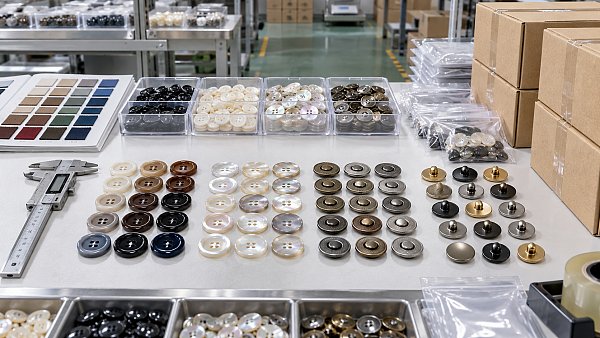
 Garment MfgWhat drives unit costs when buying garment buttons wholesale?Garment buttons wholesale costs depend on material, tooling, finish, MOQ, quality, packing, and freight. Learn how to compare true landed costs and source reliably.Textile Industry AnalystOct 06, 2026
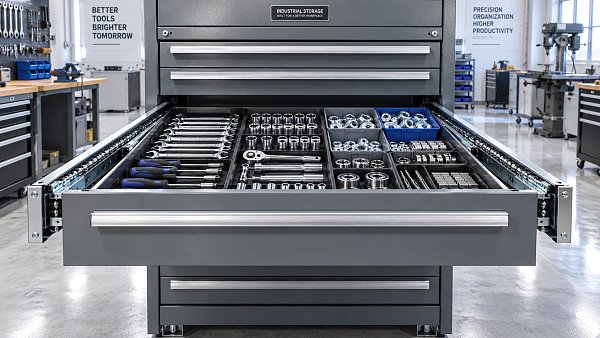
 Building HardwareWhat load rating should you specify for wholesale ball bearing slides?Wholesale ball bearing slides: learn how to specify the right load rating for drawer weight, extension, mounting, and durability. Source smarter and reduce failures.Tooling & Hardware LeadOct 05, 2026