Industry News
Curation by industry experts
Hot Articles
Popular Tags
RCEP Smart Origin Verification Launches for Wedding Fabric Exports to ASEAN
On 29 May 2026, China’s General Administration of Customs and the ASEAN Secretariat jointly launched the RCEP Certificate of Origin Smart Verification System — a digital infrastructure enabling immediate zero-tariff treatment for Chinese wedding and formalwear fabrics exported to ASEAN markets.

Launch of the RCEP Smart Origin Verification System
Effective 29 May 2026, the RCEP Certificate of Origin Smart Verification System became operational. It covers fabric and yarn categories used in bridal and formalwear — including polyester, silk, and acetate — classified under Fabrics & Yarns in RCEP tariff schedules. Chinese manufacturers may now submit electronic origin declarations with one click; ASEAN importers instantly validate tariff exemption by scanning a QR code. Customs clearance time has been reduced to under two hours.
Impact Across the Apparel Supply Chain
Export-oriented textile manufacturers
These enterprises benefit directly from accelerated customs clearance and guaranteed preferential tariff access. The system enhances their responsiveness in fast-reactive regional supply chains — particularly critical for seasonal and trend-driven wedding apparel production cycles.
Raw material procurement firms
Suppliers of base fibers and specialty yarns must ensure traceability documentation aligns with RCEP origin criteria (e.g., regional value content or change-in-tariff classification). Non-compliant upstream inputs could invalidate downstream origin claims.
Garment and accessory converters
Contract manufacturers handling cutting, dyeing, or finishing of wedding fabrics now face stricter documentation handover requirements. They must coordinate origin data flow with upstream fabric suppliers and downstream brand partners to maintain seamless verification.
Logistics and trade compliance service providers
Third-party customs brokers and digital trade platforms are adapting their systems to support automated submission, QR-code generation, and real-time status tracking of electronic origin declarations — expanding service scope beyond traditional paper-based certification.
Key Operational Priorities for Exporters
Adaptation of origin documentation workflows
Manufacturers must integrate electronic origin declaration into existing ERP or export management systems. Internal training on RCEP origin rules — especially product-specific criteria for Fabrics & Yarns — is essential to avoid misclassification.
Alignment of supplier declarations with RCEP requirements
For blended or multi-origin fabrics, exporters must collect and verify supplier declarations that meet RCEP’s accumulation and minimal processing thresholds — not just domestic compliance standards.
Pre-shipment validation of QR-coded certificates
Before shipment, exporters should test QR code functionality with sample scans using ASEAN customs’ publicly available verification interface to confirm tariff exemption eligibility and avoid port-side delays.
Integration of origin data into order fulfilment timelines
With customs clearance now achievable within two hours, delivery planning must shift from buffer-heavy schedules to precision timing — requiring tighter coordination between production, logistics, and documentation teams.
Strategic Implications for Regional Sourcing
Analysis shows this initiative signals a broader transition from paper-based trade facilitation to interoperable, system-to-system verification across RCEP economies. From an industry perspective, it lowers entry barriers for SMEs in China’s wedding textile sector while raising the bar for documentation integrity and cross-border data readiness. What deserves closer attention is how ASEAN customs authorities will harmonise enforcement interpretations — especially regarding minor processing operations and fibre substitution — which may affect long-term predictability for fabric exporters.
Industry Significance and Forward Outlook
This development marks a milestone in operationalising RCEP’s trade liberalisation commitments for high-value textile subsectors. Rather than merely reducing tariffs, it redefines speed, transparency, and trust as competitive differentiators in regional apparel sourcing. Sustainable advantage will accrue to firms that treat origin compliance not as a regulatory formality but as an integrated component of agile supply chain execution.
Source Attribution and Monitoring Guidance
This article is based exclusively on the user-provided title, event date (29 May 2026), and summary. Specific official source links were not provided in the input and should be verified continuously. Stakeholders are advised to monitor forthcoming technical guidelines from the ASEAN Secretariat and China’s GACC on verification error resolution protocols, updates to the Fabrics & Yarns origin rule annexes, and early feedback from ASEAN member states’ customs administrations.
Recommended News
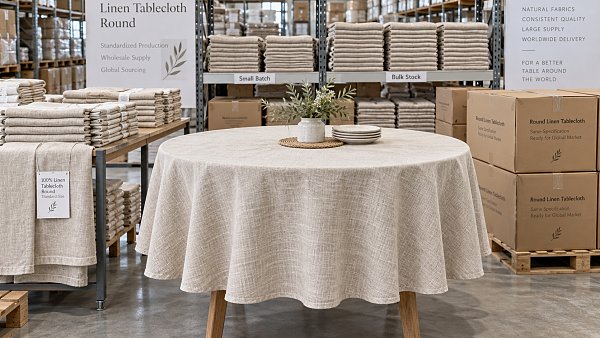
 Home DecorHow order size affects wholesale prices for round linen tableclothsBuying round linen tablecloths wholesale? Discover how order size, freight, and inventory costs affect pricing—and choose the right quantity to maximize real savings.Interior Sourcing LeadOct 14, 2026
 Outdoor FurnitureHow to verify outdoor furniture manufacturers' production capacityCan outdoor furniture manufacturers deliver on time? Learn how to verify production capacity, uncover bottlenecks, and validate supplier commitments before placing your next order.Interior Sourcing LeadOct 13, 2026
 Commercial DisplaysWhat makes an outdoor digital signage display manufacturer reliable?Discover how to choose a reliable outdoor digital signage display manufacturer with proven weather protection, quality control, smart visibility, and responsive after-sales support.Commercial Tech EditorOct 12, 2026
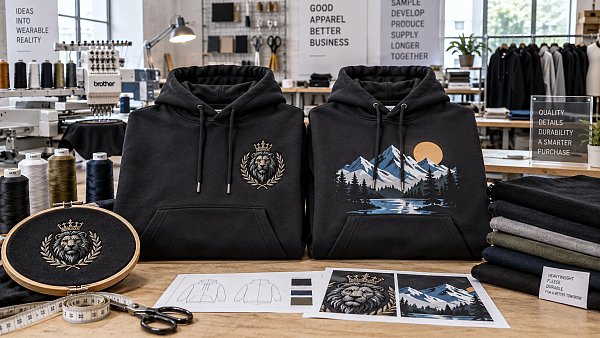
 Garment MfgWhen do bulk embroidered hoodies offer better value than printed ones?Bulk embroidered hoodies deliver lasting value for uniforms and premium branding. Compare durability, design, comfort, and cost to choose the right decoration.Textile Industry AnalystOct 11, 2026