Industry News
Curation by industry experts
Hot Articles
Popular Tags
China Customs Launches RCEP AI Origin Verification for Photo Props
On 19 May 2026, China Customs launched the RCEP Origin Intelligent Verification System, enabling zero-tariff export of wooden photo frames — a key wedding photography prop — to ASEAN countries. This development directly impacts home decor suppliers serving the global wedding and portrait photography industry, driven by enhanced speed, accuracy, and regulatory alignment under the Regional Comprehensive Economic Partnership.
Event Overview
On 19 May 2026, China Customs officially launched the RCEP Certificate of Origin AI Verification Platform. The system covers HS codes 4414.00 (wooden picture frames) and 3926.90 (acrylic display stands), both widely used in wedding photography home decor. It delivers sub-second automated verification of origin documentation, reducing average customs clearance time for ASEAN-bound shipments to 1.2 days.

Industries Affected
Direct Exporters: Companies exporting wooden frames or acrylic stands to ASEAN face lower administrative friction and faster cash conversion. Reduced clearance time lowers demurrage risk and improves order fulfillment predictability — especially critical for seasonal wedding demand cycles.
Raw Material Procurement Firms: Suppliers sourcing timber (e.g., rubberwood, paulownia) or acrylic sheets must now align traceability documentation with RCEP origin rules. While not directly subject to customs verification, their upstream data quality — including mill certificates and processing records — increasingly determines downstream exporters’ eligibility for preferential tariffs.
Manufacturing Enterprises: Factories producing photo props must ensure production processes meet RCEP ‘substantial transformation’ criteria (e.g., sufficient value addition or change in tariff classification). The AI system does not relax compliance requirements — it intensifies scrutiny of supporting evidence like BOMs, labor cost records, and process logs.
Supply Chain Service Providers: Freight forwarders, customs brokers, and digital trade platforms must upgrade document handling workflows to feed structured, machine-readable data into the new platform. Manual PDF submissions are still accepted but no longer optimized for speed; API-based integration is emerging as a competitive differentiator.
Key Focus Areas and Recommended Actions
Verify Product-Specific Origin Criteria
Exporters must confirm whether their wooden frames qualify under RCEP’s regional value content (RVC) rule (≥40%) or alternative ‘change in tariff heading’ test. HS 4414.00 products assembled from imported timber may require re-evaluation of sourcing strategy.
Digitize Supporting Documentation
The AI platform prioritizes structured, XML- or JSON-formatted origin evidence. Firms should migrate from scanned invoices and handwritten declarations to standardized digital records — particularly for material costs, processing steps, and domestic value addition.
Train Staff on RCEP Certificate Completion
Despite automation, human input remains essential: incorrect HS code selection, misstated origin criteria, or inconsistent product descriptions trigger manual review. Internal training on RCEP Form AK completion — aligned with China Customs’ latest guidance — is now operationally urgent.
Monitor ASEAN Importer Readiness
RCEP benefits require acceptance by importing-country customs. Exporters should proactively verify whether their ASEAN partners have implemented RCEP preferential tariff application systems — delays there negate upstream efficiency gains.
Editorial Insight / Industry Observation
Observably, this rollout signals a broader shift: AI-powered verification is no longer experimental but institutionalized infrastructure for trade facilitation. Analysis shows that speed gains alone do not guarantee competitiveness — rather, they amplify existing operational gaps. For example, a manufacturer with strong logistics but weak origin documentation governance will see diminishing returns. From an industry perspective, the system’s true impact lies less in tariff elimination and more in accelerating market feedback loops: faster clearance enables quicker iteration on design, packaging, and regional customization. Current data suggests early adopters are disproportionately SMEs embedded in vertical supply chains — not those relying on third-party trading companies.
Conclusion
This initiative strengthens China’s position as a responsive, rules-based supplier for global wedding photography ecosystems — but only for firms treating origin compliance as a core operational capability, not a paperwork afterthought. The 1.2-day clearance benchmark sets a new de facto standard for ASEAN-bound home decor shipments; lagging behind risks marginalization in fast-turnaround e-commerce and rental-based photography service models.
Source Attribution
Official announcement issued by China Customs General Administration, 19 May 2026 (GACC Notice No. 2026-38). Technical specifications confirmed via GACC’s public sandbox API documentation (v2.1.0, updated 15 May 2026). Ongoing monitoring required for ASEAN member states’ implementation timelines — particularly Cambodia, Laos, and Myanmar, where RCEP tariff schedules remain pending full legislative ratification.
Recommended News
 Eco PackagingWhat affects the price of kraft paper rolls bought wholesale?Kraft paper rolls wholesale pricing depends on grade, basis weight, roll size, order volume, freight, and certifications. Learn how to compare landed costs and choose reliable value.Packaging Supply ExpertOct 03, 2026
 Commercial LEDHow to evaluate a canopy lights factory before placing a bulk orderCanopy lights factory evaluation guide: verify specifications, compliance, quality control, capacity, and after-sales support before placing a bulk order.Commercial Tech EditorOct 02, 2026
 Commercial LEDHow to choose lighting systems that meet workplace safety needsLighting systems for workplace safety: learn how to control glare, improve visibility, meet environmental demands, and protect workers with reliable, compliant lighting choices.Commercial Tech EditorOct 01, 2026
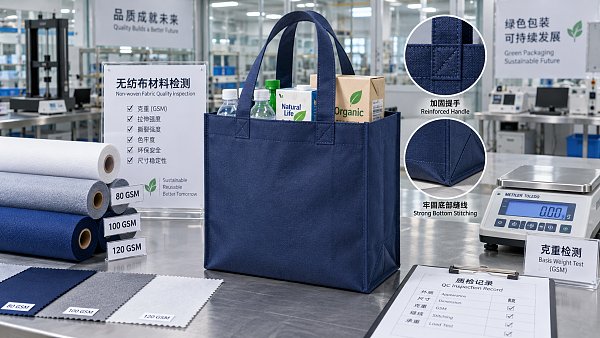
 Fabrics & YarnsWhat fabric weight works best for reusable non woven fabric bags?Non woven fabric for bags: discover the best GSM range for durability, load capacity, print quality, and cost-effective reusable bag sourcing.Textile Industry AnalystSep 30, 2026