Industry News
Curation by industry experts
Hot Articles
Popular Tags
Red Sea Crisis Extends Lead Time for Wedding Apparel Shipments to Europe
Red Sea shipping disruptions continue to exert upward pressure on Asia–Europe container freight rates, with the latest Shanghai Shipping Exchange index (released May 19, 2026) showing a 37% month-on-month increase in spot rates. As a direct consequence, average delivery time for wedding photography location apparel shipped from China to Europe has extended to 45 days — up from the prior norm of 28 days — due to longer transit via alternative routes bypassing the Suez Canal. This shift is prompting European small- and medium-sized photography studios to adopt a hybrid procurement model: ‘local fast-response small-batch orders’ combined with ‘China-based bulk inventory reserves’. The apparel logistics bottleneck is now affecting downstream creative service providers, sourcing teams, and cross-border supply chain planners.
Event Overview
According to the Shanghai Shipping Exchange’s published index dated May 19, 2026, the Asia–Europe container spot freight rate rose 37% compared to the previous month. This surge coincides with vessel rerouting around Africa, adding approximately 12 days to voyage duration. As a result, the average containerized delivery cycle for wedding photography location apparel exported from China to Europe has reached 45 days — an extension of 17 days versus the historical baseline of 28 days. European photography studios are reported shifting toward a hybrid procurement strategy combining local fast-turnaround orders and pre-positioned bulk inventory sourced from China.
Industries Affected by Segment
Direct Exporters of Wedding Apparel & Accessories
These businesses face compressed planning windows and higher working capital requirements due to longer cash-to-cash cycles. Delays directly impact order fulfillment SLAs and may trigger contractual penalties or reputational risk if not proactively communicated to European buyers.
Photography Studios & Creative Service Providers (EU-based)
Studios relying on imported Chinese-made outfits for destination shoots now confront scheduling uncertainty: extended lead times constrain booking flexibility, especially during peak wedding seasons. Some report postponing overseas shoots or substituting locally sourced garments where feasible — though options remain limited for culturally specific or high-design items.
Cross-Border Logistics & Freight Forwarding Firms
Firms handling apparel shipments on the China–Europe corridor are experiencing increased demand for visibility tools, documentation support, and contingency routing coordination. Capacity allocation and inland transport synchronization (e.g., port-to-warehouse) have become more complex amid volatile sailing schedules.
Inventory Management & Supply Chain Planners (Brands & Distributors)
Planners must now recalibrate safety stock levels and reorder triggers. The 45-day benchmark replaces the prior 28-day reference point for replenishment modeling — a change that affects warehouse utilization forecasts, financing arrangements, and seasonal inventory build-up timing.
What Enterprises and Practitioners Should Monitor and Do Now
Track official updates on Red Sea navigation advisories and Suez Canal reopening timelines
While current rerouting is driven by security concerns, any formal reassessment of maritime risk by IMO, UKMTO, or major flag states could signal inflection points in transit duration and cost — warranting real-time monitoring rather than static assumptions.
Identify and prioritize high-impact apparel categories with longest lead sensitivity
Not all wedding apparel items carry equal delay risk. Custom-embroidered gowns, non-standard sizes, or accessories requiring multi-tier component assembly are most vulnerable. Focus forecasting and buffer allocation on these subcategories first.
Distinguish between short-term operational adjustments and long-term model shifts
The ‘local fast-response + China bulk reserve’ approach observed among EU studios reflects tactical adaptation, not necessarily permanent restructuring. Monitor whether this hybrid model sustains beyond Q3 2026 — particularly as summer travel peaks conclude — before scaling infrastructure investments.
Pre-validate alternative inland transport links and bonded warehousing options in EU entry ports
With ocean leg delays now structural, efficiency gains must come from faster port discharge, customs clearance, and last-mile handoff. Pre-clearing documentation, securing bonded storage near Rotterdam or Hamburg, and aligning with local fulfillment partners can compress post-arrival lead time.
Editorial Perspective / Industry Observation
Observably, this development signals more than a temporary freight spike — it reflects a material recalibration of time-based expectations across the cross-border fashion-adjacent service chain. Analysis shows the 45-day benchmark is not merely a statistical outlier but an emerging operational floor under current routing constraints. From an industry perspective, the shift matters less as a standalone cost event and more as a catalyst accelerating segmentation in global apparel logistics: high-volume standardized goods increasingly follow predictable, inventory-led flows, while low-volume, high-variability items (e.g., bespoke photo outfits) drive renewed interest in nearshoring and agile micro-fulfillment. Current more appropriate framing is ‘structural latency adjustment’, not ‘temporary disruption’.
This situation underscores how geopolitical friction in maritime chokepoints cascades into creative-sector operations far removed from shipping lanes — revealing hidden dependencies in globally distributed aesthetic services.
Conclusion
The extended delivery timeline for wedding apparel shipments highlights how regional maritime instability translates into tangible planning constraints for service-oriented B2B segments reliant on just-in-time physical goods. It does not indicate systemic collapse in Asia–Europe trade, nor does it suggest irreversible relocation of manufacturing. Rather, it reflects a measurable, quantifiable recalibration of lead time assumptions — one that requires pragmatic, segmented responses grounded in actual shipment data and verified routing patterns. For stakeholders, the current priority is not prediction, but precision: refining visibility, validating buffers, and distinguishing between noise and durable signal in evolving logistics benchmarks.
Source Attribution
Main source: Shanghai Shipping Exchange — Asia–Europe Container Freight Index, published May 19, 2026.
Points requiring ongoing observation: Suez Canal navigation status updates; adoption rate and sustainability of the ‘local fast-response + China bulk reserve’ procurement model among EU photography studios beyond Q3 2026.
Recommended News
 Eco PackagingWhat affects the price of kraft paper rolls bought wholesale?Kraft paper rolls wholesale pricing depends on grade, basis weight, roll size, order volume, freight, and certifications. Learn how to compare landed costs and choose reliable value.Packaging Supply ExpertOct 03, 2026
 Commercial LEDHow to evaluate a canopy lights factory before placing a bulk orderCanopy lights factory evaluation guide: verify specifications, compliance, quality control, capacity, and after-sales support before placing a bulk order.Commercial Tech EditorOct 02, 2026
 Commercial LEDHow to choose lighting systems that meet workplace safety needsLighting systems for workplace safety: learn how to control glare, improve visibility, meet environmental demands, and protect workers with reliable, compliant lighting choices.Commercial Tech EditorOct 01, 2026
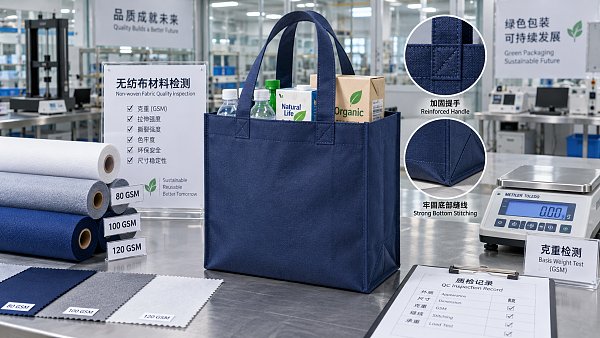
 Fabrics & YarnsWhat fabric weight works best for reusable non woven fabric bags?Non woven fabric for bags: discover the best GSM range for durability, load capacity, print quality, and cost-effective reusable bag sourcing.Textile Industry AnalystSep 30, 2026