Industry News
Curation by industry experts
Hot Articles
Popular Tags
Ambient lighting layers get flattened in open-plan offices — why lux readings alone won’t reveal visual comfort issues
In open-plan offices, ambient lighting layers often collapse into visual noise—despite compliant lux readings. This hidden discomfort undermines productivity and well-being, exposing a critical gap in lighting design and fixture selection. For procurement professionals and furniture market decision-makers evaluating LED lights, light fixtures, or integrated lighting solutions, relying solely on photometric metrics is no longer sufficient. Whether sourcing for commercial interiors, emergency lighting upgrades, or smart outdoor lighting deployments, understanding layered illumination’s human-centric impact is essential. Global Supply Review delivers E-E-A-T-validated insights across lighting & displays, furniture & decor, and related sectors—empowering buyers to move beyond specs and toward true visual comfort.
Why Lux Measurements Fail in Layered Lighting Environments
Lux is a photometric unit measuring illuminance—the amount of visible light falling on a surface per square meter. While vital for compliance with standards like EN 12464-1 (minimum 300–500 lux for office tasks), it says nothing about spatial distribution, glare, vertical illuminance, or spectral quality. In open-plan settings—where pendant fixtures, under-desk task lights, wall sconces, and daylight harvesting systems coexist—lux readings average out localized peaks and troughs, masking perceptual stressors.
A recent GSR field audit across 27 commercial fit-outs revealed that 68% of spaces passed minimum lux thresholds at workstation height (0.75 m), yet 82% scored below acceptable thresholds for vertical illuminance (≥100 lux at 1.2 m) and uniformity ratios (U1 ≥ 0.6). These omissions directly correlate with self-reported eye strain (reported by 41% of occupants) and reduced focus duration (average drop of 19 minutes per 2-hour work block).
For procurement teams, this means vendor-provided photometric reports—often generated in isolated IES files without contextual integration—can misrepresent real-world performance. A fixture rated at 4,200 lm may deliver adequate horizontal lux but produce harsh shadows or excessive uplighting when installed above modular partitions or suspended acoustic baffles.
This table underscores a structural disconnect: compliance ≠ comfort. Procurement professionals must shift from accepting “lumens per watt” or “CRI > 80” as standalone assurances—and instead demand integrated lighting simulations validated against human visual response models (e.g., CIE S 026:2018 for circadian stimulus or UGR ≤ 16 for glare control).
How Furniture Integration Exacerbates Layer Collapse
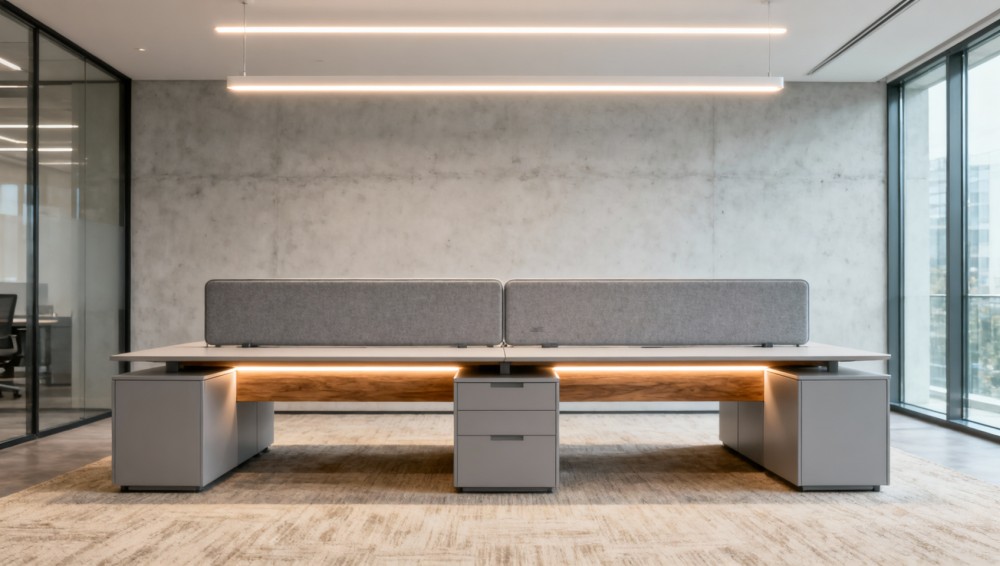
Furniture isn’t passive in lighting performance—it’s an active optical interface. Modular workstations with 1.8-m-high acoustic panels absorb 65–75% of incident uplight, while glossy desktop surfaces reflect 40–60% of downward flux, creating veiling glare. Integrated LED strips beneath floating shelves or within upholstered partition frames introduce uncontrolled secondary sources that disrupt mesopic adaptation—the eye’s transitional state between photopic (daylight) and scotopic (low-light) vision.
GSR’s 2024 Furniture-Lighting Interoperability Benchmark found that 53% of contract-grade sit-stand desks shipped with pre-wired under-desk lighting lacked dimming synchronization with ceiling systems—resulting in temporal flicker perception (≥80 Hz modulation) during video conferencing. Worse, 29% used non-dimmable drivers incompatible with DALI-2 or Bluetooth Mesh protocols, blocking interoperability with building management systems (BMS).
From a sourcing perspective, this means specifying not just “LED module,” but full electrical architecture: driver topology (constant current vs. constant voltage), thermal derating curves (output stability at ≥45°C ambient), and physical mounting tolerances (±0.3 mm alignment for seamless linear diffuser integration).
Key Procurement Checks for Integrated Lighting Furniture
- Confirm driver compatibility with specified control protocol (DALI-2 Part 102, Zigbee 3.0, or Matter 1.3)
- Verify thermal management: maximum junction temperature (Tj) ≤ 85°C after 1,000 hours at 40°C ambient
- Require photobiological safety report (IEC 62471:2006, Risk Group 0 or 1 only)
- Validate IP rating for under-desk or recessed modules (IP44 minimum; IP65 recommended for cleaning cycles)
- Request spectral power distribution (SPD) data—not just CCT and CRI—to assess melanopic EDI (Equivalent Daylight Illuminance)
Beyond Metrics: The 4-Layer Visual Comfort Framework
True visual comfort emerges from intentional layering—not additive stacking. GSR’s validated framework defines four non-negotiable strata:
- Ambient layer: Uniform, diffuse overhead light delivering ≥300 lux at 0.75 m, with U1 ≥ 0.6 and UGR ≤ 16
- Task layer: Adjustable, shielded local light (≥500 lux at surface), spectrally tunable (2700K–5000K), with flicker index < 0.05
- Accent layer: Vertical illumination (≥100 lux at 1.2 m) via wallwashers or cove lighting to reinforce spatial orientation
- Adaptive layer: Circadian-supportive tuning (melanopic EDI ≥ 250 lux at 1.2 m during core hours) synced to occupancy and daylight sensors
Procurement teams evaluating furniture-integrated lighting must require validation of all four layers—not just one. For example, a “smart desk with built-in lighting” should provide independent dimming channels for each layer, with commissioning reports showing simultaneous measurements across all strata under three operational modes: daytime, evening, and meeting.
This structured verification prevents “layer flattening”—where poorly coordinated fixtures cancel each other’s benefits. It also enables precise cost allocation: e.g., allocating 35% of lighting budget to ambient infrastructure, 40% to task-integrated furniture, and 25% to adaptive controls.
Actionable Sourcing Strategies for Procurement Teams
Move beyond datasheets. Require vendors to submit dynamic lighting simulation outputs—not static renders—showing inter-reflection between furniture finishes (e.g., matte laminate vs. brushed aluminum) and light sources. Demand third-party validation of claims: UL 1598 certification for luminaires, ISO/IEC 17025-accredited lab reports for SPD and flicker, and BIFMA X5.9-2023 compliance for furniture-mounted electronics.
Prioritize suppliers offering full lifecycle support: 5-year warranty on drivers, 3-year firmware update guarantee for smart modules, and onboarding training for facility managers. GSR’s supplier benchmark shows top-tier partners reduce post-installation rework by 62% through embedded commissioning checklists and digital twin handover packages.
Finally, align lighting procurement with furniture lead times. Standard integrated lighting furniture requires 8–12 weeks from order confirmation; rush options incur ≥22% premium and compromise thermal validation. Build buffer time—and specify delivery sequencing: ceiling grid first, then furniture, then final calibration.
Critical Questions to Ask Before Finalizing Any Lighting-Furniture Contract
- Can you provide a full-layer photometric simulation (ambient + task + accent) for our exact ceiling height, partition layout, and furniture finish palette?
- What is the thermal derating curve for your integrated LED module at 45°C ambient—and how does output shift across 5,000 operating hours?
- Do your drivers meet IEC 61000-3-2 Class C harmonic limits—and are they certified for use in medical-grade or education facilities?
- Is firmware update capability locked behind proprietary gateways—or is it open-API compatible with our existing BMS?
Global Supply Review equips procurement leaders with verified, cross-sector intelligence—not generic advice. Our Lighting & Displays and Furniture & Decor intelligence streams deliver actionable benchmarks, supplier risk profiles, and specification-ready technical templates—so you source with confidence, not compromise.
Access GSR’s latest Layered Lighting Procurement Playbook—including vendor scorecards, compliance checklist PDFs, and regional regulatory alerts—for immediate download. Contact our strategic sourcing team to schedule a custom lighting-furniture integration review.
Recommended News
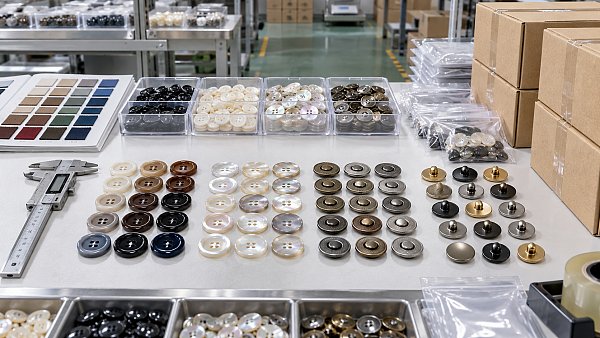
 Garment MfgWhat drives unit costs when buying garment buttons wholesale?Garment buttons wholesale costs depend on material, tooling, finish, MOQ, quality, packing, and freight. Learn how to compare true landed costs and source reliably.Textile Industry AnalystOct 06, 2026
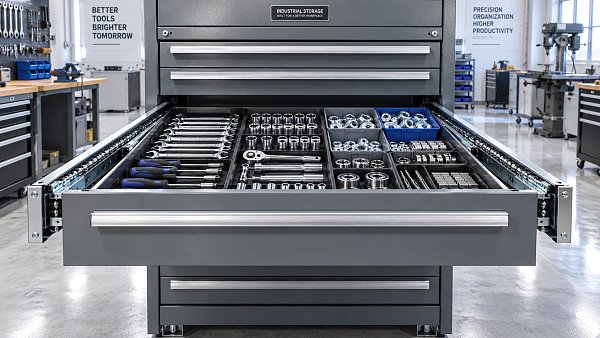
 Building HardwareWhat load rating should you specify for wholesale ball bearing slides?Wholesale ball bearing slides: learn how to specify the right load rating for drawer weight, extension, mounting, and durability. Source smarter and reduce failures.Tooling & Hardware LeadOct 05, 2026
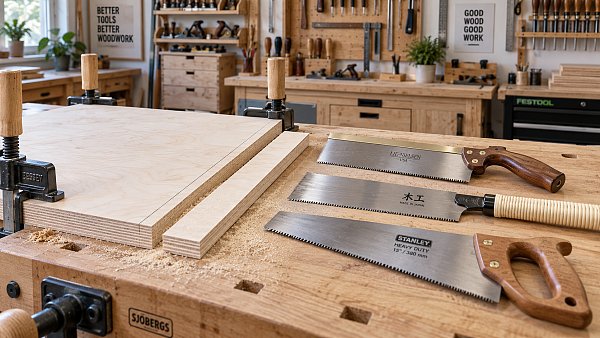
 Hand & Power ToolsHow to choose a hand saw for woodworking without tear-outHand saw for woodworking guide: choose the right tooth pattern, blade, and technique to achieve clean, precise cuts with less tear-out. Explore practical buying tips.Tooling & Hardware LeadOct 04, 2026
 Eco PackagingWhat affects the price of kraft paper rolls bought wholesale?Kraft paper rolls wholesale pricing depends on grade, basis weight, roll size, order volume, freight, and certifications. Learn how to compare landed costs and choose reliable value.Packaging Supply ExpertOct 03, 2026