Industry News
Curation by industry experts
Hot Articles
Popular Tags
Curved LED Video Wall vs Flat: Which Fits Large Venues Better?
For large venues, choosing between a curved LED video wall and a flat display is more than a design decision—it directly affects audience immersion, visibility, installation flexibility, and long-term ROI. This article compares both options from a practical business perspective, helping decision-makers identify which solution better supports performance goals, brand impact, and operational efficiency in demanding commercial environments.
For procurement leaders, facility operators, and brand owners, the choice often comes down to 4 business questions: audience impact, structural fit, maintenance complexity, and total cost over a 3- to 7-year lifecycle. A curved LED video wall can transform how content is perceived in arenas, auditoriums, convention centers, and flagship retail spaces, but it is not automatically the right answer for every large-format deployment.
Flat LED walls remain a strong option where viewing geometry is straightforward, budgets are tightly managed, and service access must be fast. The better solution depends on venue depth, seating spread, content type, ambient light, control system integration, and the commercial value of visual differentiation.
Understanding the Core Difference Between Curved and Flat LED Walls
At the most basic level, a flat LED wall creates a planar display surface, while a curved LED video wall uses cabinet geometry or flexible modules to form a concave or convex arc. In large venues, common curvature ranges often fall between a gentle arc for wide-stage coverage and a more pronounced wraparound shape for immersive installations.
The design change may look cosmetic at first, but it affects at least 5 operational factors: sightline uniformity, audience engagement, structural engineering, installation tolerance, and service access. In venues with seating spread across 120 to 180 degrees, the display shape can influence whether content feels direct and legible or distant and distorted.
Why Shape Matters in Large Venues
Large venues rarely have a single ideal viewing axis. Stadium lounges, conference halls, worship spaces, transport hubs, and experience centers all involve viewers approaching from different angles and distances, sometimes from 5 meters and sometimes from 50 meters or more.
A curved LED video wall can reduce edge falloff in visual attention by bringing the outer portions of the screen closer to side viewers. That does not change pixel pitch, but it can improve perceived balance across the display, especially when the wall is very wide relative to viewing distance.
Typical Commercial Use Cases
- Convention centers with broad audience seating and live presentation formats
- Broadcast-style stages where visual depth and camera framing matter
- Luxury retail and automotive showrooms where premium brand perception is a priority
- Command spaces or auditoriums needing better side-angle viewing consistency
The table below outlines the practical differences most enterprise buyers review during early-stage specification and sourcing.
In most sourcing reviews, curved systems win on experience value and visual differentiation, while flat systems win on simplicity and standardization. The decision should therefore be tied to venue purpose, not only hardware preference.
When a Curved LED Video Wall Performs Better
A curved LED video wall is usually the better fit when audience engagement is a measurable commercial objective. This is especially true in venues where dwell time, premium branding, ticket value, sponsorship visibility, or stage presence directly affects revenue outcomes.
1. Wide Viewing Angles and Audience Distribution
If viewers are spread across a broad horizontal field, a curved format helps create more consistent perception from left, center, and right positions. In a hall with 150-degree seating spread, the edge panels of a flat wall can feel visually remote, while a curved layout softens that effect.
2. Premium Experience-Driven Environments
High-end retail, branded experience centers, corporate lobbies, and launch stages often use a curved LED video wall to signal innovation and quality. For enterprise buyers, that aesthetic effect is not superficial; it supports brand memory, visitor engagement, and visual positioning in competitive spaces.
3. Panoramic and Immersive Content Delivery
Curved layouts are well suited to panoramic motion graphics, environmental visuals, and event backdrops designed to fill peripheral vision. In practical terms, this can improve the perceived scale of content without increasing the display height or adding separate side screens.
Business Advantages Often Seen in Curved Installations
- Stronger visual impact for sponsorship, product launches, and keynote events
- Better use of wide architectural surfaces in atriums and stage environments
- Improved premium perception in hospitality and flagship commercial spaces
- More differentiated venue identity compared with standard flat displays
However, a curved LED video wall should be specified carefully. If the curvature is too aggressive for the content type or room depth, text-heavy presentations and spreadsheets may lose visual comfort for some viewers. The shape should match the use case, not overpower it.
When Flat LED Walls Are the Smarter Commercial Choice
Flat LED walls remain the practical standard for a reason. In many large venues, they deliver the best balance of cost control, straightforward content management, and service efficiency. For organizations focused on operational reliability over visual theatrics, flat systems often provide stronger value.
Standardized Content Workflows
Most commercial content is still built on standard aspect ratios and rectangular canvases. Presentation decks, ads, wayfinding graphics, scoreboards, and live feeds all map naturally onto flat displays. That reduces adaptation work, shortens deployment timelines, and lowers design revision cycles.
Lower Structural and Installation Complexity
A flat wall typically requires fewer custom structural considerations. Alignment tolerances are easier to manage, spare modules are simpler to hold in inventory, and installation crews can often complete setup faster. In large projects, even a 1- to 2-day reduction in commissioning time can have budget significance.
Easier Long-Term Service Planning
Service access matters over years, not just on handover day. Flat systems are often easier to inspect, clean, recalibrate, and repair, particularly in venues where back-end clearance is limited to less than 800 mm or where maintenance must occur during short overnight windows.
The next table compares common venue conditions and indicates which display type tends to fit better during procurement evaluation.
This comparison shows that flat walls are not a lesser option. In many commercial deployments, they are simply the more efficient match for viewing behavior, technical operations, and budget discipline.
Procurement Factors That Should Drive the Final Decision
Enterprise buyers should avoid making the decision on appearance alone. A better sourcing process uses a 6-point framework that includes venue geometry, pixel pitch, brightness target, service method, content profile, and installation schedule.
Venue Geometry and Viewing Distance
Start with the room. Measure primary viewing distance, side-angle exposure, ceiling height, and structural load conditions. A display viewed mainly from 20 to 40 meters with central seating may not gain much from curvature, while a long wall viewed from multiple side entries might benefit clearly.
Pixel Pitch and Content Legibility
For indoor large venues, common pixel pitch selections may range from fine-pitch options for close viewing to wider pitch options for longer distances. If the display must show dense text, pricing tables, or data dashboards, legibility may outweigh the immersive benefit of a curved LED video wall.
Installation and Maintenance Access
Ask whether the venue supports front service, rear service, or a hybrid method. Also assess how many maintenance interventions are realistic per year and whether access equipment will interrupt venue operations. Service planning often affects lifetime cost more than initial hardware price differences.
Practical Buyer Checklist
- Confirm audience viewing zones across at least 3 primary seat or traffic areas
- Define whether content is mostly text, video, live camera, or immersive motion design
- Review structural support and installation tolerances before final screen geometry approval
- Plan spare parts, calibration procedures, and response time expectations for 12 to 36 months
- Check whether the display must integrate with audio, control, or broadcast infrastructure
For global sourcing teams, supplier capability is equally important. Buyers should verify cabinet consistency, module replacement process, packaging protection for international shipment, and technical documentation quality before committing to a curved or flat configuration.
Implementation Risks, Hidden Costs, and How to Reduce Them
The biggest mistake in large-venue LED procurement is underestimating non-screen costs. Mounting structures, signal distribution, content formatting, installation labor, and post-install calibration can materially change project economics. This is especially true for a curved LED video wall, where precision assembly is more demanding.
Common Risk Areas
One frequent risk is choosing curvature before confirming content strategy. Another is approving a display shape without validating service clearance. A third is ignoring how shipping and on-site handling affect cabinet alignment, particularly in large projects involving phased delivery over 2 to 6 weeks.
Cost Areas Buyers Should Map Early
Decision-makers should budget for at least these 5 categories: display hardware, support structure, control system, installation and calibration, and ongoing maintenance support. If content must be redesigned for a curved canvas, creative adaptation should also be treated as a measurable cost line.
Risk Mitigation Steps
- Run a pre-install venue survey with structural and sightline review
- Request detailed cabinet and maintenance access drawings
- Align content templates with screen geometry before production
- Define acceptance standards for brightness uniformity, seam alignment, and control performance
- Set support response expectations for the first 90 days after commissioning
For many organizations, the most effective path is not asking which technology is universally better, but which one reduces friction while supporting the venue’s revenue or communication objective. That question usually produces a clearer procurement outcome than feature comparison alone.
Which Option Fits Large Venues Better?
A curved LED video wall fits large venues better when the project depends on immersive impact, wide-angle audience engagement, and premium architectural presence. It is particularly compelling for brand-led environments, high-visibility event stages, and spaces where visual distinction has commercial value.
A flat LED wall fits better when the priority is operational simplicity, standardized content playback, easier maintenance, and disciplined project budgeting. In many conference, transport, education, and multipurpose event applications, that practical advantage is decisive.
The right decision comes from matching screen geometry to audience behavior, venue constraints, and lifecycle economics. If you are evaluating a curved LED video wall for a large venue or comparing it against a flat alternative, Global Supply Review can help you assess sourcing options, technical fit, and implementation priorities with a clearer commercial lens.
Contact us to discuss your project requirements, request a tailored evaluation framework, or explore more display sourcing solutions for large-scale commercial environments.
Recommended News
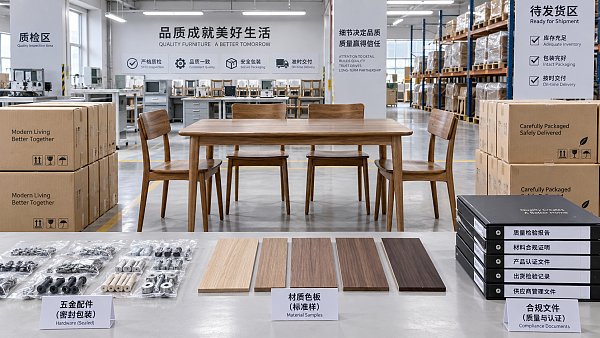
 Office FurnitureHow supplier scorecards reduce risk in furniture procurementFurniture procurement supplier management becomes more resilient with supplier scorecards that track quality, delivery, compliance, and corrective actions. Learn how to reduce sourcing risk.Interior Sourcing LeadSep 26, 2026
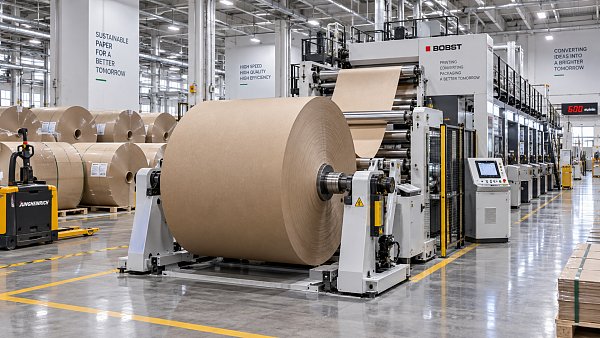
 Office Paper & Printing PaperHow roll diameter affects downtime when using jumbo paper rollsJumbo paper rolls can cut changeovers and downtime—if your unwinder, handling, and tension control can support them. Find the optimal roll diameter for smoother output.Packaging Supply ExpertSep 25, 2026
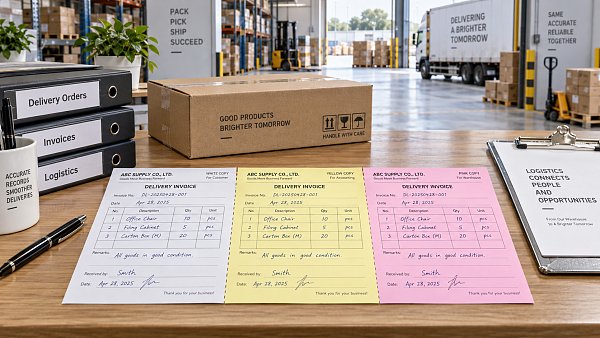
 Office Paper & Printing PaperWhen does carbonless paper for invoices reduce billing errors?Carbonless paper for invoices reduces billing errors by creating clear, consistent copies for deliveries, service calls, and approvals. Learn when it strengthens billing control.Packaging Supply ExpertSep 24, 2026
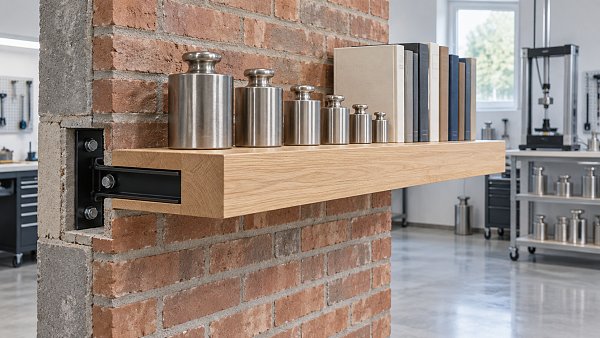
 Home DecorHow to compare floating wall shelves suppliers for consistent load capacityFloating wall shelves supplier comparison guide: evaluate load capacity, brackets, wall fixings, testing, and production consistency before you buy.Interior Sourcing LeadSep 23, 2026