Industry News
Curation by industry experts
Hot Articles
Popular Tags
India BIS Mandates IS 13252 Part 1:2026 Registration for Wedding Photography LED Lamps
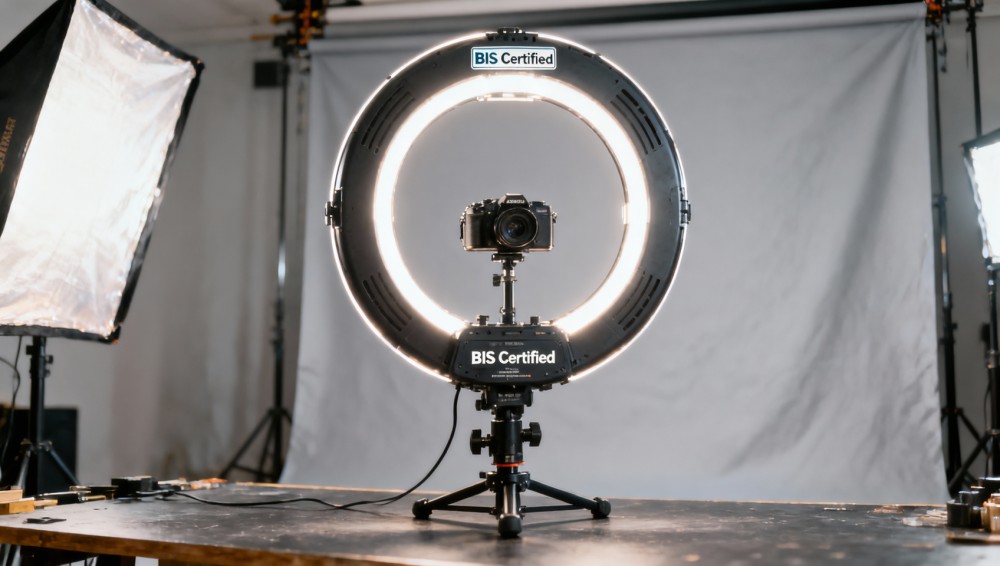
India’s Bureau of Indian Standards (BIS) issued an urgent notice on May 14, 2026, requiring all LED lighting products used in wedding photography—including ring lights, softboxes, and smartphone fill lights—to complete mandatory certification under IS 13252 Part 1:2026 by July 13, 2026. This development directly affects exporters, manufacturers, e-commerce sellers, and distributors operating in or supplying to the Indian consumer electronics and professional photography equipment markets—and signals a tightening of regulatory enforcement in India’s rapidly growing imaging accessories segment.
Event Overview
On May 14, 2026, the Bureau of Indian Standards (BIS) published Notice Ref: BIS/ETD/LED/2026/044, mandating compulsory registration under IS 13252 Part 1:2026 for all LED lamps intended for wedding photography applications sold in India. The deadline for compliance is July 13, 2026—60 days from the notice date. The standard covers three technical domains: electrical safety, electromagnetic compatibility (EMC), and photobiological safety. Products failing to obtain valid BIS registration by the deadline will be removed from e-commerce platforms and subject to seizure at physical retail points.
Industries Affected
Direct Exporters and Importers
Companies exporting LED photography lamps from China, Vietnam, or other manufacturing hubs into India are directly affected because BIS registration must be held by the Indian importer or authorized local representative. Non-compliant consignments risk customs rejection or post-import verification failure, disrupting shipment timelines and increasing compliance overhead.
Original Equipment Manufacturers (OEMs) and Contract Manufacturers
OEMs producing white-label or private-label wedding photography LED lamps for Indian brands must ensure their designs meet IS 13252 Part 1:2026 requirements before delivery. Product redesigns or component substitutions—especially for drivers, optics, or thermal management—may be needed to satisfy photobiological safety or EMC test criteria, affecting lead times and unit costs.
E-commerce Sellers and Brand Distributors
Online sellers listing ring lights or smartphone fill lights on Indian platforms (e.g., Amazon.in, Flipkart) must verify BIS registration status before July 13, 2026. Listings without valid registration numbers face automatic delisting; reinstatement requires full documentation submission and approval, with no expedited review pathway confirmed.
Supply Chain and Certification Support Providers
Third-party testing labs, BIS liaison agents, and certification consultants handling registration applications are experiencing increased demand. However, BIS has not announced capacity expansion or fast-track processing—meaning application backlogs may delay approvals for late applicants, especially those requiring retesting due to initial non-conformities.
Key Focus Areas and Recommended Actions
Monitor Official Updates from BIS and Designated Laboratories
Verify whether BIS has issued supplementary guidance—such as updated test protocols, accepted laboratory lists, or clarification on scope exclusions (e.g., battery-powered vs. mains-powered units). No such updates have been publicly released as of the notice date, but stakeholders should track BIS’s official portal and accredited labs’ bulletins.
Confirm Product Scope and Classification Before Submission
IS 13252 Part 1:2026 applies specifically to LED lamps “intended for use in wedding photography.” Companies must assess whether their product labeling, marketing materials, or user manuals explicitly reference wedding or portrait photography use—even if functionally identical to general-purpose lighting. Ambiguous positioning may trigger classification disputes during review.
Distinguish Between Policy Signal and Operational Readiness
The notice is enforceable as of July 13, 2026, but enforcement mechanisms (e.g., frequency of marketplace audits, penalties for non-compliance, or grace periods for pending applications) remain undefined. Businesses should treat the deadline as binding while preparing contingency plans—for example, holding compliant stock separately or pausing new listings until registration confirmation is received.
Initiate Documentation and Testing Well Ahead of Deadline
Testing cycles for electrical safety, EMC, and photobiological safety typically require 4–8 weeks depending on lab workload and first-time pass rate. Applications also require Indian address verification, authorized signatory documentation, and factory audit readiness. Firms still preparing samples or internal test reports should prioritize these steps now—not after June 1, 2026—to avoid missing the cutoff.
Editorial Perspective / Industry Observation
Observably, this notice reflects BIS’s broader shift toward sector-specific enforcement in consumer electronics—moving beyond generic safety standards to application-driven requirements. It is less a standalone regulatory event and more a signal of increasing granularity in India’s conformity assessment framework. Analysis shows that similar targeted mandates have preceded wider harmonization efforts (e.g., earlier BIS rules for LED tube lights or power adapters), suggesting potential future extensions to other photography or videography lighting categories. From an industry standpoint, this is best understood not as a one-off compliance hurdle, but as an early indicator of how India may align its technical regulations with global trends in photobiological risk management and digital ecosystem governance.
Conclusion: This BIS notice establishes a clear, time-bound regulatory requirement with immediate operational consequences for firms engaged in the Indian wedding photography LED lamp value chain. Its significance lies not only in the registration mandate itself—but in the precedent it sets for application-based, rather than product-category-based, regulation. Currently, it is more accurately interpreted as an enforceable compliance milestone than a policy proposal under discussion; however, its long-term implications depend on subsequent implementation patterns and stakeholder feedback mechanisms—not yet disclosed by BIS.
Source: Bureau of Indian Standards (BIS), Notice Ref: BIS/ETD/LED/2026/044, issued May 14, 2026.
Note: Ongoing monitoring is advised for any clarifications, laboratory accreditation updates, or enforcement guidelines issued by BIS prior to July 13, 2026.
Recommended News
 Carton & PlasticsWhat drives breakage rates in bulk wine bottles wholesale orders?Bulk wine bottles wholesale buyers: discover what drives breakage rates, from glass quality and packaging to pallet loading, and reduce costly claims.Packaging Supply ExpertSep 27, 2026
 Office FurnitureHow supplier scorecards reduce risk in furniture procurementFurniture procurement supplier management becomes more resilient with supplier scorecards that track quality, delivery, compliance, and corrective actions. Learn how to reduce sourcing risk.Interior Sourcing LeadSep 26, 2026
 Office Paper & Printing PaperHow roll diameter affects downtime when using jumbo paper rollsJumbo paper rolls can cut changeovers and downtime—if your unwinder, handling, and tension control can support them. Find the optimal roll diameter for smoother output.Packaging Supply ExpertSep 25, 2026
 Office Paper & Printing PaperWhen does carbonless paper for invoices reduce billing errors?Carbonless paper for invoices reduces billing errors by creating clear, consistent copies for deliveries, service calls, and approvals. Learn when it strengthens billing control.Packaging Supply ExpertSep 24, 2026