Industry News
Curation by industry experts
Hot Articles
Popular Tags
JIS C 8105-2:2026 Enforces TGIR Testing for Wedding Photography LED Lamps
On May 16, 2026, the Japanese Industrial Standards Committee (JISC) officially published JIS C 8105-2:2026 — Photography LED Luminaires – Flicker & Transient Ghost Image Requirements. This standard introduces the first mandatory quantitative metric for ‘Transient Ghost Image Reduction (TGIR)’, requiring LED lighting equipment used in wedding photography to suppress visible image trailing during high-speed continuous shooting (≥12 fps). Exporters of LED photography lamps to Japan — particularly those supplying the wedding and studio imaging segments — should closely monitor compliance timelines and technical implications, as the standard becomes enforceable on October 1, 2026.
Event Overview
The Japanese Industrial Standards Committee (JISC) released JIS C 8105-2:2026 on May 16, 2026. The standard specifies flicker and transient ghost image requirements for LED luminaires used in photography applications. It defines a new measurable parameter — Transient Ghost Image Reduction (TGIR) — and mandates that wedding photography LED lamps must not produce visually perceptible image drag under ≥12 fps shooting conditions. Enforcement begins on October 1, 2026. The standard is expected to affect approximately 37% of China’s LED photography lamp exports to Japan, according to publicly disclosed scope statements.
Impact on Specific Industry Segments
Direct Exporters to Japan
Export-oriented manufacturers supplying LED photography lamps to Japanese distributors or retailers will face immediate conformity pressure. Non-compliant products risk customs rejection or market withdrawal after October 1, 2026. Impact manifests primarily in product certification lead time, test report validity, and potential redesign cycles.
LED Optical Driver IC Suppliers
Since TGIR performance depends heavily on current stability and transient response of driver circuits, suppliers of LED driver ICs serving the photography lamp segment may see revised design specifications from downstream clients. Demand may shift toward ICs with faster loop response, lower output impedance, and tighter ripple control — especially for constant-current drivers operating above 1 kHz switching frequencies.
Thermal Management Component Manufacturers
TGIR compliance requires stable LED junction temperature during rapid intensity modulation. This increases reliance on effective heat dissipation structures. Manufacturers of aluminum heatsinks, thermal interface materials, and active cooling modules may observe heightened specification requests — particularly around transient thermal resistance (Rth,j-c) and step-response thermal behavior — rather than steady-state metrics alone.
Key Focus Areas and Recommended Actions for Affected Enterprises
Monitor official JISC implementation guidance and test method details
JIS C 8105-2:2026 references test procedures still under finalization by JISC-affiliated laboratories. Enterprises should track updates from JISC’s Technical Committee TC 92 (Lighting Equipment) and confirm whether accredited third-party labs in China or Japan have completed method validation for TGIR measurement.
Prioritize models with high-speed sync capability for pre-certification testing
Products marketed for wedding or studio use — especially those supporting TTL or HSS (High-Speed Sync) — are most likely within scope. Exporters should identify these SKUs early and allocate samples for TGIR evaluation ahead of the October 2026 deadline to avoid last-minute delays.
Distinguish between regulatory signal and operational readiness
The standard’s publication signals formal intent, but full enforcement depends on inspection protocols and customs enforcement capacity. Enterprises should treat the May 2026 release as a technical preparation trigger — not yet a trade barrier — and verify whether Japanese importers require pre-shipment TGIR reports before October 2026.
Review supply chain dependencies for optical drivers and thermal components
Because TGIR performance involves co-design of driver ICs, PCB layout, and heatsink integration, enterprises should initiate cross-functional reviews with key component suppliers. Confirm availability of driver ICs qualified for >12 fps modulation stability and assess lead times for thermally optimized mechanical housings.
Editorial Perspective / Industry Observation
Observably, JIS C 8105-2:2026 functions less as an isolated product safety rule and more as a technical benchmark signaling Japan’s tightening alignment between lighting performance and imaging system interoperability. Analysis shows this is the first national standard globally to codify transient visual artifacts — distinct from traditional flicker metrics — as a quantifiable photometric requirement. From an industry perspective, it reflects growing recognition that LED lighting quality in professional imaging contexts extends beyond color accuracy and CRI into dynamic electro-optical fidelity. Current interpretation suggests this is primarily a signal stage: while enforcement starts October 2026, widespread testing infrastructure and supplier capability development remain works in progress. Continued observation is warranted on how Japanese market players interpret ‘visually perceptible’ thresholds and whether test methodologies converge with emerging IEC or CIE proposals.
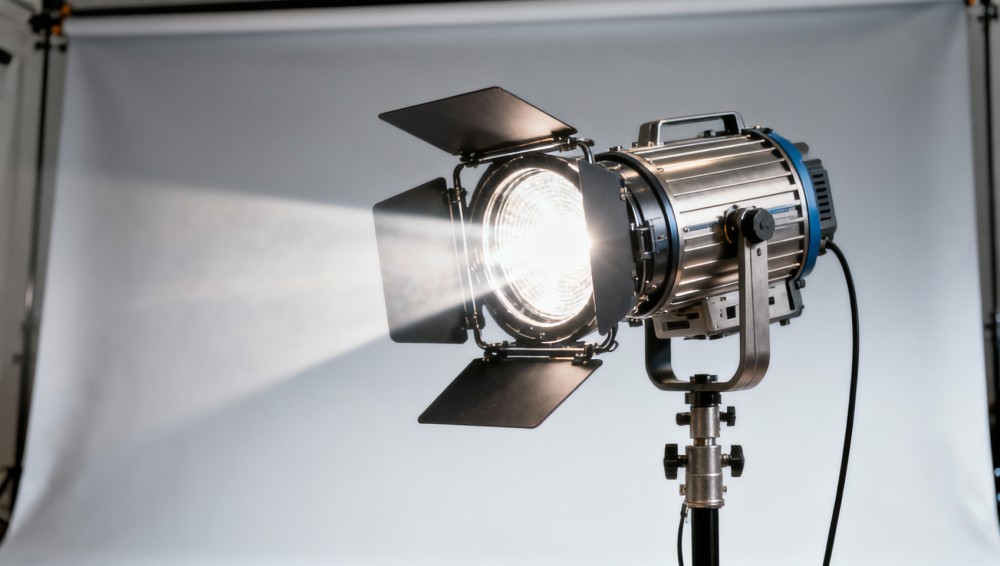
In summary, JIS C 8105-2:2026 marks a targeted regulatory evolution — not a broad-based market shift — focused on eliminating transient optical artifacts in a specific application niche. Its significance lies in raising the technical bar for LED driver and thermal subsystem integration in professional photography lighting. For stakeholders, it is best understood as a forward-looking technical alignment requirement rather than an immediate compliance crisis; proactive component-level engagement and selective pre-validation represent the most pragmatic response path at this stage.
Source: Japanese Industrial Standards Committee (JISC), official release of JIS C 8105-2:2026 on May 16, 2026.
Notes for ongoing observation: Finalized TGIR test methodology documentation, accreditation status of testing laboratories in Asia, and enforcement practices by Japanese customs authorities post-October 2026 remain pending confirmation.
Recommended News
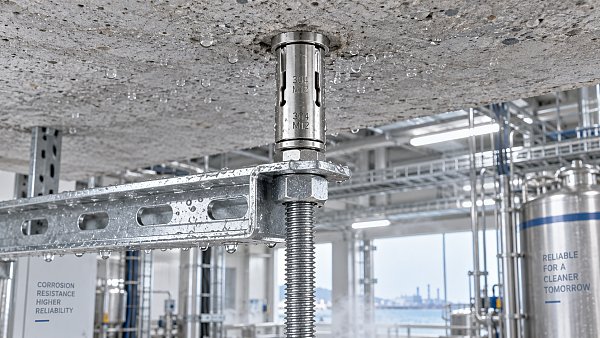
 Industrial FastenersWhen do zinc drop in anchors need corrosion-resistant coatings?Zinc drop in anchors need corrosion-resistant coatings in damp, outdoor, chloride-rich, or chemical environments. Learn how to select durable, approved protection.Tooling & Hardware LeadSep 29, 2026
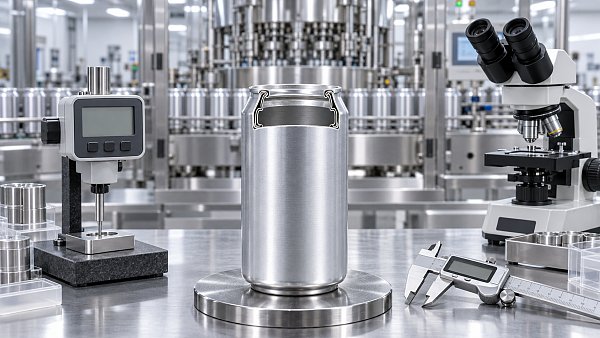
 Carton & PlasticsHow to assess seam quality in 250ml aluminum beverage cansLearn how to assess seam quality in 250ml aluminum beverage cans with practical visual checks, precise measurements, teardown methods, and defect-control guidance.Packaging Supply ExpertSep 28, 2026
 Carton & PlasticsWhat drives breakage rates in bulk wine bottles wholesale orders?Bulk wine bottles wholesale buyers: discover what drives breakage rates, from glass quality and packaging to pallet loading, and reduce costly claims.Packaging Supply ExpertSep 27, 2026
 Office FurnitureHow supplier scorecards reduce risk in furniture procurementFurniture procurement supplier management becomes more resilient with supplier scorecards that track quality, delivery, compliance, and corrective actions. Learn how to reduce sourcing risk.Interior Sourcing LeadSep 26, 2026