Industry News
Curation by industry experts
Hot Articles
Popular Tags
Malaysia MITI: LED Studio Lights Require Energy Label & Chinese Manual from Jul 2026
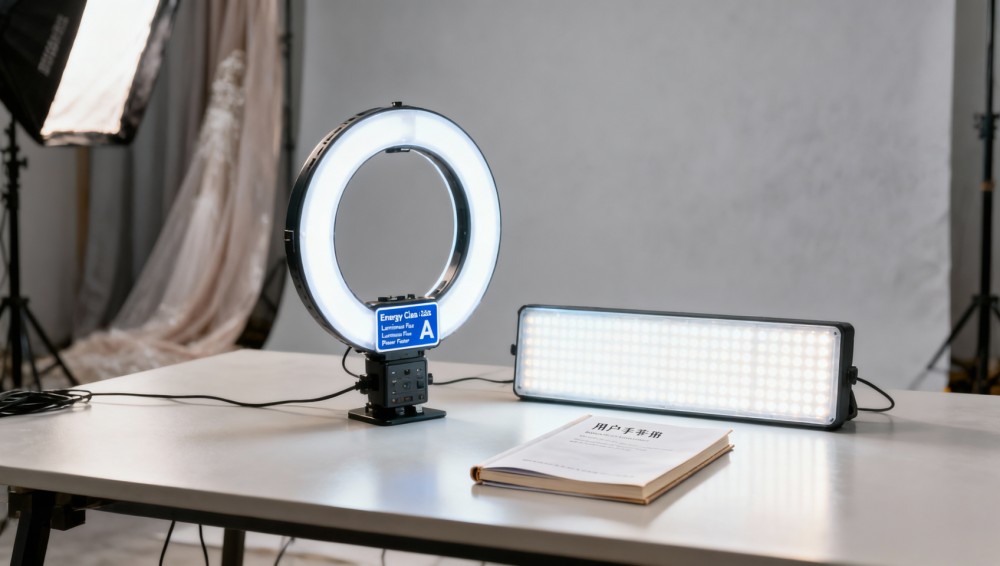
On May 16, 2026, Malaysia’s Ministry of International Trade and Industry (MITI) issued an urgent technical advisory requiring importers of LED studio lighting—specifically ring lights and panel lights used in bridal photography—to submit both a mandatory energy label compliant with MS 2391:2023 and a certified Chinese-language user manual starting July 1, 2026. This requirement applies alongside existing SIRIM certification and directly affects exporters and supply chain actors focused on the Malaysian market.
Event Overview
On May 16, 2026, Malaysia’s Ministry of International Trade and Industry (MITI) released an official technical advisory addressed to all importers. It states that, effective July 1, 2026, all imported LED studio lighting products—including ring lights and panel lights intended for bridal photography—must be accompanied by: (1) an energy label conforming to the national standard MS 2391:2023 (specifying energy efficiency class, luminous flux, and power factor); and (2) a Chinese-language user manual verified by an accredited translation service. Failure to submit both documents will result in customs clearance suspension at Kuala Lumpur Port.
Industries Affected
Direct Exporters and Trading Companies
These entities are directly responsible for documentation compliance at Malaysian customs. The new requirement introduces a dual-document dependency—beyond SIRIM certification—that may delay shipments if labeling or manual submission is incomplete or non-compliant. Delays could trigger contractual penalties, storage fees, or order cancellations.
LED Lighting Manufacturers (OEM/ODM)
Manufacturers supplying white-label or custom-branded studio lights to exporters must now embed energy labeling data into product design and packaging, and provide source files for certified Chinese translations. Internal quality control processes must verify label accuracy against MS 2391:2023—not just generic energy claims—before shipment.
Distribution and Channel Partners in Malaysia
Local distributors and e-commerce sellers handling bridal photography gear must validate documentation upstream before accepting inventory. Inbound stock without pre-cleared labels or manuals risks being held at port, disrupting shelf readiness and promotional timelines—especially ahead of peak wedding seasons.
Key Points for Enterprises and Practitioners to Monitor and Act On
Track official updates on implementation scope and verification procedures
MITI’s advisory references MS 2391:2023 but does not specify whether third-party lab testing is required for label validation, nor whether self-declaration is permitted. Importers should monitor MITI and SIRIM announcements for clarification ahead of July 2026.
Confirm applicability to specific product categories and configurations
The advisory explicitly names “ring lights” and “panel lights” for bridal photography—but does not define technical thresholds (e.g., wattage, luminous flux range) or clarify whether battery-powered or USB-C–powered variants are included. Exporters should cross-check product specifications against MITI’s forthcoming guidance.
Distinguish between policy signal and operational readiness
This is a regulatory enforcement action—not a consultation draft. As of May 16, 2026, the timeline (July 1, 2026) and consequences (customs hold) are fixed. Businesses should treat this as binding, not provisional, and align internal workflows accordingly.
Prepare documentation infrastructure ahead of first shipment
Securing certified Chinese translations takes time—especially with technical accuracy review and notarization. Manufacturers and exporters should initiate translation contracts and label design reviews no later than June 2026 to avoid bottlenecks. Pre-submission coordination with Malaysian customs brokers is recommended.
Editorial Perspective / Industry Observation
Observably, this advisory signals a tightening of Malaysia’s post-market compliance framework—not just for safety, but for energy transparency and consumer-facing documentation. Analysis shows it targets a documented gap: many Chinese-made studio lights enter Malaysia with minimal local-language support, leading to misuse and inconsistent energy performance reporting. From an industry perspective, this is less about sudden market access restriction and more about formalizing expectations for documentation localization—a trend increasingly visible across ASEAN electronics import regimes. Current attention should focus on execution readiness rather than policy reversal likelihood.
In summary, MITI’s advisory represents a concrete, near-term compliance milestone for exporters of LED studio lighting to Malaysia—not a broad-based trade barrier, but a targeted documentation upgrade. It reflects growing regulatory emphasis on end-user information integrity and energy accountability. For affected businesses, the most constructive interpretation is operational: this is a defined, date-bound requirement demanding coordinated preparation across manufacturing, translation, and customs functions—rather than a strategic inflection point requiring market reevaluation.
Source: Official technical advisory issued by Malaysia’s Ministry of International Trade and Industry (MITI), dated May 16, 2026. Note: Implementation details—including accepted translation accreditation bodies and label verification pathways—remain subject to further notice and are under active observation.
Recommended News
 Industrial FastenersWhen do zinc drop in anchors need corrosion-resistant coatings?Zinc drop in anchors need corrosion-resistant coatings in damp, outdoor, chloride-rich, or chemical environments. Learn how to select durable, approved protection.Tooling & Hardware LeadSep 29, 2026
 Carton & PlasticsHow to assess seam quality in 250ml aluminum beverage cansLearn how to assess seam quality in 250ml aluminum beverage cans with practical visual checks, precise measurements, teardown methods, and defect-control guidance.Packaging Supply ExpertSep 28, 2026
 Carton & PlasticsWhat drives breakage rates in bulk wine bottles wholesale orders?Bulk wine bottles wholesale buyers: discover what drives breakage rates, from glass quality and packaging to pallet loading, and reduce costly claims.Packaging Supply ExpertSep 27, 2026
 Office FurnitureHow supplier scorecards reduce risk in furniture procurementFurniture procurement supplier management becomes more resilient with supplier scorecards that track quality, delivery, compliance, and corrective actions. Learn how to reduce sourcing risk.Interior Sourcing LeadSep 26, 2026