Industry News
Curation by industry experts
Hot Articles
Popular Tags
Japan TELEC Regulation Effective for Wireless Mics in Wedding Photography
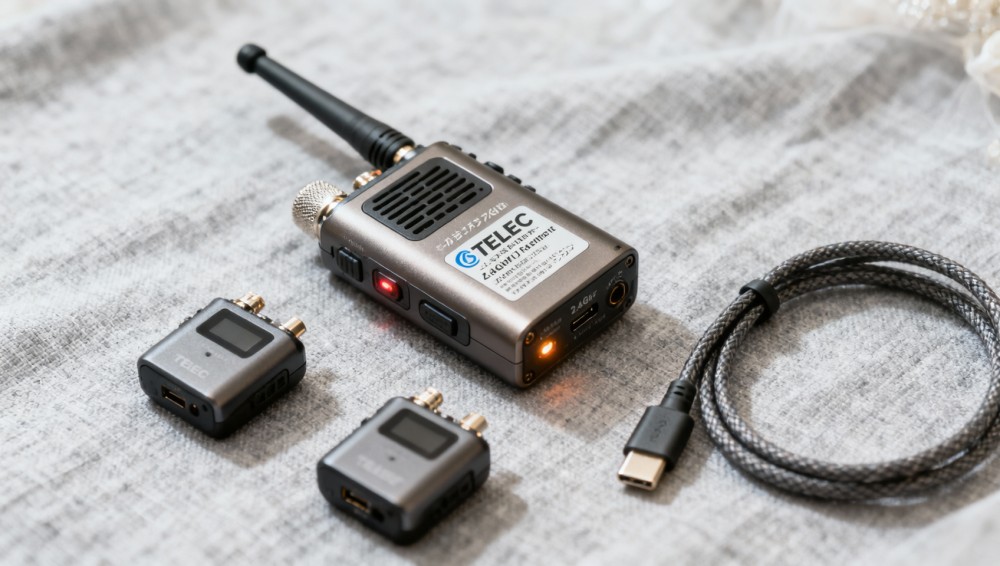
Starting May 20, 2026, Japan’s Radio Law mandates TELEC (Technical Conformity Certification) for all radio-transmitting devices—including wireless microphone transmitters used in wedding photography—prior to import. This requirement directly affects exporters, OEMs, and distributors supplying such equipment to the Japanese market, with implications for customs clearance, compliance costs, and channel access.
Event Overview
Effective May 20, 2026, Japan’s Ministry of Internal Affairs and Communications (MIC) enforces mandatory TELEC certification under the Radio Law for all active radio-emitting devices imported into Japan. This includes wireless microphone transmitters deployed in professional photography and videography settings—specifically those used in wedding photography services. Certification requires verification of radio frequency parameters, electromagnetic compatibility (EMC), and proper labeling. Non-compliant products risk detention or rejection at Japanese customs.
Industries Affected by Segment
Direct Exporters and Trading Companies
These entities face immediate impact on shipment scheduling and documentation readiness. TELEC certification must be completed prior to customs declaration; absence of valid certification halts import processing. Impact manifests as delayed delivery timelines, potential storage fees, and contractual penalties if delivery windows are missed.
OEM and Contract Manufacturers
OEMs producing wireless microphones for Japanese-bound brands must now integrate TELEC testing and certification into product development cycles. Impact includes extended time-to-market, added cost for RF/EMC lab testing, and revised bill-of-materials to ensure label compliance (e.g., TELEC ID marking on device and packaging).
Distributors and Channel Partners
Distributors handling wedding photography gear—including bundled kits with wireless mics—must verify TELEC status before accepting inventory. Impact includes increased pre-arrival due diligence, possible stock write-downs for uncertified units already in transit or warehouse, and renegotiation of supplier liability terms.
Key Focus Areas and Recommended Actions
Monitor Official MIC Guidance and TELEC Application Updates
Analysis shows that MIC may issue clarifications on scope interpretation—for example, whether legacy devices already in Japan but newly imported post-May 2026 require re-certification. Stakeholders should track MIC notices and accredited certification body bulletins for updates.
Verify Certification Status for High-Risk SKUs Ahead of Shipment
Observably, wireless microphone transmitters operating in the 1.9 GHz, 2.4 GHz, and 5.8 GHz bands—commonly used in prosumer wedding audio kits—are most likely subject to TELEC review. Exporters should prioritize these SKUs for pre-clearance validation.
Distinguish Between Regulatory Signal and Operational Readiness
From industry perspective, the May 20, 2026 date reflects an enforcement deadline—not a grace period extension. Certification cannot be retroactively applied after arrival. Businesses should treat pending shipments scheduled for late April or early May 2026 as high-risk and confirm TELEC status before vessel departure.
Update Supplier Agreements and Logistics Coordination Protocols
Current more suitable approach is to revise purchase orders and logistics service level agreements to include TELEC documentation submission deadlines, label verification checkpoints, and contingency clauses for customs delays caused by non-compliance.
Editorial Perspective / Industry Observation
Observably, this regulation is not a new policy introduction but a formalization of existing TELEC requirements—now explicitly extended to consumer-facing professional audio equipment previously treated as low-priority under enforcement discretion. Analysis shows it signals tightening regulatory scrutiny on ‘non-traditional’ RF devices entering Japan via B2B channels. It is best understood as an operational inflection point rather than a one-time compliance event: ongoing TELEC maintenance (e.g., model changes, firmware updates affecting RF performance) will remain mandatory. The broader implication is that Japanese market access for wireless AV peripherals is shifting from documentation-light to certification-critical.
Conclusion
This TELEC enforcement update marks a structural shift in regulatory expectations for wireless audio equipment targeting Japan—not merely a procedural change. Its significance lies in the binding linkage between technical certification and physical market entry. For affected businesses, it is more appropriately understood as a baseline requirement for continued trade, not an isolated compliance hurdle. Rational response centers on integrating TELEC validation into standard product launch and export workflows—not treating it as an ad hoc add-on.
Source Attribution
Main source: Japan Ministry of Internal Affairs and Communications (MIC), Radio Law Enforcement Notice No. 2026-05 (confirmed effective date: May 20, 2026).
Points requiring ongoing observation: MIC’s forthcoming guidance on transitional arrangements for devices shipped before May 20, 2026 but arriving afterward; and potential classification clarifications for hybrid devices (e.g., mics with Bluetooth + proprietary RF transmission).
Recommended News
 Eco PackagingWhat affects the price of kraft paper rolls bought wholesale?Kraft paper rolls wholesale pricing depends on grade, basis weight, roll size, order volume, freight, and certifications. Learn how to compare landed costs and choose reliable value.Packaging Supply ExpertOct 03, 2026
 Commercial LEDHow to evaluate a canopy lights factory before placing a bulk orderCanopy lights factory evaluation guide: verify specifications, compliance, quality control, capacity, and after-sales support before placing a bulk order.Commercial Tech EditorOct 02, 2026
 Commercial LEDHow to choose lighting systems that meet workplace safety needsLighting systems for workplace safety: learn how to control glare, improve visibility, meet environmental demands, and protect workers with reliable, compliant lighting choices.Commercial Tech EditorOct 01, 2026
 Fabrics & YarnsWhat fabric weight works best for reusable non woven fabric bags?Non woven fabric for bags: discover the best GSM range for durability, load capacity, print quality, and cost-effective reusable bag sourcing.Textile Industry AnalystSep 30, 2026