Industry News
Curation by industry experts
Hot Articles
Popular Tags
Ultra-Thin Transparent LED Screen Installation Risks to Know
Installing an ultra-thin transparent led screen can deliver a striking visual effect, but for project managers, the bigger question is not appearance. It is whether the system can be installed safely, perform consistently, and stay maintainable over time.
In most projects, the highest risks are not the screen panels themselves. They usually come from overlooked structural limits, rushed wiring plans, poor thermal management, visibility mismatches, and limited access for service after handover.
If these issues are not resolved during planning, the result can be budget overruns, installation delays, display failure, safety exposure, and disappointing return on investment. That is why installation risk assessment should happen before procurement, not after delivery.
This article focuses on the practical risks engineering leads and project owners should evaluate before approving an ultra-thin transparent led screen project, especially in commercial façades, showrooms, retail windows, transport hubs, and architectural media applications.
Why installation risk matters more than product aesthetics
Transparent LED systems are often selected because they preserve daylight, maintain an open architectural feel, and create a premium digital layer without fully blocking glass. However, the thinner and lighter the system appears, the more unforgiving the installation environment can become.
Many stakeholders assume that a slim, transparent display is automatically easier to mount than a conventional LED wall. In practice, the opposite can be true, because reduced panel depth leaves less tolerance for vibration, heat buildup, cable routing, and uneven support conditions.
For project managers, the main objective is to verify whether the full installation ecosystem works together. That includes structure, power, control systems, ambient light conditions, safety compliance, maintenance access, and long-term operating demands.
A successful project is not defined only by a clean launch. It is defined by stable operation over years, predictable maintenance cost, and minimal disruption to the building or commercial site.
Structural load and mounting risks are often underestimated
One of the first concerns should be whether the host structure can safely carry the screen, mounting frame, power components, and dynamic load factors. Glass façades, curtain walls, window mullions, and decorative metal frames may look strong but may not be designed for display loads.
Even when the screen itself is marketed as ultra-thin and lightweight, the installed system weight is what matters. Engineers must calculate brackets, reinforcement, cabling, power supplies, and any secondary support hardware rather than relying on panel weight alone.
Wind load is another critical variable, especially for installations near entrances, high-rise glazing, atriums, or semi-outdoor spaces. A transparent screen allows airflow better than a solid display, but wind pressure and vibration can still affect fasteners, connectors, and long-term alignment.
Improper anchoring can lead to glass stress, frame distortion, visible sagging, or in severe cases, safety hazards. If the project is attached to an existing façade, an independent structural review is usually more valuable than vendor assumptions.
Project leaders should ask for stamped load calculations, mounting detail drawings, and clear responsibility boundaries between the display supplier, façade contractor, and general installer. Installation risk increases sharply when those interfaces are vague.
Power distribution and wiring complexity can derail schedules
An ultra-thin transparent led screen may look visually minimal, but the hidden infrastructure behind it is rarely simple. Power supply placement, signal routing, controller access, grounding, and cable concealment all need careful coordination with architecture and MEP teams.
One common risk is underestimating how much space is required for power and data management. When a project demands a clean glass appearance, there may be little tolerance for visible conduits, bulky boxes, or last-minute trunking solutions.
Another issue is voltage stability across long runs. Large transparent displays often span wide areas, and uneven power distribution can create brightness inconsistency, intermittent failure, or accelerated component wear. This becomes more likely when circuits are shared with other building loads.
Signal integrity is equally important. Poor cable planning can produce flicker, delay, black segments, or control instability, especially in high-resolution applications. In prestigious retail or corporate environments, even occasional display artifacts can damage the perceived quality of the entire project.
To reduce risk, project managers should confirm power maps, cable paths, service loops, controller locations, and redundancy strategy before fabrication begins. Waiting until site installation typically causes rework, visual compromise, and missed deadlines.
Brightness and visibility mistakes can ruin the business outcome
Many installation problems are not technical failures in the strict sense. The system may operate exactly as designed, yet still fail commercially because the screen is too dim, too reflective, or unreadable from the actual viewing distance.
Transparent LED displays behave differently from standard solid LED screens because they interact strongly with background light. In bright daylight, glass reflection, sunlight direction, and interior lighting all affect whether content appears sharp or washed out.
For project managers, this means visibility should be evaluated in the real environment, not judged only from showroom demos or specification sheets. A brightness figure alone does not guarantee legibility when background contrast is weak or when viewers approach from oblique angles.
Pixel pitch is another frequent source of mismatch. A very fine pitch may increase cost without delivering practical value at long viewing distances, while a pitch that is too coarse can make text and logos look broken in close-range storefront or lobby applications.
Content strategy also matters. Transparent screens perform best when content is designed for transparency, spacing, and contrast. If the client expects dense video detail or small text over complex daylight backgrounds, expectation management is essential before approval.
The key question is not whether the screen looks good in ideal conditions. It is whether it remains effective during the busiest, brightest, and most commercially important hours of operation.
Heat buildup and ventilation risk can shorten system life
Because ultra-thin transparent systems are compact, some teams assume they generate fewer thermal issues. In reality, slim construction can make heat dissipation more difficult, particularly when screens are mounted close to glass, enclosed framing, or decorative surfaces.
Excess heat does not always cause immediate shutdown. More often, it reduces LED lifespan, weakens power supply reliability, shifts color consistency, and increases maintenance frequency over time. Those long-tail effects can materially change total ownership cost.
Heat risk is especially relevant in sun-exposed façades, curtain wall installations, and indoor spaces with high solar gain. Glass can trap heat, and local temperatures around the display may be significantly higher than standard indoor design assumptions.
Ventilation planning should cover not only the front display area but also the rear cavity, power component zones, and control access points. If there is no thermal escape path, even a premium product may underperform in real operation.
Project teams should request operating temperature ranges, thermal test data, and recommended clearance dimensions. It is also wise to review worst-case conditions, including summer afternoons, direct sun exposure, and prolonged full-brightness playback.
Maintenance access is one of the most overlooked installation risks
Many transparent LED projects look elegant on opening day because service concerns were hidden from view. The problem appears later, when a failed module, driver board, or power unit cannot be reached without dismantling adjacent panels or blocking the public area.
This is a major operational risk for project managers because maintenance difficulty affects downtime, labor cost, and tenant disruption. A display installed in a premium retail window or transport space may have little tolerance for extended service closures.
Access planning must address how technicians will safely reach the screen, where replacement parts can be staged, and whether repairs can happen from the front, rear, or side. In some installations, maintenance paths are more expensive than the display hardware itself.
Cleaning access should also be considered. Transparent screens installed near glass are vulnerable to dust, fingerprints, and environmental residue, all of which can reduce visual quality. If the façade cleaning plan ignores the display, maintenance standards will quickly decline.
Before sign-off, ask the vendor to demonstrate the exact module replacement method and estimated service time. If no one can explain how a failed component will be replaced on a live site, the maintenance risk is still unresolved.
Environmental exposure and compliance risks must be checked early
Not every transparent LED installation is fully indoor or fully outdoor. Semi-outdoor entrances, glazed atriums, airport frontage, shopping mall windows, and transit platforms create mixed environments where dust, humidity, condensation, and temperature shifts can become serious issues.
An installation that appears protected may still be exposed to cleaning chemicals, HVAC condensation, door drafts, or direct morning sun. If the environmental rating does not match actual site conditions, failures may appear much sooner than expected.
Compliance is another area where risk can hide. Depending on the region and building type, the project may require review for electrical safety, fire behavior, structural attachment, emergency egress impact, and façade modification approval.
For international sourcing teams, this is especially important. A product that is technically sound may still face local acceptance problems if its certification package, test documents, or installation method does not align with site regulations.
Project leaders should verify responsibility for permits, inspections, and final compliance sign-off at the beginning. Regulatory ambiguity creates both schedule risk and legal exposure.
Supplier capability can be as important as the screen specification
When buyers compare options, they often focus on transparency ratio, thickness, brightness, and price. Those metrics matter, but installation success depends just as much on supplier engineering support, documentation quality, and post-sale responsiveness.
A qualified supplier should provide more than a product catalog. They should support site assessment, structural coordination, electrical planning, control architecture, and commissioning guidance. If the vendor cannot engage at that level, the project team absorbs more risk.
Documentation quality is a strong predictor of execution reliability. Look for complete shop drawings, cable schedules, mounting details, spare part recommendations, and maintenance manuals. Weak documentation usually leads to site improvisation, and site improvisation increases failure probability.
References from similar projects are also valuable. A supplier experienced in showroom displays may not be prepared for large glazed façades, transit installations, or complex multi-stakeholder projects. Context-specific experience matters more than generic claims.
For procurement and engineering teams, the right question is not simply, “Who offers the best ultra-thin transparent led screen?” It is, “Who can deliver a reliable installation outcome under our real project constraints?”
A practical pre-installation checklist for project managers
Before final approval, project teams should validate several points in sequence. First, confirm structural suitability with engineering calculations for total installed load, anchoring method, and vibration conditions.
Second, verify power and signal planning, including circuit allocation, control locations, cable concealment, grounding, and redundancy where business continuity matters. Third, test visibility assumptions against real site lighting and realistic content conditions.
Fourth, review thermal performance under worst-case exposure, especially near sunlit glass or enclosed cavities. Fifth, approve a maintenance strategy that shows how modules, power components, and controllers will be accessed safely and quickly.
Finally, confirm compliance responsibilities, supplier support scope, warranty terms, spare parts availability, and acceptance testing criteria. This checklist may seem basic, but it prevents many of the costly surprises that emerge after installation has already started.
Conclusion: treat installation as a risk-managed engineering project
An ultra-thin transparent led screen can be a powerful asset for branding, communication, and architectural impact. But the technology only delivers value when the installation is engineered around real site conditions rather than visual ambition alone.
For project managers and engineering leads, the main risks are clear: structural uncertainty, hidden wiring complexity, weak daylight visibility, heat stress, poor maintenance access, environmental mismatch, and underqualified supplier support.
The strongest projects are the ones that identify these issues early, assign clear responsibilities, and make decisions based on lifecycle performance instead of first impressions. In this category, installation discipline is what protects both safety and ROI.
If your team approaches the project as an integrated engineering and operations challenge, not just a display purchase, an ultra-thin transparent led screen can move from a visual concept to a durable business asset.
Recommended News
 Eco PackagingWhat affects the price of kraft paper rolls bought wholesale?Kraft paper rolls wholesale pricing depends on grade, basis weight, roll size, order volume, freight, and certifications. Learn how to compare landed costs and choose reliable value.Packaging Supply ExpertOct 03, 2026
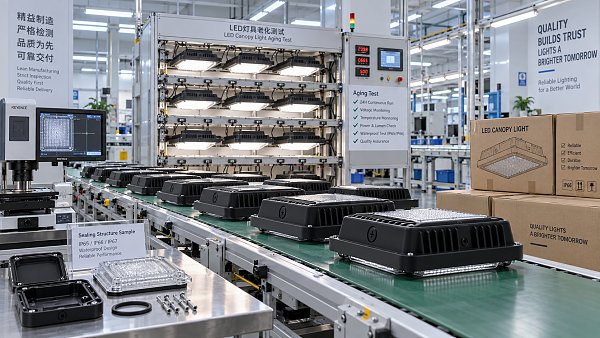
 Commercial LEDHow to evaluate a canopy lights factory before placing a bulk orderCanopy lights factory evaluation guide: verify specifications, compliance, quality control, capacity, and after-sales support before placing a bulk order.Commercial Tech EditorOct 02, 2026
 Commercial LEDHow to choose lighting systems that meet workplace safety needsLighting systems for workplace safety: learn how to control glare, improve visibility, meet environmental demands, and protect workers with reliable, compliant lighting choices.Commercial Tech EditorOct 01, 2026
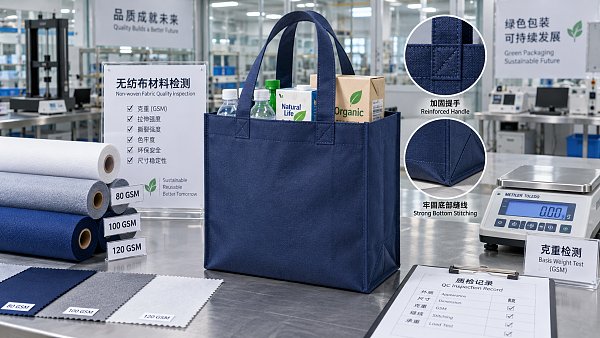
 Fabrics & YarnsWhat fabric weight works best for reusable non woven fabric bags?Non woven fabric for bags: discover the best GSM range for durability, load capacity, print quality, and cost-effective reusable bag sourcing.Textile Industry AnalystSep 30, 2026