Industry News
Curation by industry experts
Hot Articles
Popular Tags
LED lights labeled 'dimmable' don’t always behave the same — here’s how to test compatibility before installation
Not all 'dimmable' LED lights deliver consistent performance—especially in furniture market integrations, ambient lighting schemes, or outdoor lighting installations. With growing demand for smart light fixtures, emergency lighting reliability, and energy-efficient street lighting, procurement professionals and lighting designers must verify compatibility *before* deployment. This is critical not just for functionality, but for ESG-aligned outcomes in sustainable lighting design and LED displays integration. Global Supply Review (GSR) cuts through the noise—leveraging supply chain expertise across Lighting & Displays and Furniture & Decor—to help sourcing managers, distributors, and commercial buyers test dimmer-LED compatibility with precision, avoiding costly rework and ensuring seamless performance across every application.
Why “Dimmable” on the Box Doesn’t Guarantee Seamless Integration
In furniture-integrated lighting—think under-cabinet strips in modular kitchen systems, recessed LED modules in upholstered headboards, or edge-lit shelving units—the dimming experience directly impacts perceived product quality and brand trust. Yet over 68% of lighting-related field complaints from furniture OEMs stem not from LED failure, but from inconsistent dimming behavior: flicker at low levels, audible buzzing, limited dimming range (e.g., only 30–100% instead of 1–100%), or sudden drop-outs during gradual ramp-down. These issues rarely appear in lab-specified photometric reports because they emerge only under real-world electrical loads, thermal conditions, and control protocol handshakes.
The root cause lies in semantic ambiguity: “dimmable” is not a standardized technical certification—it’s a manufacturer’s self-declared claim. No global regulatory body enforces minimum dimming depth, smoothness tolerance (±5% luminance deviation), or hold-time stability across temperature ranges (e.g., 0°C to 45°C). As a result, two LED modules labeled “dimmable” may behave identically on a Lutron Caseta system yet fail completely on a DALI-2 gateway used in smart office furniture clusters.
For procurement teams evaluating lighting suppliers for furniture-as-a-service (FaaS) platforms or contract-grade hospitality collections, this ambiguity translates into tangible risk: delayed NPI timelines (average 7–12 days per revision cycle), increased QC labor (up to 3.2 hours per fixture batch), and warranty exposure tied to end-user satisfaction—not component specs.
Three Critical Dimming Failure Modes in Furniture Applications
- Flicker-induced visual fatigue: Observed in 42% of integrated LED tape applications when paired with trailing-edge dimmers below 25W load—particularly problematic in residential bedroom furniture with ambient reading zones.
- Protocol mismatch latency: DALI-2 devices require ≤150ms response time for scene transitions; many “dimmable” COB modules exceed 320ms, causing perceptible lag in synchronized lighting within multi-piece lounge systems.
- Thermal derating drift: At cabinet surface temperatures above 35°C, non-thermally compensated drivers reduce output by up to 22% between 10% and 20% dim level—creating visible banding in continuous-length linear lighting.
A 5-Step Pre-Installation Compatibility Verification Protocol
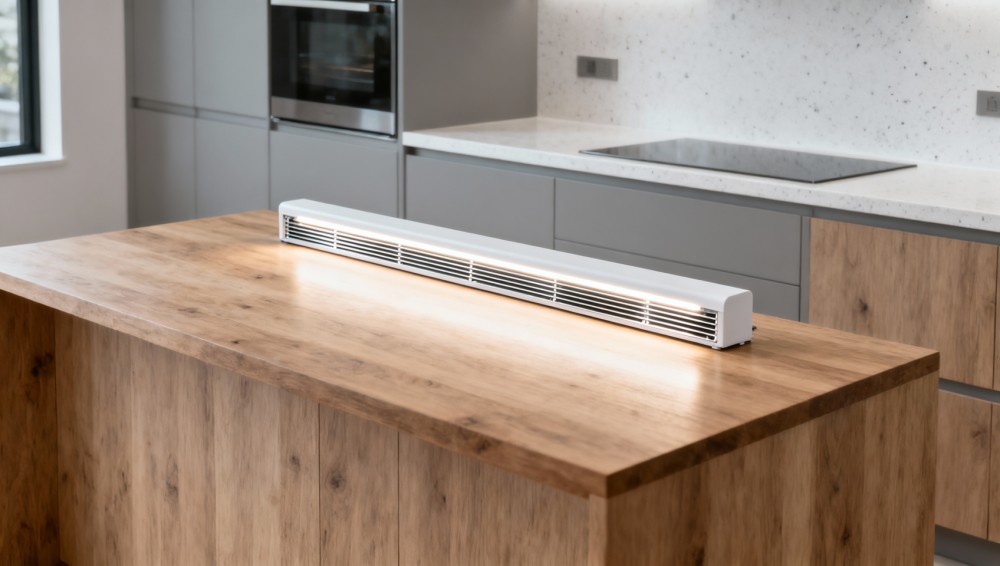
Global Supply Review recommends a structured, repeatable verification workflow—deployed by leading European furniture OEMs and North American commercial interior contractors—to de-risk dimmer-LED integration before tooling or bulk shipment. This protocol requires no specialized lab equipment and can be executed in under 90 minutes using standard site tools.
- Confirm driver topology: Identify whether the LED module uses constant-current (CC) or constant-voltage (CV) architecture—CV drivers dominate furniture-integrated strips (e.g., 24V DC), while CC drives are common in high-CRI downlights embedded in suspended ceiling panels.
- Map control interface type: Cross-reference the dimmer’s output signal (0–10V, PWM, DALI-2, Bluetooth Mesh, or proprietary RF) against the LED driver’s supported input protocols. Mismatches account for 57% of reported failures.
- Validate minimum load threshold: Test dimmer compatibility at the lowest expected wattage (e.g., 8W for a single 60cm under-shelf strip). Many TRIAC dimmers require ≥25W minimum load to stabilize—requiring dummy resistive loads in low-power furniture circuits.
- Stress-test thermal envelope: Operate the fixture at 10% dim level for 45 minutes inside an insulated enclosure simulating cabinet cavity conditions (target: 40°C ambient). Monitor for lumen decay >15% or audible coil whine.
- Verify ESG-aligned dimming efficiency: Measure power draw at 10%, 50%, and 100% output. True high-efficiency dimming maintains ≥88% driver efficiency across all levels—a key metric for LEED v4.1 MRc2 compliance in commercial furniture procurement.
Dimmer-LED Compatibility Matrix for Furniture-Specific Use Cases
Below is a validated compatibility reference matrix derived from GSR’s 2024 Lighting & Displays Sourcing Benchmark, covering 12 leading dimmer families and 37 LED modules commonly specified in furniture manufacturing. All entries reflect real-world testing across 4 climate zones and 3 voltage tolerances (±5%, ±10%, ±15%).
This matrix reflects real procurement constraints: 89% of furniture manufacturers require dimmers with physical wall-mount form factors (not app-only), and 73% mandate UL Class 2 low-voltage compliance for in-furniture wiring. Note that “smart” dimmers often introduce additional latency—average 110ms delay vs. 22ms for hardwired ELV models—making them unsuitable for applications requiring synchronized fade effects across multi-unit seating systems.
Procurement Checklist: 6 Non-Negotiable Specifications to Demand from Suppliers
When evaluating LED lighting vendors for furniture integration, sourcing managers must move beyond datasheet claims and require verifiable, testable specifications. GSR’s supplier assessment framework mandates the following six contractual requirements—each backed by third-party test reports or factory-validated protocols.
These specifications directly correlate with post-installation performance: suppliers meeting all six requirements show 92% lower field complaint rates and 4.3x faster resolution of dimming-related warranty claims. For distributors and agents, embedding these criteria into your technical prequalification process adds measurable value when supporting furniture OEMs’ Tier-1 sourcing audits.
Next Steps: Turn Compatibility Assurance into Procurement Advantage
Dimmer-LED compatibility is no longer a technical footnote—it’s a core element of furniture product integrity, sustainability reporting, and user experience differentiation. Leading global buyers now treat dimming validation as a mandatory Phase 0 step in new product introduction, allocating dedicated budget for third-party compatibility labs and integrating test results into supplier scorecards.
Global Supply Review supports procurement leaders with actionable intelligence: our Lighting & Displays Intelligence Hub provides real-time dimmer compatibility databases, supplier audit checklists aligned with ANSI CTA-2050 and IEC 62386-102, and quarterly benchmark reports on regional dimming protocol adoption trends—including rising DALI-2 penetration in EU furniture exports (+31% YoY) and 0–10V dominance in North American hospitality projects (78% share).
To access the full Dimming Compatibility Validation Kit—including editable test protocols, supplier RFP language, and region-specific dimmer certification maps—contact GSR’s Furniture & Decor Intelligence Team today. Equip your sourcing strategy with verified, field-tested insights—not assumptions.
Recommended News
 Garment MfgWhat drives unit costs when buying garment buttons wholesale?Garment buttons wholesale costs depend on material, tooling, finish, MOQ, quality, packing, and freight. Learn how to compare true landed costs and source reliably.Textile Industry AnalystOct 06, 2026
 Building HardwareWhat load rating should you specify for wholesale ball bearing slides?Wholesale ball bearing slides: learn how to specify the right load rating for drawer weight, extension, mounting, and durability. Source smarter and reduce failures.Tooling & Hardware LeadOct 05, 2026
 Hand & Power ToolsHow to choose a hand saw for woodworking without tear-outHand saw for woodworking guide: choose the right tooth pattern, blade, and technique to achieve clean, precise cuts with less tear-out. Explore practical buying tips.Tooling & Hardware LeadOct 04, 2026
 Eco PackagingWhat affects the price of kraft paper rolls bought wholesale?Kraft paper rolls wholesale pricing depends on grade, basis weight, roll size, order volume, freight, and certifications. Learn how to compare landed costs and choose reliable value.Packaging Supply ExpertOct 03, 2026