Industry News
Curation by industry experts
Hot Articles
Popular Tags
SASO Updates IEC 62471:2026+A1:2026: Arabic Light Safety Labels Required for LED Photography Lamps
Saudi Standards, Metrology and Quality Organization (SASO) issued a technical notice on May 9, 2026, mandating Arabic-language photobiological safety labeling for LED photography lamps imported into Saudi Arabia — effective July 1, 2026. This requirement directly affects manufacturers, exporters, and distributors of professional lighting equipment targeting the Saudi wedding and studio photography markets, and signals tightening regulatory alignment with IEC-based optical safety standards in GCC import compliance.
Event Overview
On May 9, 2026, SASO published Technical Notice No. SASO/TECH/LED/2026-05. It specifies that, starting July 1, 2026, all imported LED lamps used in bridal and studio photography must bear Arabic-language photobiological safety labels on both the product unit and its smallest retail packaging. Labels must clearly indicate the blue light hazard risk group (RG0–RG3), exposure limit (EL), and minimum safe use distance. Non-compliant products will be denied customs clearance.
Industries Affected by Segment
Manufacturers of Professional LED Photography Lamps
These companies are directly responsible for label design, placement, and compliance verification. Impact arises from mandatory bilingual (Arabic + original language) labeling — requiring updates to product artwork, packaging specifications, and quality control checklists before shipment.
Exporters and Trading Companies Specializing in GCC Lighting Imports
They face increased pre-shipment verification responsibilities. Inconsistent or missing Arabic labels will trigger customs rejection at Saudi ports, leading to delays, storage fees, or return shipments — affecting delivery timelines and contractual obligations with local distributors.
Local Distributors and Retailers in Saudi Arabia
They must verify label compliance upon receipt and may need to rework existing inventory if stock was procured prior to the July 1, 2026 enforcement date. Non-compliant units cannot be legally sold or displayed, risking inventory write-offs or penalties under SASO’s market surveillance regime.
Third-Party Lab Testing and Certification Service Providers
While the notice does not introduce new testing requirements beyond IEC 62471:2026+A1:2026, it elevates demand for Arabic-label verification services — particularly for confirming correct RG classification, EL values, and Arabic terminology accuracy per SASO’s linguistic guidelines.
Key Points for Enterprises and Practitioners to Monitor and Act On
Track official SASO clarifications on Arabic label formatting
Analysis shows SASO has not yet published detailed Arabic terminology templates or font-size/layout specifications for the required labels. Enterprises should monitor SASO’s official portal and authorized conformity assessment bodies for supplementary guidance ahead of the July 2026 deadline.
Confirm applicability scope with product-specific classification
Observably, the notice explicitly references “wedding photography LED lamps” — not all LED lighting. Companies should verify whether their specific models fall under this defined use case (e.g., based on luminous flux, beam angle, or intended application statements in technical documentation) rather than assuming broad coverage.
Distinguish between policy issuance and operational enforcement
Current more appropriately understood as a formalized compliance checkpoint — not a newly introduced safety standard. The underlying photobiological risk assessment remains governed by IEC 62471:2026+A1:2026; the change is strictly linguistic and procedural. Businesses should prioritize label adaptation over retesting unless classification was previously unverified.
Update procurement and packaging workflows ahead of Q2 2026
Manufacturers and exporters should revise printing vendor contracts, update packaging artwork databases, and conduct internal label mock-ups by June 2026 to avoid last-minute production bottlenecks. Pre-clearance sample submissions to Saudi-appointed certification bodies are recommended for high-volume SKUs.
Editorial Perspective / Industry Observation
This notice is best interpreted as a procedural reinforcement — not a technical pivot. From an industry perspective, it reflects SASO’s ongoing effort to localize regulatory communication without altering core safety thresholds. It signals growing emphasis on end-user accessibility of safety information in domestic language, consistent with broader GCC consumer protection trends. However, it does not imply expanded scope to other lighting categories (e.g., video or architectural LEDs) unless explicitly stated in future notices. Continuous monitoring remains advisable, as SASO may extend similar labeling expectations to adjacent product groups following this implementation cycle.
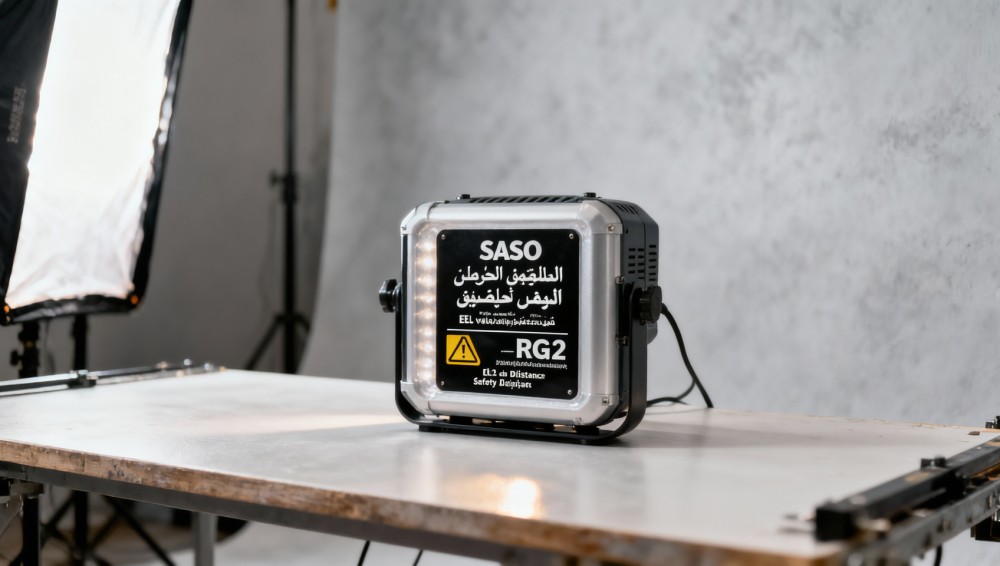
Conclusion: This update represents a targeted, language-specific compliance adjustment — not a fundamental shift in photobiological safety requirements. Its primary significance lies in operational readiness: affected enterprises must treat Arabic labeling as a non-negotiable customs prerequisite, not a discretionary marketing element. Current understanding should emphasize procedural execution over technical reinterpretation.
Source: SASO Technical Notice No. SASO/TECH/LED/2026-05, issued May 9, 2026.
Note for ongoing observation: SASO has not yet released official Arabic label templates or confirmed whether third-party lab reports must include Arabic summaries — both points warrant follow-up in Q2 2026.
Recommended News
 Carton & PlasticsWhat drives breakage rates in bulk wine bottles wholesale orders?Bulk wine bottles wholesale buyers: discover what drives breakage rates, from glass quality and packaging to pallet loading, and reduce costly claims.Packaging Supply ExpertSep 27, 2026
 Office FurnitureHow supplier scorecards reduce risk in furniture procurementFurniture procurement supplier management becomes more resilient with supplier scorecards that track quality, delivery, compliance, and corrective actions. Learn how to reduce sourcing risk.Interior Sourcing LeadSep 26, 2026
 Office Paper & Printing PaperHow roll diameter affects downtime when using jumbo paper rollsJumbo paper rolls can cut changeovers and downtime—if your unwinder, handling, and tension control can support them. Find the optimal roll diameter for smoother output.Packaging Supply ExpertSep 25, 2026
 Office Paper & Printing PaperWhen does carbonless paper for invoices reduce billing errors?Carbonless paper for invoices reduces billing errors by creating clear, consistent copies for deliveries, service calls, and approvals. Learn when it strengthens billing control.Packaging Supply ExpertSep 24, 2026