Industry News
Curation by industry experts
Hot Articles
Popular Tags
Testing Corrugated Carton Boxes for Compression Strength: What Standards Apply
In the packaging and printing sector, evaluating the compression strength of corrugated carton boxes is essential for ensuring safe storage, efficient logistics, and brand credibility. As procurement professionals and quality managers align corporate performance with global standards, understanding which testing methods apply becomes a vital step toward compliance and sustainability. From ergonomic office chairs to blister packaging and self tapping screws, Global Supply Review (GSR) empowers decision-makers with data-driven insights that strengthen sourcing strategies and enhance product integrity across the supply chain.
What Is Compression Strength Testing of Corrugated Boxes?

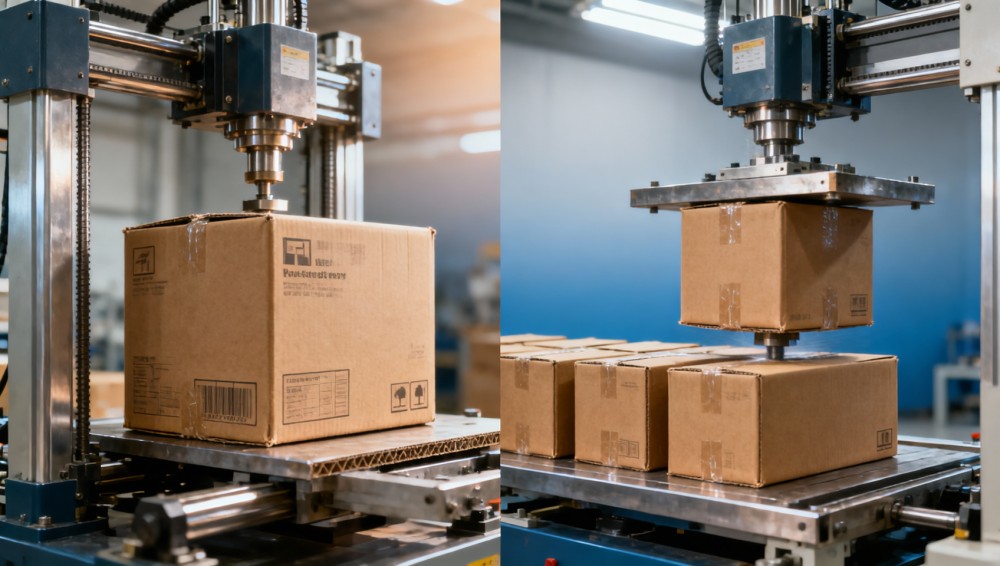
Compression strength testing measures how much load a corrugated carton can withstand before deforming or failing. In logistics and warehousing, stacked boxes are frequently subjected to top-down forces for long durations—often ranging from 5 kilograms to over 1,000 kilograms. For B2B buyers, this metric correlates directly to product protection and structural efficiency, impacting transport safety and overall cost-per-unit shipped.
The test typically involves placing a filled or empty box between two parallel compression plates and applying a continuous load until the box collapses. The recorded maximum load value, usually measured in newtons (N) or kilograms-force (kgf), represents the box’s compression strength. According to general industry practice, acceptable compression strength values for export-grade cartons vary from 3,000 N to 10,000 N depending on flute type and material quality.
Three primary factors determine test outcomes: board grade, flute configuration, and environmental conditions such as humidity (typically controlled at 23°C ±2 and 50% ±5 RH during testing). For companies producing in tropical climates, adjusting moisture control procedures can improve consistency by 10–15% across batch outputs. Ensuring uniform conditions is vital for certification and repeatability.
Beyond numerical performance, compression tests also provide valuable insights into design optimization. A 5% reduction in box height or the introduction of double-wall material can improve stacking efficiency by roughly 12% while maintaining the same physical load endurance—a key advantage for space-sensitive exports.
Global and Regional Testing Standards for Corrugated Cartons
To ensure consistency and trade compliance, corrugated box compression tests reference globally acknowledged standards. The most widely adopted include ISO, ASTM, and TAPPI standards, which provide methodological benchmarks for packaging engineers and quality inspectors. Understanding which standard to use is often dictated by target export markets, product weight categories, and industry-specific regulations.
The table below summarizes commonly applied standards and their core testing specifications for corrugated cartons:
When shipping to different regulatory regions, such as the EU or North America, documentation referencing at least one standard is mandatory. For example, compliance audits for food packaging often request ISO 12048 reports dated within 12 months. Keeping updated certificates streamlines customs clearance and enhances traceability during environmental audits.
A supplementary test frequently paired with compression analysis is the Edge Crush Test (ECT). The ECT value, typically between 32 and 55 ECT for medium-weight cartons, helps estimate load-bearing capabilities using McKee’s formula, enabling project teams to forecast compression failure with ±10% predictive accuracy.
Key Procurement and Quality Considerations
For procurement and QA teams, understanding the connection between carton performance and operational demand ensures smarter sourcing and lower risk. Procurement cycles often operate on 4–6 week production windows, leaving limited time for revalidation if tests fail. Consistency across supplier batches is therefore vital to maintain just-in-time delivery models.
Decision-makers typically evaluate corrugated boxes based on five criteria:
- Compression strength and stacking load requirements based on pallet height (usually 1.5–1.8 m).
- Moisture resistance for 7–10 days under high humidity logistics environments.
- Compatibility with automation—folding and sealing speed tolerance within ±0.2 seconds per unit.
- Cost per square meter of corrugated board versus projected reduction in transport damage.
- Certification readiness: ISO 9001, FSC, or chain-of-custody marks supporting ESG compliance.
The following table offers a practical comparison for buyers shortlisting multiple suppliers during tender evaluation:
A structured supplier scoring approach mitigates long-term risk and aligns with sustainability mandates. Even a 2% deviation from specified compression strength can result in stacking failure worth thousands in product loss per shipment for large-scale FMCG logistics.
Common Misconceptions and Frequently Asked Questions
Despite wide adoption of global standards, misconceptions persist in packaging procurement, particularly concerning cost-performance trade-offs and environmental conditions. Addressing these questions helps buyers and engineers align testing decisions with real-world handling conditions.
Is higher compression strength always better?
Not necessarily. Excessively high compression ratings can indicate over-specification, leading to unnecessary board weight and cost. For medium-duty retail packaging, 4,000–6,500 N is often adequate. Optimization should focus on balancing strength with supply chain load conditions, especially for stacked storage within 1.6 m height.
How often should carton compression tests be repeated?
Most manufacturers perform testing every 3–6 months or when raw material specifications change. For exporters under ISO 9001 audit cycles, records older than 12 months can be considered non-compliant. Regular revalidation ensures that shipping impacts, environment, and material batch variations remain under control.
Does printing or coating affect compression results?
Yes. Surface coatings can alter board stiffness by up to ±5%. Heavy gloss lamination or wax treatment might improve moisture resistance but slightly decrease overall compression resistance due to modified fiber bonding. It’s advisable to test both pre- and post-print samples to quantify impact before mass production.
What role does corrugation type play?
Flute profile is fundamental. For instance, B-flute offers roughly 1.5 mm thickness and is suitable for lighter retail goods, while double-wall BC flute (6–7 mm) supports 1,000 N per cm² edge compression. Selection should consider trade-offs between cushioning, print surface smoothness, and vertical strength.
Why Partner with GSR for Packaging Intelligence and Sourcing?
Global Supply Review (GSR) bridges technical packaging knowledge and procurement strategy. Our industry-specialized analysts consolidate insights from certified packaging technologists and supply chain engineers across five manufacturing pillars. Through structured data and supplier benchmarking, we help procurement directors minimize specification errors and strengthen ESG alignment.
With access to verified suppliers, reference compression testing records, and standard-to-market mapping, enterprises can confidently negotiate lead times of 2–4 weeks, confirm compliance documentation, and accelerate market entry. Our resource base empowers quality managers to align factory testing frequency with industry expectations and avoid costly shipment delays.
Enterprises aiming to enhance packaging reliability or evaluate supplier conformance can engage GSR for:
- Compression and ECT performance verification consultation
- Packaging material optimization and cost benchmarking
- Regulatory insight on ISO 12048 and ASTM D642 compliance
- Custom supplier shortlisting for sustainable carton production
- Sample testing coordination and audit workflow setup
To discuss parameter confirmation, sample testing schedules, or tailored sourcing solutions, connect with Global Supply Review today. We build resilient sourcing frameworks that help global buyers and exporters secure reliable, compliant, and cost-effective packaging systems.
Recommended News
 Eco PackagingWhat affects the price of kraft paper rolls bought wholesale?Kraft paper rolls wholesale pricing depends on grade, basis weight, roll size, order volume, freight, and certifications. Learn how to compare landed costs and choose reliable value.Packaging Supply ExpertOct 03, 2026
 Commercial LEDHow to evaluate a canopy lights factory before placing a bulk orderCanopy lights factory evaluation guide: verify specifications, compliance, quality control, capacity, and after-sales support before placing a bulk order.Commercial Tech EditorOct 02, 2026
 Commercial LEDHow to choose lighting systems that meet workplace safety needsLighting systems for workplace safety: learn how to control glare, improve visibility, meet environmental demands, and protect workers with reliable, compliant lighting choices.Commercial Tech EditorOct 01, 2026
 Fabrics & YarnsWhat fabric weight works best for reusable non woven fabric bags?Non woven fabric for bags: discover the best GSM range for durability, load capacity, print quality, and cost-effective reusable bag sourcing.Textile Industry AnalystSep 30, 2026