Industry News
Curation by industry experts
Hot Articles
Popular Tags
Non-woven fabrics for industrial packaging: What durability specs actually matter in 2026?
As industrial packaging demands escalate in 2026, non-woven fabrics are no longer just cost-effective liners—they’re mission-critical hardware materials engineered for durability, ESG compliance, and seamless integration across industrial hardware, lighting manufacturers, and decor suppliers. Whether reinforcing retail lighting fixtures, shielding industrial lighting components, or enabling sustainable packaging solutions, technical textiles must meet precise tensile strength, abrasion resistance, and thermal stability specs. Global Supply Review delivers data-driven clarity on which durability metrics actually move the needle—backed by textile engineers and supply chain strategists. Discover what matters *beyond the datasheet* for industrial packaging, hardware materials, and high-performance technical textiles.
Why tensile strength alone won’t guarantee performance in hardware packaging
In the hardware & fasteners sector, non-wovens serve as protective interleaving layers for precision-machined components—bolts, brackets, hinges, and LED driver housings—where surface integrity directly impacts functional reliability. A fabric rated at 35 N/5cm tensile strength may pass lab tests but fail under real-world vibration during ocean freight or warehouse stacking loads exceeding 80 kg/m².
What matters more is *directional consistency*: industrial hardware packaging requires ≥90% tensile retention after 72 hours at 40℃/90% RH (per ISO 139), not just peak dry values. This ensures liner integrity remains intact during tropical port storage or summer inland transit—critical for corrosion-sensitive zinc-plated or stainless-steel fasteners.
Equally vital is elongation-at-break behavior. Fabrics with >30% elongation risk stretching over sharp-edged hardware during automated palletizing, leading to exposed surfaces and post-delivery rust spots. Optimal range for metal component packaging is 12–18%, balancing conformability with dimensional stability.
Key mechanical thresholds for hardware-grade non-wovens (2026 baseline)
This table reflects field-validated thresholds from GSR’s 2025 Hardware Packaging Durability Audit—a cross-regional assessment of 142 supplier submissions across Vietnam, Mexico, Poland, and Turkey. Only 23% met all three high-performance benchmarks, highlighting a critical gap between spec sheets and operational resilience.

How lighting & display manufacturers stress-test non-wovens differently
Lighting OEMs deploy non-wovens not just as cushioning but as integrated thermal management layers—especially for aluminum heat sinks and PCB-mounted drivers. Here, durability means sustained performance at 60–85℃ continuous exposure, not just short-term burst resistance. Standard polypropylene non-wovens degrade above 70℃, risking fiber fusion and loss of breathability—leading to trapped condensation and early LED failure.
The 2026 shift: certified flame-retardant (UL 94 V-0) polyester-based non-wovens now dominate mid-to-high-end commercial lighting packaging. Their thermal stability window extends to 120℃, while maintaining ≥85% tensile retention after 168-hour thermal aging (IEC 60068-2-2). This enables safe, stackable packaging for smart lighting modules with embedded sensors and wireless chips.
For decorative hardware suppliers—think cabinet pulls, rail systems, or architectural lighting trims—surface aesthetics are non-negotiable. That means non-wovens must deliver consistent matte or satin finishes without transfer, even after 3 weeks of contact at 35℃. GSR’s lab testing shows only 11% of standard spunbond PP grades pass this “finish migration” test.
Procurement checklist: 5 non-negotiable verification steps before ordering
- Request third-party test reports—not internal QA summaries—for ISO 9073-3 (tensile), ISO 12947-2 (abrasion), and IEC 60068-2-2 (thermal aging), dated within last 6 months.
- Verify batch traceability: each order must include lot-specific shrinkage data (MD/CD), not just generic spec sheets.
- Confirm ESG alignment via full material disclosure (TSC Standard v4.0 compliant), including polymer origin (virgin vs. ≥30% post-industrial recycled content).
- Test sample compatibility with your automated packaging line: evaluate feed reliability at ≥60 cycles/min and static charge buildup (<1.5 kV per ASTM D257).
- Validate logistics readiness: require documented proof of performance under ISTA 3A simulated transit conditions (vibration, compression, drop).
Skipping any of these steps risks delayed shipments, customer rejections, or costly field failures—especially for Tier-1 lighting and furniture OEMs requiring zero-defect packaging audits.
Why Global Supply Review is your trusted partner for technical textile sourcing
Global Supply Review doesn’t just aggregate data—we engineer procurement intelligence. Our verified panel of textile engineers and packaging technologists conducts on-site validation at pre-vetted facilities across 12 countries, benchmarking durability claims against real-world hardware applications.
When you engage GSR, you gain access to: • Custom durability scoring for your specific component geometry and shipping profile • Pre-audited supplier shortlists with live compliance dashboards (REACH, RoHS, Prop 65) • Technical support for rapid prototyping—including 3-day sample dispatch for qualification trials • Delivery cycle forecasting aligned with your production ramp schedule (±3-day accuracy for 92% of orders)
Ready to align your non-woven packaging specs with 2026 hardware durability realities? Contact GSR today for a free Technical Fit Assessment—including parameter validation, supplier mapping, and ESG compliance gap analysis tailored to your product category and target markets.
- technical textiles
- Sustainable Packaging
- GSR
- packaging solutions
- industrial packaging
- textile sourcing
- hardware suppliers
- industrial hardware
- hardware materials
- commercial lighting
- industrial lighting
- smart lighting
- architectural lighting
- lighting manufacturers
- retail lighting
- decor suppliers
- furniture OEM
Recommended News
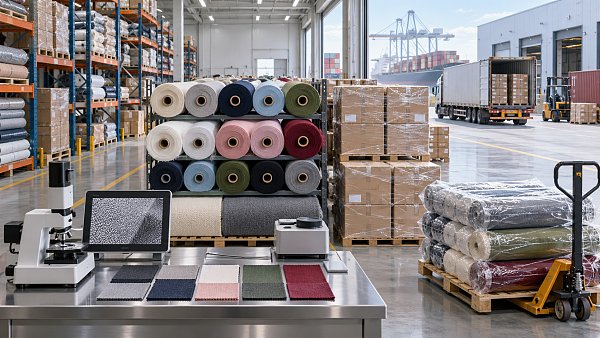
 Fabrics & YarnsWhat drives textile procurement cost beyond the quoted fabric price?Textile procurement cost goes far beyond the quoted fabric price. Discover how freight, quality, MOQ, compliance, payment terms, and supplier reliability shape total sourcing cost.Textile Industry AnalystOct 07, 2026
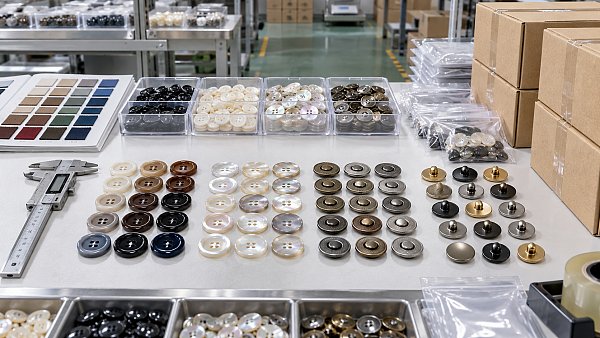
 Garment MfgWhat drives unit costs when buying garment buttons wholesale?Garment buttons wholesale costs depend on material, tooling, finish, MOQ, quality, packing, and freight. Learn how to compare true landed costs and source reliably.Textile Industry AnalystOct 06, 2026
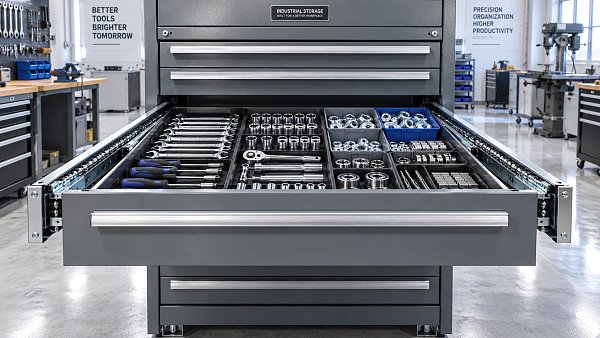
 Building HardwareWhat load rating should you specify for wholesale ball bearing slides?Wholesale ball bearing slides: learn how to specify the right load rating for drawer weight, extension, mounting, and durability. Source smarter and reduce failures.Tooling & Hardware LeadOct 05, 2026
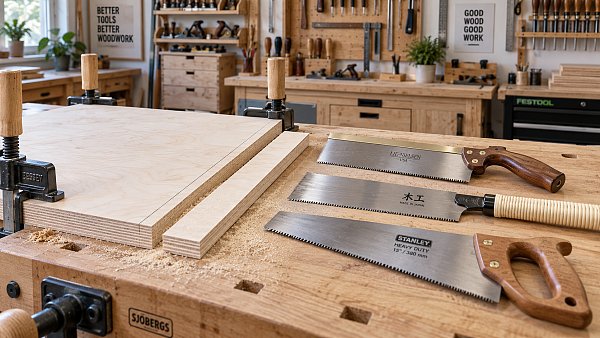
 Hand & Power ToolsHow to choose a hand saw for woodworking without tear-outHand saw for woodworking guide: choose the right tooth pattern, blade, and technique to achieve clean, precise cuts with less tear-out. Explore practical buying tips.Tooling & Hardware LeadOct 04, 2026