Industry News
Curation by industry experts
Hot Articles
Popular Tags
Vietnam Requires Vietnamese OEKO-TEX® Cert for Wedding Backdrop Fabric Imports
On May 10, 2026, Vietnam’s Ministry of Industry and Trade (MOIT) issued Circular No. 12/2026/TT-BCT, mandating that all imported fabric-based wedding photography backdrops (HS code 6307.90) must be accompanied by a Vietnamese-language OEKO-TEX® Standard 100 certificate—registered with QUACERT, Vietnam’s national accreditation body—effective June 15, 2026. This requirement directly affects exporters, importers, and manufacturers supplying to Vietnam’s wedding services and visual production sectors.
Event Overview
Vietnam’s Ministry of Industry and Trade signed Circular No. 12/2026/TT-BCT on May 10, 2026. The circular stipulates that, starting June 15, 2026, all imports of fabric wedding photography backdrops classified under HS code 6307.90 must include a Vietnamese-language OEKO-TEX® Standard 100 certificate. The certificate must be filed with QUACERT—the Vietnam National Accreditation Board—and must specify the exact fabric composition, dyeing process, and test batch number. English-only certificates are explicitly deemed invalid.
Industries Affected
Direct Importers and Exporters
Importers bringing backdrop fabrics into Vietnam must now verify certificate language, accreditation status, and technical detail compliance before customs clearance. Non-compliant shipments risk rejection or delay at entry points, increasing documentation lead time and operational uncertainty.
Textile Manufacturers and Finishers
Manufacturers supplying backdrop fabrics—including woven, knitted, or printed textiles—must ensure their OEKO-TEX® certification includes Vietnamese-language reporting and is registered with QUACERT. Facilities relying solely on English certificates from OEKO-TEX® institutes will need to reprocess documentation or coordinate with accredited local agents.
Wedding Production and Rental Service Providers
Domestic Vietnamese companies sourcing backdrops for studios, events, or e-commerce rental platforms may face tighter supply windows and higher unit costs if suppliers delay compliance. Inventory planning and procurement cycles will require earlier alignment with upstream certification timelines.
Supply Chain and Certification Support Providers
Local certification consultants, translation agencies, and QUACERT-registered conformity assessment bodies may see increased demand for Vietnamese-language certificate preparation, batch-specific technical review, and filing support—particularly for small-to-midsize foreign suppliers unfamiliar with Vietnam’s technical regulation procedures.
Key Points for Enterprises and Practitioners to Monitor and Act On
Confirm QUACERT registration status of current OEKO-TEX® certifying bodies
Not all OEKO-TEX®-accredited labs are automatically recognized by QUACERT. Exporters should verify whether their certifier is listed in QUACERT’s official registry of foreign conformity assessment organizations—and initiate registration if not yet completed.
Update product-level documentation to include Vietnamese-language batch-specific data
Certificates must state fabric composition, dyeing method, and test batch number in Vietnamese. Generic or template-based translations without traceable batch linkage will not satisfy the requirement. Internal quality control records must align precisely with the submitted certificate.
Align shipment schedules with the June 15, 2026 implementation date
Shipments arriving in Vietnam on or after June 15, 2026—even if dispatched earlier—will be subject to the new rule. Importers should adjust logistics planning, especially for sea freight with long transit times, to avoid post-arrival non-compliance.
Monitor MOIT and QUACERT for supplementary guidance
No official checklist, sample certificate format, or list of approved translation providers has been published as of May 2026. Stakeholders should track updates via MOIT’s official portal and QUACERT’s public notices for procedural clarifications ahead of enforcement.
Editorial Perspective / Industry Observation
Observably, this circular reflects Vietnam’s broader trend toward strengthening technical barrier alignment for textile-related consumer goods—particularly those entering service-oriented B2B channels like photography and event staging. Analysis shows the requirement is less about restricting trade and more about reinforcing traceability and consumer safety accountability within domestic downstream use. It functions primarily as a regulatory signal: while enforcement begins June 2026, full market adaptation—including supplier capacity building and inter-agency coordination—may extend beyond the initial deadline. From an industry perspective, it signals growing expectations for localized, granular compliance—not just certification, but certified documentation adapted to national administrative frameworks.

This notice marks a procedural shift rather than a substantive change in safety standards: OEKO-TEX® Standard 100 remains the benchmark, but its application now requires linguistic, institutional, and batch-level specificity under Vietnam’s domestic regulatory architecture. It is best understood not as an isolated import restriction, but as an early indicator of tightening documentation rigor across Vietnam’s textile-adjacent B2B segments.
Conclusion
The issuance of Circular No. 12/2026/TT-BCT introduces a targeted, enforceable documentation requirement for a niche but commercially active textile subcategory. Its significance lies not in altering material safety criteria, but in elevating administrative precision—requiring Vietnamese-language, QUACERT-recognized, batch-identified certification. For stakeholders, the priority is operational readiness: verifying accreditation pathways, updating documentation workflows, and calibrating logistics to the June 15, 2026 effective date. Currently, this is best interpreted as a defined compliance threshold—not a broad policy shift, but a concrete procedural checkpoint with measurable execution requirements.
Source Attribution
Main source: Vietnam Ministry of Industry and Trade (MOIT), Circular No. 12/2026/TT-BCT, issued May 10, 2026.
Additional reference: QUACERT (Vietnam National Accreditation Board) public registry of foreign conformity assessment bodies — status and update frequency remain under observation as of May 2026.
Recommended News
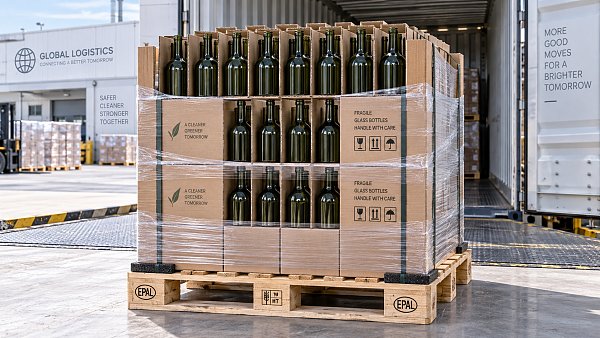
 Carton & PlasticsWhat drives breakage rates in bulk wine bottles wholesale orders?Bulk wine bottles wholesale buyers: discover what drives breakage rates, from glass quality and packaging to pallet loading, and reduce costly claims.Packaging Supply ExpertSep 27, 2026
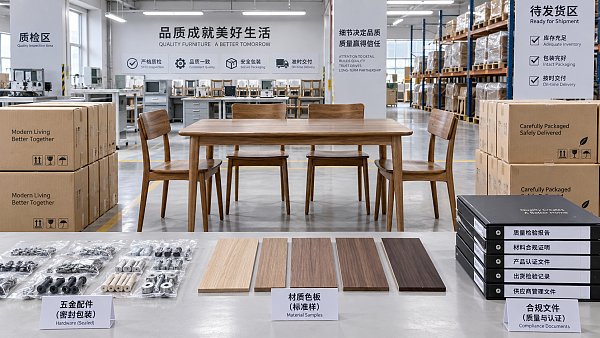
 Office FurnitureHow supplier scorecards reduce risk in furniture procurementFurniture procurement supplier management becomes more resilient with supplier scorecards that track quality, delivery, compliance, and corrective actions. Learn how to reduce sourcing risk.Interior Sourcing LeadSep 26, 2026
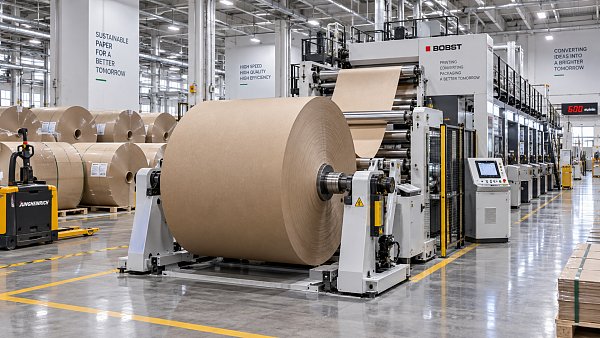
 Office Paper & Printing PaperHow roll diameter affects downtime when using jumbo paper rollsJumbo paper rolls can cut changeovers and downtime—if your unwinder, handling, and tension control can support them. Find the optimal roll diameter for smoother output.Packaging Supply ExpertSep 25, 2026
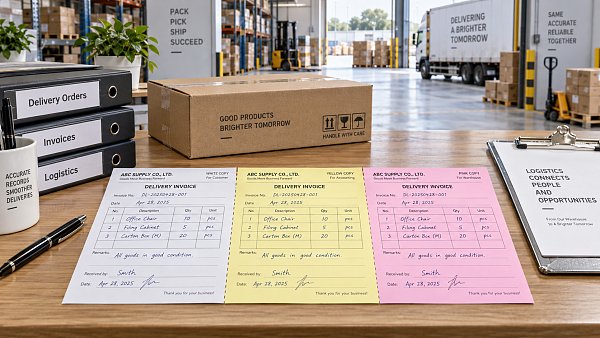
 Office Paper & Printing PaperWhen does carbonless paper for invoices reduce billing errors?Carbonless paper for invoices reduces billing errors by creating clear, consistent copies for deliveries, service calls, and approvals. Learn when it strengthens billing control.Packaging Supply ExpertSep 24, 2026