Industry News
Curation by industry experts
Hot Articles
Popular Tags
SASO Enforces GSO 2521-2:2026 for Acrylic Wedding Props in Saudi Arabia
Effective May 6, 2026, the Saudi Standards, Metrology and Quality Organization (SASO) mandates compliance with the updated GSO 2521-2:2026 standard for acrylic wedding photography props—including freestanding columns, frames, and decorative panels—requiring ≥1.5 J impact resistance testing. This regulation directly affects exporters, manufacturers, and importers engaged in the Middle East’s wedding services supply chain.
Event Overview
On May 6, 2026, SASO enforced GSO 2521-2:2026 as a mandatory requirement for imported acrylic hard props used in wedding photography. Under this rule, all such products must pass a ≥1.5 J falling-ball impact test. Compliance documentation—issued by accredited third-party laboratories (e.g., SGS, Bureau Veritas)—must be uploaded to the SABER platform prior to customs clearance. Non-compliant shipments will be rejected at Saudi ports.
Industries Affected
Direct Exporters (China-based)
Chinese enterprises exporting acrylic wedding props to Saudi Arabia are directly affected because absence of a valid GSO 2521-2:2026 test report prevents SABER registration and subsequent customs release. Impact manifests as shipment delays, rework costs, or order cancellations if certificates are missing or outdated.
Manufacturers & OEMs
Factories producing acrylic columns, frames, or wall-mounted decor for export face revised quality control requirements. The new impact test applies to finished goods—not raw material—so structural integrity, thickness uniformity, and edge finishing now carry regulatory weight. Production lines may require verification against test parameters before shipment.
Importers & Distributors (Middle East-based)
Saudi and regional importers must now verify supplier-provided test reports prior to purchase. GSO 2521-2:2026 compliance has become a technical gatekeeping criterion in vendor evaluation—replacing informal quality checks with standardized, lab-verified evidence.
Supply Chain & Certification Service Providers
Logistics intermediaries and conformity assessment facilitators must confirm that SABER submissions include both the test report and product-specific technical documentation (e.g., material grade, dimensions, intended use). Incomplete dossiers risk rejection without notification.
What Enterprises Should Monitor and Do Now
Confirm test scope alignment with GSO 2521-2:2026
Verify that existing or planned laboratory testing explicitly references GSO 2521-2:2026 (not earlier versions or generic ISO/IEC standards). Reports must state “≥1.5 J falling-ball impact test” and list sample identification matching commercial invoices.
Validate laboratory accreditation status for SABER acceptance
Only test reports from SASO-recognized labs (e.g., SGS, BV) uploaded via authorized SABER agents qualify. Confirm lab inclusion in SASO’s latest list of approved conformity assessment bodies before commissioning tests.
Review product categorization under GSO 2521-2:2026 scope
GSO 2521-2:2026 applies specifically to rigid acrylic photographic props—not general acrylic sheets or non-wedding decorative items. Ensure internal classification matches SASO’s defined application context to avoid over-testing or misclassification.
Update documentation workflows ahead of May 2026 enforcement
Integrate test report generation, SABER upload, and certificate validation into pre-shipment QA checklists. Assign responsibility for SABER dossier preparation to staff trained in Saudi regulatory submission protocols—not solely to freight forwarders.
Editorial Perspective / Industry Observation
Observably, this update signals SASO’s broader shift toward harmonizing physical safety requirements for consumer-facing display products—even those used in professional service environments. Analysis shows it is not merely a procedural update but an enforceable market access condition already reflected in Saudi customs systems. From an industry perspective, GSO 2521-2:2026 functions less as a future warning and more as an active technical barrier: its implementation date is fixed, its test method unambiguous, and its enforcement mechanism (SABER integration) fully operational. Current relevance lies in its role as a de facto filter for supplier capability—where certification readiness now correlates strongly with delivery reliability in the Gulf wedding prop market.

Conclusion: This regulation establishes a concrete, non-negotiable compliance checkpoint for acrylic wedding photography props entering Saudi Arabia. It does not introduce new product categories or expand scope beyond stated items; rather, it formalizes and enforces a specific mechanical safety benchmark. For stakeholders, it is best understood not as an isolated policy change—but as a calibrated step in SASO’s ongoing alignment of imported visual merchandising materials with domestic safety expectations.
Source: Official SASO enforcement notice dated May 6, 2026; GSO 2521-2:2026 standard document (Gulf Standardization Organization); SABER platform guidance v4.2. Continuous monitoring advised for SASO circulars on transitional arrangements or lab accreditation updates.
Recommended News
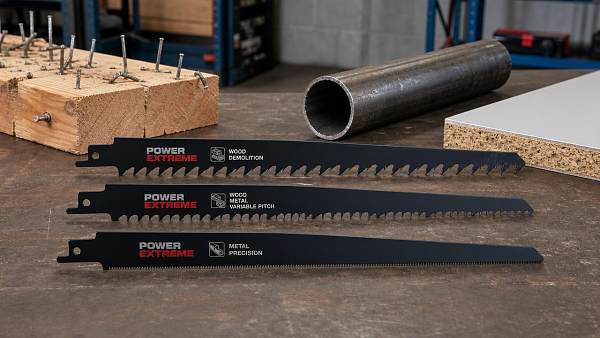
 Hand & Power ToolsReciprocating Saw Blades: Faster Demolition Starts With the Right Tooth DesignReciprocating saw blades work best when tooth design matches the job. Learn how to cut wood, metal, and mixed materials faster with better control, longer blade life, and fewer interruptions.Tooling & Hardware LeadMay 07, 2026
![]() Building HardwareStainless Steel Handrail Brackets for Coastal Projects: What to CheckStainless steel handrail brackets for coastal projects: learn what to check on grade, finish, fixings, and corrosion risk to avoid failures, ensure compliance, and choose with confidence.Tooling & Hardware LeadMay 07, 2026
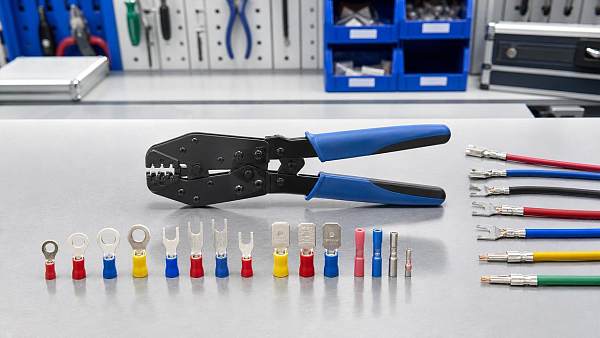
Building HardwareStainless Steel Handrail Brackets for Coastal Projects: What to CheckStainless steel handrail brackets for coastal projects: learn what to check on grade, finish, fixings, and corrosion risk to avoid failures, ensure compliance, and choose with confidence.Tooling & Hardware LeadMay 07, 2026 Hand & Power ToolsCrimping Tools Wholesale: How to Avoid Fit Issues Across TerminalsCrimping tools wholesale buyers: learn how to avoid terminal fit issues, compare key specs, and choose reliable suppliers to reduce rework, prevent failures, and improve repair consistency.Tooling & Hardware LeadMay 07, 2026
 Industrial FastenersBlind Rivets Wholesale: Material Matching Mistakes to AvoidBlind rivets wholesale buyers: avoid costly material matching mistakes. Learn how aluminum, steel, and stainless choices affect strength, corrosion, and long-term reliability.Tooling & Hardware LeadMay 07, 2026