Industry News
Curation by industry experts
Hot Articles
Popular Tags
Crimping Tools Wholesale: How to Avoid Fit Issues Across Terminals
For after-sales maintenance teams, sourcing through crimping tools wholesale channels can reduce costs, but mismatched terminals often lead to poor connections, rework, and field failures. This guide explains how to identify fit issues across terminal types, compare tool specifications, and choose reliable supply options that support consistent repairs and long-term performance.
Why do fit issues happen so often when buying through crimping tools wholesale channels?
The biggest misunderstanding in crimping tools wholesale purchasing is assuming that a tool marked for a certain wire range will automatically fit every terminal in that range. In real maintenance work, that is rarely true. Terminals may share similar wire gauge claims, yet differ in barrel wall thickness, insulation sleeve diameter, seam style, material hardness, plating, and required crimp geometry. A hand tool that performs well on one insulated spade terminal may create under-crimping or cracked barrels on another brand’s ring terminal.
After-sales service teams are especially exposed to this problem because they repair mixed fleets, legacy assemblies, and products sourced from different factories over several years. That means the terminal population is not standardized. When procurement focuses only on unit price from crimping tools wholesale suppliers, field technicians often receive tools that are “generally compatible” but not precisely matched to the terminals they handle most.
Poor fit usually shows up in four ways: loose pull-out force, damaged insulation, deformed conductor strands, or inconsistent compression from one crimp to the next. These problems may not be obvious during bench repair, but they become visible later as overheating, vibration failure, intermittent signals, or customer complaints. That is why fit matters more than headline cost.
What should maintenance teams check first before comparing wholesale options?
Before contacting any crimping tools wholesale source, maintenance managers should map the actual terminal families used in repairs. This step is more valuable than browsing catalogs too early. If the terminal mix is unclear, even a high-quality tool can become the wrong purchase.
Start by identifying the repair categories that drive the highest ticket volume or the highest field risk. For example, HVAC service, automotive harness repair, appliance service, industrial control panel maintenance, and lighting retrofit work all use different terminals and often require different die shapes. Then document the following points for each terminal group:
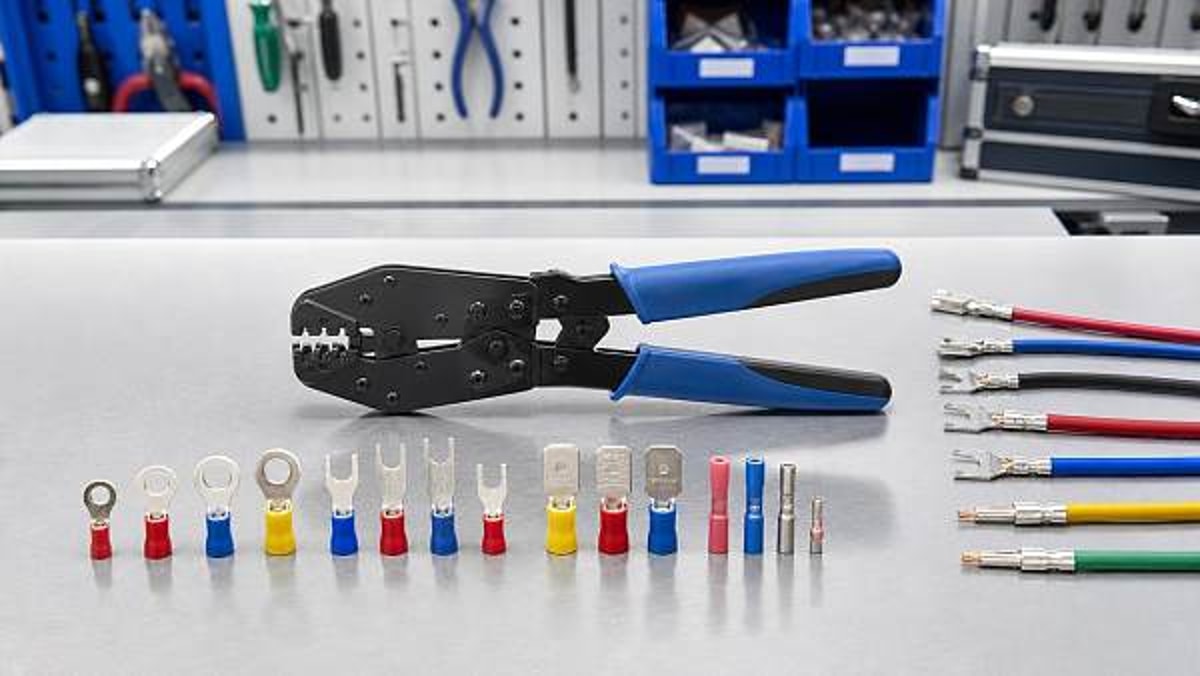
- Terminal type: ring, fork, spade, butt connector, ferrule, open-barrel, closed-barrel, coaxial, or specialty contact
- Wire size range actually used in the field, not only the nominal catalog range
- Insulated or non-insulated construction
- Required crimp profile such as hex, indent, B-crimp, trapezoid, or oval
- Expected pull force, vibration resistance, and environmental exposure
- Brand variation across installed equipment and spare parts
This inventory helps buyers speak more precisely with crimping tools wholesale suppliers. Instead of asking for a “universal crimper,” they can request matched tooling for defined terminal categories and ask for application data, test references, or compatibility samples.
How can you tell whether a crimping tool truly matches the terminal?
A true match is determined by crimp outcome, not marketing language. Many tools claim broad compatibility, but maintenance teams should validate fit based on measurable and visual criteria. The first checkpoint is die profile alignment. Different terminals require compression in a specific shape to create the right mechanical retention and electrical continuity. A mismatched profile may flatten the barrel without forming the intended cold weld or strain relief.
The second checkpoint is dimensional tolerance. Even when the nominal wire gauge matches, the terminal barrel may sit too loose or too tight in the die nest. This leads to one of two failure modes: under-compression, where the conductor pulls out too easily, or over-compression, where strands fracture or the barrel cracks. For after-sales repair teams, the safest practice is to request sample crimps across the exact terminal SKUs used in service.
The third checkpoint is ratchet consistency and cycle completion. Inconsistent release force or poor mechanism repeatability causes variation between technicians and between shifts. If a tool does not fully cycle with predictable compression, maintenance outcomes become operator dependent, which increases warranty risk.
Finally, inspect real crimp results. A good fit usually shows centered compression, intact insulation support where required, no barrel splitting, no severe flash, and acceptable pull performance. If possible, verify continuity stability under vibration or thermal cycling for high-risk applications.
Quick fit-check table for after-sales buyers
Are “universal” crimpers a good choice for after-sales maintenance?
They can be useful, but only within clearly defined limits. A universal tool may reduce inventory and simplify technician kits, especially when service calls involve common insulated terminals or standard ferrules. However, the word “universal” often means the tool covers several categories adequately, not that it delivers optimal geometry for every terminal style. For maintenance teams working on critical systems, that distinction matters.
If your service environment includes safety-related wiring, vibration-heavy equipment, fine-strand conductors, or OEM-specific contacts, specialized dies or application-specific tools are usually the better option. A universal tool may still be retained for low-risk repairs, but it should not become the default for every job just because the crimping tools wholesale price is attractive.
A balanced strategy is to segment tools into three groups: daily general-use tools, terminal-specific tools for recurring repairs, and controlled-use specialty tools for high-risk or low-volume applications. This reduces overspending while still protecting repair quality.
Which specifications matter most when comparing crimping tools wholesale suppliers?
Price should never be the first filter. For after-sales operations, the better question is whether a supplier can deliver repeatable fit across your terminal mix. When comparing crimping tools wholesale offers, focus on practical specification quality rather than catalog breadth alone.
- Die geometry clarity: Suppliers should specify the crimp profile and intended terminal families in plain technical terms.
- Tolerance and material quality: Jaw hardness, machining accuracy, and wear resistance affect long-term repeatability.
- Calibration support: Reliable suppliers provide adjustment guidance, maintenance instructions, or calibration references.
- Testing evidence: Pull force benchmarks, sample validation, or internal QC procedures add confidence.
- Spare parts and after-sales support: Springs, ratchet components, replacement dies, and warranty terms matter in service environments.
- Batch consistency: The first sample may work well, but wholesale supply must remain stable over time.
For organizations managing multiple regions, supplier responsiveness is also critical. A supplier that can quickly confirm terminal compatibility, offer traceable documentation, and support repeat orders will often create more value than one offering the lowest upfront quote.
What are the most common mistakes buyers make with crimping tools wholesale purchases?
One frequent mistake is buying by wire gauge only. Wire size is important, but it does not define terminal geometry. Another mistake is mixing terminal brands while assuming one tool will maintain the same result across all of them. Small differences in barrel thickness or insulation collar design can shift performance enough to create failures in field service.
A third mistake is skipping trial validation because the application seems simple. Basic repairs are often where quality shortcuts hide longest. The crimp may pass a quick visual check but fail weeks later under heat, movement, or moisture. A fourth mistake is ignoring technician ergonomics. If the tool is uncomfortable, too heavy, or requires excessive hand force, field operators may avoid full cycle completion or substitute unauthorized methods.
There is also a procurement mistake that affects long-term cost: not standardizing approved terminal and tool combinations. Without a controlled matrix, each branch or technician may improvise with different consumables, making root-cause analysis difficult when failures appear.
Common buying mistakes and better alternatives
How can after-sales teams build a safer sourcing process for long-term repairs?
The most effective process combines technical screening with operational discipline. First, classify repairs by criticality. High-risk repairs should use validated tool-terminal pairings only. Second, consolidate the number of terminal brands where possible. Standardizing consumables often solves more fit issues than changing tools alone.
Third, ask crimping tools wholesale suppliers for sample kits and application support before large-volume purchasing. A small trial across your top service scenarios can reveal whether the tool performs consistently in technician hands, not just in a showroom demonstration. Fourth, document acceptance criteria. These may include visual standards, pull test thresholds, ratchet consistency, and field feedback after controlled deployment.
Fifth, treat crimp tools as controlled quality equipment rather than simple hand tools. Schedule inspections, replace worn jaws, and track performance drift. In many service organizations, tool wear is an invisible cause of repair variation. Finally, maintain a feedback loop between procurement, technical service, and warranty teams. When repair failures are analyzed quickly, buyers can refine future crimping tools wholesale decisions with real operational data.
What should you ask a supplier before placing a wholesale order?
A good supplier conversation should move beyond quotations. Ask which exact terminal categories the tool was designed for, whether compatibility has been tested on third-party terminals, and what crimp profile the die creates. Request data on ratchet repeatability, jaw material, and expected service life under routine maintenance use. If your repairs involve mixed OEM parts, ask whether the supplier can review your terminal samples directly.
You should also confirm lead time stability, spare die availability, replacement policy, and whether the supplier can support future standardization across multiple branches or regions. For buyers managing service quality at scale, these questions are often more important than a small difference in unit price.
Final takeaway: how do you avoid fit issues without overbuying?
The safest approach to crimping tools wholesale is not to search for the cheapest broad-claim tool, but to match tool design to the terminals that drive your actual repair workload. Fit issues usually come from vague compatibility assumptions, mixed terminal inventories, and limited validation. Once maintenance teams map terminal families, verify crimp profiles, and request sample-based proof, they can reduce rework and field failures while still controlling cost.
If you need to confirm a practical sourcing plan, the first points to discuss are your main terminal types, wire ranges, repair criticality, required test standards, expected order volume, and whether you need one general-use solution or several approved tool-terminal combinations. Starting with those questions makes every crimping tools wholesale decision more accurate, more scalable, and more reliable for long-term after-sales support.
Recommended News
 Hand & Power ToolsReciprocating Saw Blades: Faster Demolition Starts With the Right Tooth DesignReciprocating saw blades work best when tooth design matches the job. Learn how to cut wood, metal, and mixed materials faster with better control, longer blade life, and fewer interruptions.Tooling & Hardware LeadMay 07, 2026
![]() Building HardwareStainless Steel Handrail Brackets for Coastal Projects: What to CheckStainless steel handrail brackets for coastal projects: learn what to check on grade, finish, fixings, and corrosion risk to avoid failures, ensure compliance, and choose with confidence.Tooling & Hardware LeadMay 07, 2026
Building HardwareStainless Steel Handrail Brackets for Coastal Projects: What to CheckStainless steel handrail brackets for coastal projects: learn what to check on grade, finish, fixings, and corrosion risk to avoid failures, ensure compliance, and choose with confidence.Tooling & Hardware LeadMay 07, 2026 Hand & Power ToolsCrimping Tools Wholesale: How to Avoid Fit Issues Across TerminalsCrimping tools wholesale buyers: learn how to avoid terminal fit issues, compare key specs, and choose reliable suppliers to reduce rework, prevent failures, and improve repair consistency.Tooling & Hardware LeadMay 07, 2026
 Industrial FastenersBlind Rivets Wholesale: Material Matching Mistakes to AvoidBlind rivets wholesale buyers: avoid costly material matching mistakes. Learn how aluminum, steel, and stainless choices affect strength, corrosion, and long-term reliability.Tooling & Hardware LeadMay 07, 2026