Industry News
Curation by industry experts
Hot Articles
Popular Tags
Stainless Steel Handrail Brackets for Coastal Projects: What to Check
For coastal builds, stainless steel handrail brackets must do more than look durable—they need to withstand salt spray, humidity, heavy use, and strict safety demands. For project managers and engineering leads, knowing what to check before specification or purchase can prevent corrosion failures, costly replacements, and compliance risks. This guide outlines the key performance, material, and installation factors that matter most.
Why coastal specification is changing faster than many teams expect
The market for stainless steel handrail brackets in coastal projects is no longer driven by appearance and basic load support alone. What has changed is the level of exposure risk, the speed of visible corrosion in aggressive environments, and the higher accountability placed on project teams when installed hardware fails early. Sea-facing hotels, public walkways, transport terminals, marinas, mixed-use towers, and waterfront residential developments all face stronger scrutiny around lifecycle cost, maintenance planning, and safety performance.
Several signals explain this shift. First, owners are demanding longer service intervals and lower maintenance disruption. Second, contractors are under pressure to avoid callbacks caused by tea staining, pitting, loose anchor points, or galvanic corrosion around mixed-metal assemblies. Third, designers and procurement teams are expected to justify why a given bracket grade, finish, and fixing method is suitable for a specific exposure zone rather than assuming that any stainless part is “marine grade.”
For project leaders, this means specification work is becoming more evidence-based. The question is not simply whether stainless steel handrail brackets are used, but whether the selected bracket system matches the chloride exposure, cleaning regime, structural duty, and installation detail of the project.
The clearest trend: buyers are moving from generic stainless to environment-specific performance
One of the most important changes in the sector is the move away from generic hardware descriptions. In coastal projects, stainless steel handrail brackets are increasingly evaluated by exact material grade, fabrication quality, surface finish, and compatibility with adjacent components. This is especially relevant where brackets are exposed to direct salt spray, trapped moisture, or poor drainage.
The practical implication is straightforward: a bracket that performs adequately in an inland office block may fail much sooner on a beachfront deck or ferry terminal. Project teams therefore need to distinguish between sheltered exterior zones, semi-exposed façades, and highly aggressive splash or marine atmosphere conditions. That distinction shapes not only the bracket choice, but also fixing hardware, sealants, maintenance access, and warranty expectations.
What to check first: material grade is now a strategic decision, not a line-item detail
When reviewing stainless steel handrail brackets for coastal use, the first checkpoint is material grade. In many routine environments, 304 stainless may be considered acceptable. In coastal settings, however, 316 stainless is often preferred because of its improved resistance to chlorides. Even then, “316” should not end the conversation. Teams should ask how the material is sourced, whether composition is verified, and whether all related parts—including screws, cover plates, saddles, and anchors—match the intended corrosion performance.
A recurring market issue is specification drift: the visible bracket body may be stainless, but hidden fasteners or anchors may be lower grade or dissimilar metals. That creates weak points that undermine the whole assembly. For engineering leads, the better practice is to review the complete bracket system, not just the exposed component description in a catalog.
Another trend worth noting is the growing need for traceability. Buyers increasingly ask suppliers for mill certificates, grade declarations, and manufacturing controls. This reflects a broader B2B sourcing shift toward documented reliability, especially for products used in public infrastructure, hospitality, and premium residential developments.
Key material questions for project review
Before approving stainless steel handrail brackets, confirm the following:
- Is the specified grade 304, 316, or another alloy suited to the exposure level?
- Are all visible and concealed components made from compatible materials?
- Is there documentation to verify material consistency across batches?
- Has the supplier addressed chloride exposure rather than only indoor corrosion resistance?
Surface finish is gaining importance because aesthetics and corrosion risk now overlap
Another major change in coastal procurement is greater attention to finish quality. Project stakeholders increasingly understand that finish is not only a visual decision. Surface condition influences how contaminants accumulate, how easy brackets are to clean, and how soon corrosion staining becomes visible. Rougher or poorly finished surfaces can trap deposits and accelerate surface deterioration in salty, wet conditions.
For this reason, polished, brushed, or passivated finishes should be reviewed in relation to the actual use case. A beautiful finish in a showroom may not perform well if the fabrication process leaves contamination, weld discoloration, or inconsistent surface treatment. This is especially critical where handrail brackets are installed on promenades, balconies, stair cores open to sea air, or leisure properties where visual standards are high.
In practical terms, buyers should ask how the surface is finished after fabrication, whether passivation is part of the process, and whether protective packaging minimizes contamination before installation. This reflects a wider industry direction: finish quality is now being treated as part of corrosion management, not just design styling.
Installation details are becoming a bigger source of failure than the bracket body itself
A significant trend in post-installation failures is that many issues do not start with the bracket casting or machining. They start with bad detailing, poor drainage, incompatible anchors, or field contamination. In coastal projects, stainless steel handrail brackets can underperform if installation crews use carbon steel tools that contaminate the surface, if crevices trap saltwater, or if sealants and backing materials create moisture-retaining pockets.
This matters for project management because responsibility often spans multiple parties: specifiers, fabricators, installers, façade contractors, and maintenance teams. If bracket detailing does not clearly define isolation between dissimilar metals, edge distances, fixing depth, and water-shedding geometry, the risk transfers downstream and becomes expensive to correct later.
Compliance expectations are broadening beyond simple product fit
Another industry change is the broader interpretation of compliance. For coastal developments, stainless steel handrail brackets must satisfy more than dimensional fit and basic appearance. Teams increasingly need evidence related to structural loading, barrier safety, manufacturing consistency, and sometimes fire or accessibility considerations depending on the project type and jurisdiction.
This shift is particularly relevant for public works, transport spaces, education facilities, and hospitality assets where the handrail system is part of a high-traffic safety environment. Procurement managers should avoid treating brackets as low-risk accessories. In many cases, they are safety-critical components whose failure can generate liability far beyond replacement cost.
The practical response is to request clearer technical submittals earlier in the project cycle. That may include load ratings, test references, finishing details, installation instructions, and maintenance recommendations. Suppliers that can provide a coherent documentation package are increasingly favored over those offering only generic product claims.
How the impact differs across project roles
The same coastal corrosion trend affects each stakeholder differently. Recognizing that difference helps teams assign review responsibilities more effectively.
What smart buyers are asking suppliers now
The sourcing conversation around stainless steel handrail brackets is becoming more disciplined. Buyers increasingly ask suppliers not just “What grade is this?” but “How does this system perform in a coastal exposure category like ours?” That is a better question because it connects material choice with real service conditions.
Useful supplier questions now include whether the bracket has been used in similar marine or waterfront projects, how the finish is controlled after welding or machining, what maintenance regime is recommended, and which fasteners are approved for use with the bracket. It is also wise to ask whether the product design minimizes water traps and whether replacement parts can be sourced consistently over time.
This trend aligns with broader B2B procurement practice: buyers are placing higher value on documented application knowledge, consistency, and long-term supply confidence. In other words, the supplier’s ability to explain performance is becoming almost as important as the bracket itself.
How to judge risk before approval
Before sign-off, project teams should make a simple but disciplined risk review. Start with exposure: how close is the installation to direct sea spray, prevailing wind, or elevated humidity? Then assess assembly complexity: are the stainless steel handrail brackets part of a glass balustrade, timber rail, concrete stair, or mixed-metal guardrail system? Finally, review serviceability: can the area be cleaned easily, inspected safely, and repaired without disruptive access works?
If any of those answers point to high exposure, complex interfaces, or poor maintenance access, the bracket specification should be treated as a high-priority durability decision. That may justify a higher grade, better finish, stricter documentation, or mock-up review before bulk purchase. The cost increase is often minor compared with future replacement, shutdown, or façade access expenses.
Where the next decisions should focus
Looking ahead, the most important direction is clear: coastal hardware decisions are moving toward whole-life performance thinking. For stainless steel handrail brackets, that means teams should focus less on generic stainless labeling and more on verified grade, finish control, installation discipline, compatibility, and maintainability. The bracket is no longer a minor accessory in the decision chain; it is a visible and safety-relevant component that influences risk across design, procurement, installation, and operation.
If your business needs to judge how these trends affect an upcoming project, start by confirming five points: the actual exposure severity, the full material set of the bracket assembly, the finish and passivation process, the compatibility of anchors and surrounding metals, and the maintenance reality after handover. Those questions provide a stronger basis for specifying stainless steel handrail brackets that are suitable for coastal projects, not just acceptable on paper.
Recommended News
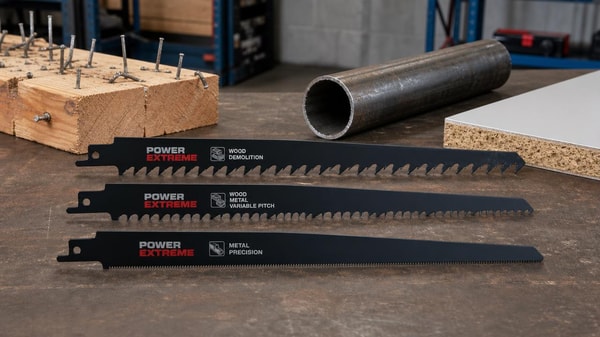
 Hand & Power ToolsReciprocating Saw Blades: Faster Demolition Starts With the Right Tooth DesignReciprocating saw blades work best when tooth design matches the job. Learn how to cut wood, metal, and mixed materials faster with better control, longer blade life, and fewer interruptions.Tooling & Hardware LeadMay 07, 2026
![]() Building HardwareStainless Steel Handrail Brackets for Coastal Projects: What to CheckStainless steel handrail brackets for coastal projects: learn what to check on grade, finish, fixings, and corrosion risk to avoid failures, ensure compliance, and choose with confidence.Tooling & Hardware LeadMay 07, 2026
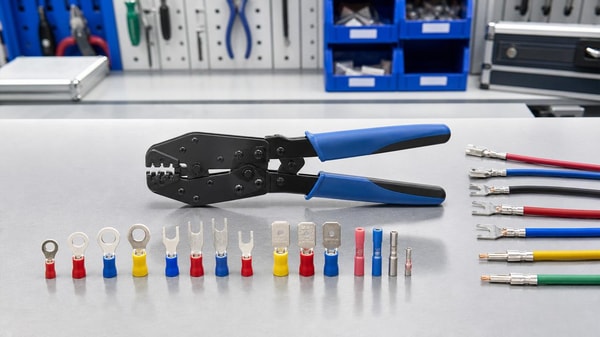
Building HardwareStainless Steel Handrail Brackets for Coastal Projects: What to CheckStainless steel handrail brackets for coastal projects: learn what to check on grade, finish, fixings, and corrosion risk to avoid failures, ensure compliance, and choose with confidence.Tooling & Hardware LeadMay 07, 2026 Hand & Power ToolsCrimping Tools Wholesale: How to Avoid Fit Issues Across TerminalsCrimping tools wholesale buyers: learn how to avoid terminal fit issues, compare key specs, and choose reliable suppliers to reduce rework, prevent failures, and improve repair consistency.Tooling & Hardware LeadMay 07, 2026
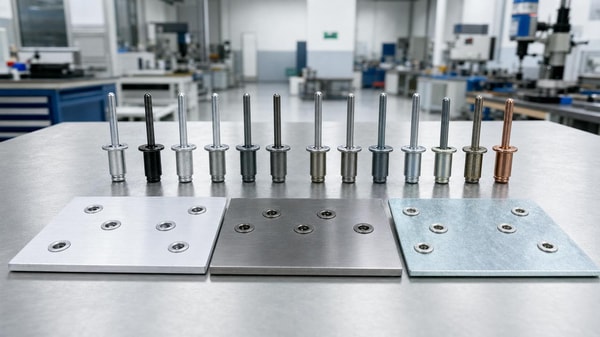
 Industrial FastenersBlind Rivets Wholesale: Material Matching Mistakes to AvoidBlind rivets wholesale buyers: avoid costly material matching mistakes. Learn how aluminum, steel, and stainless choices affect strength, corrosion, and long-term reliability.Tooling & Hardware LeadMay 07, 2026