Industry News
Curation by industry experts
Hot Articles
Popular Tags
Wind Resistant Patio Umbrellas: What to Check First
Choosing wind resistant patio umbrellas starts with the right checks: frame strength, canopy fabric, base stability, and weather-ready features. For buyers comparing patio umbrellas for restaurants or patio umbrellas with LED lights, understanding durability and smart lighting controls can prevent costly mistakes. This guide outlines what procurement teams, distributors, and sourcing professionals should evaluate first before making a confident purchase decision.
In the lighting and outdoor hospitality segment, a patio umbrella is no longer just a shade product. It often functions as part of an integrated exterior lighting setup, supports evening dining operations, and influences maintenance cost over a 12–36 month ownership cycle. For B2B buyers, the first review should therefore combine structural wind performance with lighting reliability, electrical safety, and serviceability.
Whether the requirement involves café terraces, hotel pool decks, rooftop lounges, or distributor stock planning, the best purchase decision begins with a disciplined checklist. Below, we break down the most important specifications, common sourcing mistakes, and commercial considerations that matter before placing an order.
Start with Wind Load, Frame Construction, and Opening Mechanism
The first question is simple: what level of wind resistance is actually required in the target environment? A patio umbrella used in a sheltered courtyard may perform well at 15–20 km/h wind conditions, while a beachfront dining area or rooftop terrace may regularly face 30–40 km/h gusts. Buyers should always request the supplier’s recommended operating range, closure guidelines, and the frame’s structural material details instead of relying on generic claims such as “heavy duty.”
For wind resistant patio umbrellas, the frame typically determines 50% or more of real-world durability. Aluminum remains a common commercial choice because it balances corrosion resistance with manageable weight. Steel may offer higher rigidity in some designs, but it needs stronger anti-rust treatment for humid or coastal locations. Fiberglass ribs are often preferred in windy environments because they flex rather than permanently deform when exposed to repeated gust loads.
Opening and locking systems also deserve close review. Crank systems are easy for hospitality staff to use, but gear quality matters. Pulley systems can be durable in larger diameters when rope quality and hardware grade are strong. For umbrellas above 3 m in diameter, buyers should inspect joint reinforcement, hub thickness, and whether replacement parts are available within 7–21 days. A structurally sound canopy is less useful if one damaged rib or locking collar puts the whole unit out of service during peak season.
Key structural checks before supplier shortlisting
- Confirm pole diameter and wall thickness, especially for commercial units in the 2.7 m to 4 m size range.
- Ask whether ribs are aluminum, steel, or fiberglass, and whether they are replaceable individually.
- Review the tilt mechanism carefully; some tilt systems introduce weak points under wind stress.
- Check if the design is center pole or cantilever, since cantilever models usually need heavier bases and more careful wind management.
- Request assembly instructions and spare-part availability for at least one operating season.
The table below summarizes practical frame checkpoints that buyers can use during quotation comparison. This is especially useful when multiple suppliers describe products with similar marketing language but different structural specifications.
A common sourcing error is comparing only diameter and price. In practice, two 3 m umbrellas can perform very differently if one uses thin aluminum ribs and a light hub assembly while the other uses reinforced joints and vented canopy geometry. The specification sheet should show enough detail to reveal those differences before samples are approved.
Evaluate Canopy Fabric, UV Stability, and LED Lighting Integration
Because this product category overlaps with outdoor lighting, canopy evaluation should not stop at color or shade size. Commercial buyers need to assess fabric weight, UV resistance, fade behavior, water repellency, and how the textile interacts with integrated LED components. If a patio umbrella with LED lights is intended for restaurant or resort use, light diffusion, wiring concealment, and access to power components become part of the product quality review.
Common canopy materials include polyester, solution-dyed polyester, and acrylic fabrics. Standard polyester may be suitable for lower-duty programs, but under strong sun exposure it often shows faster fading over 6–18 months. Solution-dyed polyester and acrylic fabrics generally offer better color retention and UV performance, making them more suitable for hospitality terraces that operate 5–7 days per week. Buyers should ask about fabric weight in gsm, seam reinforcement, and coating type rather than accepting broad statements like “sunproof.”
For lighting-enabled umbrellas, the LED system must be treated as a functional subsystem. Important checks include LED color temperature, lumen output, ingress protection, charging or wiring method, battery capacity if solar-assisted, and switch or remote-control reliability. In outdoor commercial environments, warm white output in the 2700K–3000K range is often preferred for hospitality ambiance, while pathway or retail-focused setups may use 3000K–4000K depending on branding and visibility needs.
Fabric and lighting selection priorities
If the umbrella is expected to support both daytime shade and evening revenue generation, the material and lighting package should be specified together. Dark fabrics may absorb more heat, while lighter tones improve visual brightness under integrated LEDs. Stitch density and reinforcement patches near rib pockets also matter because lighting-equipped umbrellas are often opened and closed more frequently during operating hours.
Typical performance comparison
The following table helps buyers compare common canopy and lighting configurations in a more practical way.
A useful commercial rule is to separate decorative LED umbrellas from true operational lighting products. If the umbrella only adds accent light for 2–3 evening hours, a basic integrated system may be sufficient. If it supports active dining, guest circulation, or branded outdoor merchandising for 6 or more hours each night, buyers should request clearer electrical and maintenance specifications from the supplier.
Do Not Ignore Base Weight, Mounting Method, and Site Conditions
Many failures blamed on the umbrella itself actually begin at the base. Even a well-designed wind resistant patio umbrella can underperform if paired with an undersized base or an unstable mounting surface. Procurement teams should review the umbrella, base, and installation environment as one combined system. This is especially important for commercial terraces where flooring, guest traffic, and furniture layout affect stability.
For center-pole models, typical freestanding base ranges may start around 30–50 kg for smaller units, but larger commercial sizes often require heavier support depending on canopy diameter and local wind exposure. Cantilever umbrellas usually demand substantially more ballast or fixed mounting. Buyers should ask suppliers for a recommended base matrix by size rather than selecting the cheapest compatible stand from a separate catalog.
Site conditions also change the requirement. A hotel deck with smooth stone flooring, wide open exposure, and evening sea breeze is very different from a sheltered café patio surrounded by walls. If the project includes LED power routing, the mounting plan must also consider cable protection, trip hazards, and access for cleaning crews. A visually attractive layout can become a safety issue if the base footprint conflicts with chairs, service carts, or drainage paths.
Questions to ask before confirming the base system
- What is the exact umbrella size and whether it is center pole or cantilever?
- Will the installation be portable, semi-permanent, or fixed through the floor?
- What is the typical wind exposure at the site during opening hours?
- Will the unit include integrated lighting, battery housing, or external wiring?
- How much clearance is needed for guest movement and service operations?
The table below provides a practical planning view that distributors and project buyers can use during site review.
For distributors, matching the correct base to each umbrella model reduces after-sales complaints significantly. It also improves customer confidence because the sales recommendation looks engineered rather than improvised. In this category, the base is not an accessory; it is a core safety component.
Review Electrical Safety, Controls, and Maintenance Access
When the product includes lighting, purchasing teams should assess more than brightness. Electrical reliability affects operating continuity, warranty claims, and site safety. Buyers comparing patio umbrellas with LED lights should clarify whether the system is battery-powered, solar-assisted, low-voltage wired, or mains-connected through an external transformer. Each option changes installation complexity, maintenance frequency, and replacement logistics.
Control method is another overlooked factor. Simple on/off switches may suit smaller cafés, but larger restaurant groups or hospitality operators often prefer dimming, grouped control, or remote operation to reduce staff handling time. If 20–50 umbrellas are used in one venue, even a 1-minute manual adjustment per unit can become a daily labor issue. Buyers should ask whether the control system supports zone-based operation, timed shutoff, or easy replacement of remotes and receivers.
Maintenance access should be visible in the design. Can LED strips, light modules, batteries, or connectors be serviced without replacing the full canopy? Are cables routed inside the ribs or externally clipped? How long does a typical component replacement take: 10 minutes, 30 minutes, or a full workshop return? For trade buyers, serviceability often matters as much as first cost because field repairs shape long-term margin and reputation.
Minimum electrical review points
- Outdoor suitability of connectors, switches, and light housings.
- Expected runtime per charge if battery or solar supported.
- Availability of replacement drivers, strips, battery packs, or control units.
- Compatibility with local voltage requirements and installation practices.
- Cleaning guidance to avoid water ingress or cable damage during daily washdown.
Typical maintenance planning benchmark
As a general commercial guideline, visually inspecting structural joints and lighting components every 30–60 days during peak season is a practical baseline. In coastal, humid, or high-turnover hospitality environments, that interval may need to shorten to every 2–4 weeks. Preventive checks are less costly than emergency replacement during busy service periods.
A good supplier should also provide a basic maintenance manual, spare part list, and recommended storage process for off-season periods. If these documents are missing, procurement teams should treat that as a risk signal, especially for LED-enabled models where support questions can arise after installation.
Build a Smarter B2B Buying Process: Sampling, Lead Time, and Commercial Risk Control
A strong specification is only part of the decision. Procurement teams also need a sourcing process that reduces risk before mass order confirmation. For wind resistant patio umbrellas in the lighting and outdoor commercial segment, a practical buying workflow usually includes 4 stages: requirement definition, sample review, pilot deployment, and full-scale order. This structure helps buyers verify both structural performance and lighting usability in real operating conditions.
During sample review, buyers should test opening force, rib stability, canopy finish, LED uniformity, and control responsiveness. If the product is intended for restaurant use, the sample should ideally be assessed in evening conditions for at least 2–3 service cycles. This reveals whether the light output is decorative only or truly functional for guest seating, menu visibility, and ambiance.
Lead time should be broken into components: sample preparation, fabric color confirmation, electronic component sourcing, production, and shipment. In many standard programs, the cycle may range from 3–6 weeks after approval, while customized lighting, branding, or special fabric colors can add 1–3 additional weeks. Buyers should confirm which components have the longest replenishment cycle, especially during seasonal demand peaks.
Commercial checkpoints before purchase order release
- Define application clearly: restaurant, hotel, retail terrace, event rental, or distributor stock.
- Match wind condition, umbrella size, and base system as a complete set.
- Review lighting specifications with the same rigor as frame specifications.
- Approve a sample or pilot batch before rolling out to multiple sites.
- Confirm spare parts, warranty handling process, and replacement lead times.
Common buying mistakes to avoid
The most frequent mistake is treating the umbrella as a seasonal commodity when it is actually an operational asset. Another common issue is choosing integrated LED lighting without verifying field service access. Some buyers also overlook how packaging affects last-mile damage, especially for longer ribs, light-equipped frames, and glass-free but delicate control components. Good sourcing decisions balance unit cost with installation efficiency, replacement speed, and venue uptime.
Distributors and agents can create additional value by pre-bundling recommended base systems, spare rib kits, and replacement lighting parts. That approach improves resale confidence and gives end customers a clearer ownership model instead of leaving them to solve compatibility issues after delivery.
Frequently Asked Questions from Procurement and Distribution Teams
How do I choose between a standard patio umbrella and a wind resistant patio umbrella?
Start with exposure level, operating hours, and service expectations. If the umbrella will be used occasionally in a protected residential-style setting, a standard model may be enough. If it is for restaurant terraces, hotels, rooftops, or coastal projects with repeated outdoor use, a wind resistant patio umbrella with reinforced ribs, vented canopy, and a properly matched base is usually the safer commercial option.
Are patio umbrellas with LED lights suitable for restaurants?
Yes, but only if the lighting system is specified for operational use rather than decoration alone. Restaurants should review color temperature, light distribution, outdoor protection, and service access. For dining environments, warm white output around 2700K–3000K is often preferred, and the control system should be simple enough for daily staff use.
What should distributors focus on when adding these products to inventory?
Distributors should prioritize 3 areas: reliable frame specifications, base compatibility, and spare part support. Stocking only the umbrella without the recommended base or replacement lighting components creates avoidable customer friction. It is also wise to standardize a limited range of sizes, fabrics, and lighting options so inventory can turn faster and support remains manageable.
How often should commercial users inspect LED patio umbrellas?
A practical schedule is every 30–60 days in regular service conditions and every 2–4 weeks in harsher environments such as coastal hospitality sites or high-volume restaurant operations. Inspections should cover ribs, hub joints, fasteners, canopy wear, connectors, switches, and any visible cable routing. Preventive inspection reduces unplanned downtime during peak business periods.
For sourcing teams, the first checks should always cover structure, canopy, base, and lighting as one integrated purchase decision. That approach improves safety, extends service life, and reduces the hidden cost of replacement, warranty handling, and site disruption. For restaurants, hotels, distributors, and commercial buyers, the right patio umbrella is not just wind resistant; it is operationally reliable, maintainable, and aligned with the lighting demands of outdoor business spaces.
If you are evaluating supplier options, comparing patio umbrellas for restaurants, or planning a product line that includes patio umbrellas with LED lights, GSR can help you assess specifications, sourcing risks, and category fit more effectively. Contact us to discuss your procurement priorities, request a tailored sourcing perspective, or explore more lighting and outdoor commercial solutions.
Recommended News
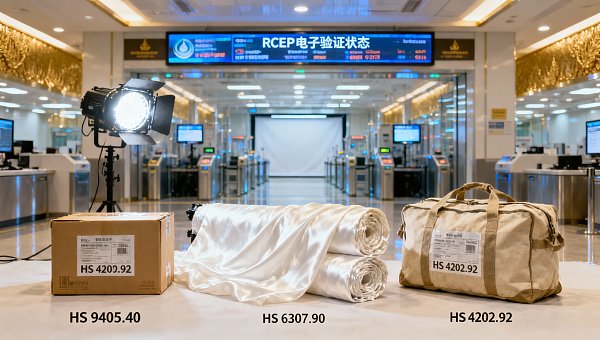
 Export UpdatesThailand Launches RCEP Origin Verification for Chinese Wedding Photo PropsRCEP origin verification for Chinese wedding photo props is live in Thailand—unlock zero tariffs & faster clearance for HS 9405.40, 4202.92, 6307.90 exports now.Apr 23, 2026
 Fabrics & YarnsTurkey TSE Mandates AATCC 100-2024 for Antibacterial Wedding BackdropsAATCC 100-2024 is now mandatory for antibacterial wedding backdrops entering Turkey — ensure compliance, avoid customs delays, and secure market access before 1 June 2026.Textile Industry AnalystApr 23, 2026
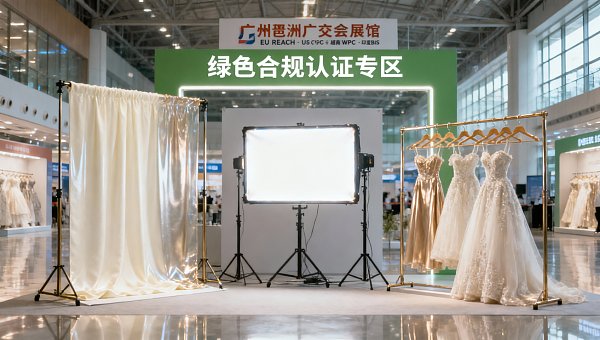
 Export UpdatesCanton Fair Phase II 2026 Launches Green Compliance Zone for Wedding Photo PropsGreen Compliance Zone launched at Canton Fair 2026 for wedding photo props — EU REACH, US CPSC & more. Get certification-ready now!Apr 23, 2026
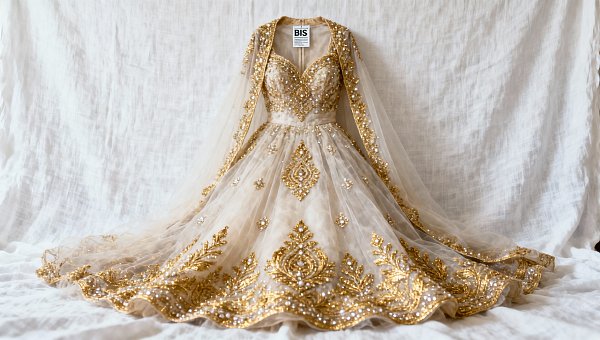
 Garment MfgIndia BIS Mandate for Wedding Apparel: IS 15620:2026 Effective July 2026India BIS mandates IS 15620:2026 for wedding apparel — bridal gowns, veils & formal wear must meet safety testing by July 2026. Act now to avoid port delays!Textile Industry AnalystApr 23, 2026