Industry News
Curation by industry experts
Hot Articles
Popular Tags
Threading Taps and Dies: How to Match Tool Material to the Job
Selecting the right tool material is critical when working with threading taps and dies, especially for technical evaluators comparing performance, cost, and application fit. From high-speed steel to carbide and specialty coatings, each option affects thread quality, tool life, and machining stability. This guide explains how to match tool material to the job with greater precision and confidence.
In hardware and fastener supply chains, tool selection is rarely a simple catalog decision. A tap or die that performs well on low-carbon steel at 20 pieces per shift may fail quickly on stainless or alloy steel at 500 pieces per batch. For technical evaluators, the real task is to align tool material with workpiece hardness, production volume, machine stability, coolant conditions, and total cost per threaded hole or external thread.
That is why threading taps and dies should be reviewed as part of a broader sourcing and process-control framework. For B2B buyers, especially those serving industrial hardware, maintenance supply, contract machining, and export manufacturing, a sound material match reduces rework, protects delivery schedules, and improves the consistency of finished components across multiple lots.
Why Tool Material Matters in Threading Performance
When evaluating threading taps and dies, material choice directly affects 4 core outcomes: cutting edge retention, resistance to heat, fracture risk, and surface finish. These factors influence not only tool life but also thread accuracy, burr formation, and the frequency of tool changes across a 1-shift or 3-shift production environment.
The link between tool material and workpiece behavior
Different metals respond to cutting loads in very different ways. Aluminum tends to stick and build up on the cutting edge. Stainless steel work-hardens quickly and generates more heat. Medium-carbon steel creates higher torque demand, while hardened alloys can chip weaker cutting edges in fewer than 20 to 50 holes if the wrong tool grade is used.
Because of this, a low-cost tool is not automatically the lowest-cost option. In many industrial settings, the cost of one broken tap inside a high-value part can exceed the price difference between standard high-speed steel and premium coated tooling for an entire production run.
What technical evaluators should measure
A practical review of threading taps and dies should include at least 6 checks:
- Workpiece material type and hardness range
- Thread size, pitch, and tolerance class
- Blind-hole versus through-hole application
- Machine type: manual, drill press, CNC, or tapping center
- Coolant or lubrication method
- Target output per batch, per day, or per month
If even 2 of these variables change, the ideal tool material may change as well. This is especially relevant for multi-market suppliers who handle short runs for custom fasteners and longer runs for standardized threaded components.
The table below provides a practical comparison of common material options used in threading taps and dies across typical industrial applications.
For most industrial buyers, HSS remains the baseline for versatility, while cobalt HSS often delivers better value in stainless and tougher steels. Carbide can offer a major productivity advantage, but only when machine rigidity, fixturing, and process control are strong enough to support it.
A note on coatings
Coatings such as TiN, TiCN, or TiAlN do not replace the need for the correct base material. They improve wear resistance, reduce friction, and help manage heat, but the gain may range from 15% to 80% depending on the material being threaded, cutting speed, lubrication, and chip evacuation. A poor base material with a premium coating still remains a poor match in many jobs.
How to Match Threading Taps and Dies to the Actual Job
A practical matching process starts with the workpiece, not the tool shelf. Technical evaluators should define the operating conditions first, then narrow down the appropriate material, geometry, and coating. This reduces the risk of choosing tooling based only on unit price or brand familiarity.
Step 1: Start with the workpiece material and hardness
As a general rule, soft non-ferrous metals can often be threaded effectively with quality HSS, while stainless steels and higher-alloy materials usually justify cobalt HSS or carbide. If the workpiece hardness moves from below 25 HRC to above 35 HRC, tool stress rises sharply and the acceptable margin for poor alignment becomes much smaller.
Step 2: Consider production volume and cycle expectations
For prototypes, maintenance work, or lots under 100 pieces, flexibility and lower initial investment may matter more than peak output. For recurring runs of 1,000 to 10,000 parts, however, the economics often shift. Longer tool life, fewer tool changes, and more predictable thread quality can justify upgrading from HSS to cobalt or carbide grades.
Step 3: Review machine rigidity and operator control
This is where many sourcing decisions fail. Carbide threading taps and dies can be highly efficient, but they are less forgiving in unstable setups. On manual or lightly supported machines, HSS or cobalt HSS may outperform carbide in real production because they tolerate vibration, small misalignment, and interrupted feed more safely.
Step 4: Check chip evacuation and lubrication needs
Blind holes require especially careful chip control. Spiral flute taps may be preferred for chip removal, while form taps may be considered for ductile materials where chipless threading is feasible. Inadequate lubrication can reduce tool life by 30% or more in sticky or work-hardening materials, especially when tapping deeper than 1.5 times thread diameter.
The following matrix helps technical evaluators connect common job conditions to suitable threading taps and dies material choices.
The matrix shows that there is no single best material across all jobs. The best result comes from balancing workpiece difficulty, volume, and machine capability. In many B2B sourcing reviews, the most efficient decision is not the highest-grade tool, but the most stable tool for the actual process window.
A 5-point evaluation method for procurement teams
- Define the top 3 workpiece materials by annual usage.
- Segment jobs into low, medium, and high volume bands.
- Review current breakage, regrind, and replacement frequency.
- Compare cost per usable thread, not cost per tool.
- Run a controlled trial over at least 2 to 3 production lots.
This method is particularly useful for importers, contract manufacturers, and industrial distributors who supply multiple end-use sectors and need a defensible basis for supplier qualification.
Common Selection Mistakes and Risk Controls
Even experienced buyers can misjudge threading taps and dies when too much attention is placed on catalog claims and too little on process conditions. Most failures in service can be traced to 3 practical errors: over-specifying, under-specifying, or ignoring setup quality.
Mistake 1: Buying carbide for every difficult material
Carbide is often treated as the premium answer, but it is not always the most cost-effective answer. In an unstable machine, a carbide tap may chip in the first few parts, while a cobalt HSS tool may complete several hundred threads with acceptable consistency. Tool material must match process capability, not only material hardness.
Mistake 2: Ignoring coating compatibility
A coating should be selected according to friction, heat, and adhesion risks. For example, some jobs benefit more from lower friction and anti-galling behavior than from maximum hardness alone. Technical evaluators should ask not only whether a tool is coated, but what problem the coating is intended to solve in that specific thread-forming environment.
Mistake 3: Comparing suppliers only on unit price
In industrial sourcing, the hidden costs are often larger than the listed cost. These include machine downtime, scrap risk, inconsistent thread gauge results, and expedited replenishment. A tool that costs 20% more but lasts 50% longer may create a stronger margin position, especially where delivery reliability is contract-sensitive.
The table below outlines practical risk-control points that can be used during technical review, supplier evaluation, and incoming quality planning.
For procurement and technical teams, these controls support better supplier discussions and more reliable comparative testing. They also help standardize review criteria across global sourcing projects where multiple factories or distributors may propose similar threading taps and dies with very different real-world performance.
Frequently asked technical questions
Is HSS still a valid choice for modern industrial threading?
Yes. For many mixed-material workshops and moderate-volume runs, HSS remains a reliable and economical standard. It is especially useful where material variety is high and process conditions are not perfectly controlled.
When is cobalt HSS worth the premium?
It is often justified in stainless steel, tougher alloy grades, and applications where heat buildup shortens standard HSS life too quickly. If tool change frequency is affecting output or consistency, cobalt HSS deserves close evaluation.
Should technical buyers always request coated threading taps and dies?
Not always. Coatings add value when friction, adhesion, or heat are the limiting factors. In low-volume manual use, the cost increase may not produce a meaningful return. In repetitive machining, however, the improvement can be significant if the coating is matched to the workpiece and cutting conditions.
Procurement Guidance for Global Industrial Supply Chains
For organizations sourcing tooling across borders, the selection of threading taps and dies should be integrated into supplier qualification, inventory planning, and process validation. A technically suitable tool that cannot be replenished in 2 to 4 weeks may create more operational risk than a slightly lower-performing option with stable supply continuity.
What to ask suppliers before approval
- Which workpiece materials are the tool grades intended for?
- Are performance recommendations based on manual or machine use?
- What are the standard lead times for repeat orders: 7 days, 15 days, or longer?
- How is lot consistency controlled for geometry and finish?
- Can trial quantities be supplied before annual volume commitment?
These questions help technical evaluators move beyond generic product claims and toward evidence-based sourcing. In sectors where fasteners, fittings, enclosures, and fabricated metal parts must meet tight delivery windows, tooling reliability becomes part of overall supply chain resilience.
Matching tool material to the job is ultimately about reducing uncertainty. The right choice among carbon steel, HSS, cobalt HSS, carbide, and coated options depends on a clear reading of material behavior, production volume, machine stability, and risk tolerance. For technical evaluators and procurement teams working with threading taps and dies, a disciplined comparison framework improves thread quality, lowers failure cost, and supports more confident supplier decisions.
If your team is reviewing industrial tooling options across hardware and fastener sourcing programs, Global Supply Review can help you assess supplier fit, compare technical positioning, and identify more reliable procurement pathways. Contact us to discuss your application requirements, request a tailored sourcing perspective, or learn more solutions for industrial tool evaluation.
Recommended News
 Export UpdatesNingbo Port Launches 'Green Export Index' for Wedding Photography GoodsWedding photography goods exporters: Ningbo Port’s new Green Export Index reveals 98.2% customs pass rate for OEKO-TEX®/GOTS fabrics & IEC 62471 LED lights — boost your sustainability credibility now.May 09, 2026
 Carton & PlasticsECHA Adds D-Limonene to SVHC List: Impact on Bridal Photo Spray ExportsBridal photo spray exporters: ECHA’s D-Limonene SVHC listing (May 2026) triggers urgent SDS & label updates for EU-bound hair and fabric sprays.Packaging Supply ExpertMay 09, 2026
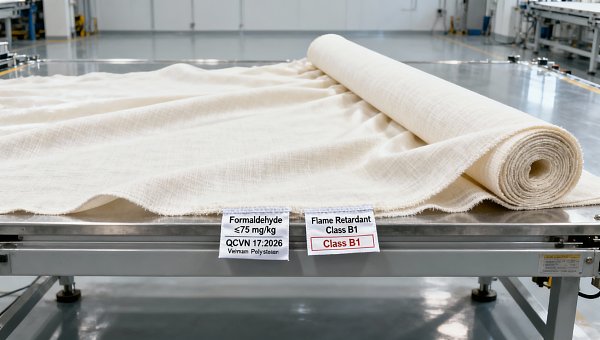
 Fabrics & YarnsVietnam Enforces QCVN 17:2026 for Wedding Photo BackdropsVietnam enforces QCVN 17:2026 for wedding photo backdrops—mandatory formaldehyde testing & B1 flame-retardant labeling. Ensure compliance now to avoid market access delays.Textile Industry AnalystMay 09, 2026
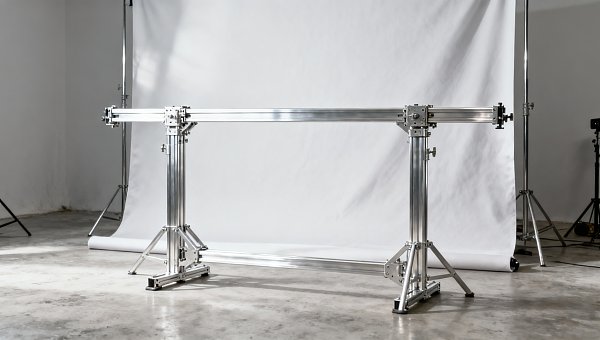
 Building HardwareIndia BIS Mandate: Aluminum Photo Backdrop Stands Must Pass Dual Testing by June 30, 2026Aluminum photo backdrop stands for wedding photography must pass BIS salt spray & load testing by June 30, 2026—secure certification now to avoid import bans in India.Tooling & Hardware LeadMay 09, 2026