Industry News
Curation by industry experts
Hot Articles
Popular Tags
Wholesale Grease Guns: Manual or Pneumatic for High-Volume Maintenance?
For after-sales maintenance teams handling repetitive lubrication tasks, choosing the right wholesale grease guns can directly affect uptime, labor efficiency, and service consistency. Whether you are comparing manual models for control and portability or pneumatic options for speed in high-volume maintenance, understanding the trade-offs is essential to making a cost-effective procurement decision.
Why are wholesale grease guns such an important purchasing decision for after-sales maintenance teams?
For service departments, lubrication is not a minor task. It supports bearings, joints, hinges, agricultural equipment, construction machinery, fleet components, industrial rollers, and other moving parts that fail quickly when grease is applied inconsistently. That is why wholesale grease guns matter far beyond unit price. The right tool affects technician fatigue, lubrication accuracy, maintenance speed, and even warranty outcomes.
Buyers sourcing wholesale grease guns for high-volume maintenance usually focus on more than product availability. They need repeatable performance across many jobs, compatibility with common grease cartridges or bulk filling methods, reliable pressure delivery, and practical service life in workshops or field conditions. A grease gun that works well for occasional use may not perform the same way when technicians apply grease hundreds of times per week.
This is especially relevant in broad industrial and commercial environments where maintenance crews support multiple equipment types. In these cases, the choice between manual and pneumatic tools becomes a strategic decision rather than a simple catalog selection.
What is the real difference between manual and pneumatic wholesale grease guns?
At the most basic level, manual grease guns rely on hand force, while pneumatic grease guns use compressed air to deliver grease. That sounds simple, but the operational difference is significant in day-to-day maintenance.
Manual models are valued for portability, lower upfront cost, and better control in lighter service work. They are often preferred when technicians move between job sites, climb ladders, work in restricted spaces, or service equipment where over-greasing is a concern. Lever and pistol-grip versions both exist, with lever styles often generating higher pressure and pistol-grip models offering easier one-hand use in tighter positions.
Pneumatic wholesale grease guns are built for throughput. They reduce hand strain, accelerate repetitive lubrication, and deliver more consistent output during long maintenance shifts. In facilities with reliable compressed air infrastructure, pneumatic tools can dramatically improve service speed, especially when teams maintain fleets, production lines, or heavy machinery on fixed schedules.
The real trade-off is this: manual tools maximize mobility and control, while pneumatic tools maximize productivity and operator comfort in high-volume environments.
Which option is better for high-volume maintenance: manual or pneumatic?
For most high-volume maintenance operations, pneumatic wholesale grease guns are usually the more efficient choice. If your team services many grease points every day, labor savings can quickly outweigh the higher purchase price. Repetitive manual pumping increases fatigue, slows work pace, and can create inconsistency between technicians. Pneumatic models help standardize output and keep service intervals on schedule.
That said, “better” depends on the maintenance setting. If your after-sales team is largely mobile and works in customer locations without dependable compressed air access, manual grease guns may still be the smarter procurement option. They also remain useful as backup tools even in pneumatic-equipped workshops.
A practical way to decide is to examine three operating conditions:
- How many lubrication points are serviced per shift
- Whether technicians work mainly in-house or in the field
- Whether air supply is stable, safe, and already integrated into the maintenance workflow
If all three factors point toward repetitive, centralized, workshop-based service, pneumatic tools are usually the stronger long-term answer. If not, manual wholesale grease guns may deliver better flexibility and lower operational complexity.
What comparison points should buyers review before ordering wholesale grease guns?
Procurement teams often compare price first, but that is rarely enough. A better buying framework looks at the total impact on maintenance output, training, consumables, and replacement cycles. The table below summarizes the most useful decision points.
When evaluating wholesale grease guns, buyers should also check hose durability, coupler quality, seal performance, cartridge compatibility, output pressure, and spare parts support. In a wholesale program, standardization is often as valuable as performance. If every technician uses the same fittings and refill method, training becomes easier and errors decrease.
Which maintenance scenarios favor manual wholesale grease guns?
Manual wholesale grease guns still make sense in many professional environments, even when buyers are tempted to move entirely toward powered tools. They are a strong fit when lubrication routes are irregular, service locations are spread out, or access to compressed air is limited.
Typical scenarios include mobile repair vans, agricultural service calls, equipment commissioning at customer sites, and light-to-medium lubrication frequency. They are also useful when technicians need a slower, more tactile approach to avoid seal damage or accidental over-application. For some machinery, especially older units with variable fitting condition, manual pressure feedback helps the operator respond more carefully.
Another advantage is procurement simplicity. Manual wholesale grease guns usually require less supporting infrastructure, fewer integration questions, and lower training thresholds. For distributors or sourcing managers supplying diverse customer segments, that makes them easier to stock as a broad-market offering.
When do pneumatic wholesale grease guns deliver the strongest return on investment?
Pneumatic wholesale grease guns deliver the best return when maintenance volume is high enough to convert faster lubrication into measurable labor savings. In factories, fleet depots, mining support facilities, and heavy equipment workshops, the time saved per lubrication point multiplies quickly. Even a small reduction in service time per asset can free technicians for inspections, repairs, and urgent breakdown work.
These tools are also valuable where technician fatigue creates hidden costs. Hand strain can reduce output, increase inconsistency, and lower morale in repetitive maintenance roles. Pneumatic models help maintain steady pace across long shifts and reduce variability between experienced and less experienced staff.
However, ROI depends on system readiness. If compressed air lines are poorly maintained, moisture control is weak, or hoses create safety issues, the expected productivity gain can be reduced. In short, pneumatic wholesale grease guns produce the best results when the maintenance environment is already organized for powered tooling.
What mistakes do buyers make when sourcing wholesale grease guns in bulk?
One common mistake is buying only on unit cost. Low-cost tools may appear attractive in a wholesale order, but weak couplers, poor seals, inconsistent output, or short service life can increase downtime and replacement expense. For after-sales maintenance teams, reliability under daily use is usually more important than the lowest catalog price.
Another mistake is choosing pneumatic models without verifying actual site conditions. If technicians lack stable air access, they may carry a powered tool but still struggle to use it efficiently. This creates frustration rather than productivity. Bulk buyers should map the service environment before selecting the dominant tool type.
A third error is ignoring grease compatibility and refill methods. Some teams use standard cartridges, while others prefer bulk filling for cost control. If the selected wholesale grease guns do not match established lubrication practices, procurement savings can be canceled by workflow disruption.
Finally, many buyers underestimate the value of standard accessories. Hoses, couplers, extension pipes, and replacement seals influence uptime just as much as the gun body itself. A well-supported wholesale program should consider the full operating kit, not just the primary tool.
How should after-sales teams choose the right specification instead of just the right type?
Selecting between manual and pneumatic is only the first step. The better question is which specification matches your actual lubrication workflow. After-sales teams should review pressure requirement, grease consistency, coupler retention, hose length, cartridge capacity, trigger comfort, and maintenance frequency. A mismatched specification can cause poor performance even if the correct power type was chosen.
For example, a team servicing hard-to-reach fittings may benefit from flexible hoses and locking couplers more than from extra pressure alone. A workshop servicing many identical machines may prioritize output consistency and fast cartridge replacement. Mobile service teams may care most about weight, durability, and simple operation in variable weather conditions.
It is also wise to test one or two models before expanding a wholesale grease guns order. Pilot use can reveal technician preferences, leakage issues, refill efficiency, and cleaning requirements. These practical details are often missing from standard product sheets but become decisive in real maintenance work.
What are the most useful questions to ask a supplier before placing a wholesale grease guns order?
Before finalizing procurement, buyers should clarify a focused list of operational questions. This helps reduce mismatch risk and improves long-term sourcing confidence.
- What output pressure and delivery rate can the tool maintain under regular workshop use?
- Is the model designed for cartridge loading, bulk filling, or both?
- Are replacement hoses, seals, couplers, and repair kits readily available?
- How does the supplier support consistency across large batch orders?
- What usage environment is recommended: field service, workshop use, or intensive industrial cycles?
- Can the supplier provide guidance on matching manual or pneumatic wholesale grease guns to your maintenance volume?
For sourcing managers, these questions create a stronger basis for comparison than pricing alone. They also help identify suppliers that understand real maintenance demands rather than simply reselling generic hardware.
So, should you choose manual or pneumatic wholesale grease guns?
If your after-sales team works across multiple locations, handles mixed equipment, and values portability and control, manual wholesale grease guns remain a smart and dependable option. If your operation is centralized, repetitive, and built around high service throughput, pneumatic wholesale grease guns will usually provide stronger productivity and lower operator strain.
In many cases, the best answer is not either-or but a combined tool strategy: pneumatic models for primary workshop lubrication and manual units for field work, backup use, and sensitive applications. That approach often gives maintenance teams the flexibility to protect uptime without overcommitting to one workflow.
If you need to confirm the best wholesale grease guns program for your maintenance environment, start by discussing service volume, equipment types, grease format, air supply conditions, spare parts availability, and expected replacement cycles. Those questions will lead to a more accurate specification, a more efficient procurement plan, and better long-term value from every lubrication task.
Recommended News
 Export UpdatesNingbo Port Launches 'Green Export Index' for Wedding Photography GoodsWedding photography goods exporters: Ningbo Port’s new Green Export Index reveals 98.2% customs pass rate for OEKO-TEX®/GOTS fabrics & IEC 62471 LED lights — boost your sustainability credibility now.May 09, 2026
 Carton & PlasticsECHA Adds D-Limonene to SVHC List: Impact on Bridal Photo Spray ExportsBridal photo spray exporters: ECHA’s D-Limonene SVHC listing (May 2026) triggers urgent SDS & label updates for EU-bound hair and fabric sprays.Packaging Supply ExpertMay 09, 2026
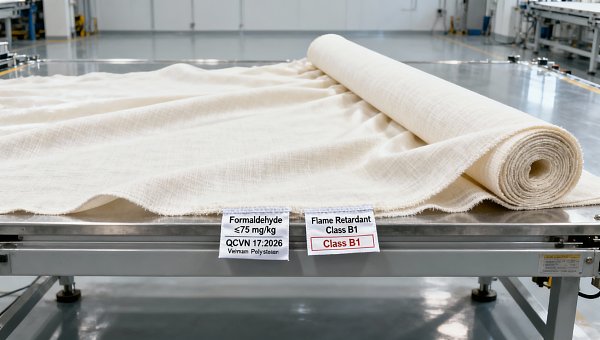
 Fabrics & YarnsVietnam Enforces QCVN 17:2026 for Wedding Photo BackdropsVietnam enforces QCVN 17:2026 for wedding photo backdrops—mandatory formaldehyde testing & B1 flame-retardant labeling. Ensure compliance now to avoid market access delays.Textile Industry AnalystMay 09, 2026
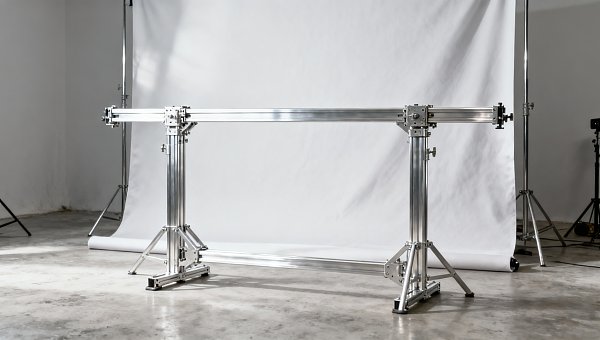
 Building HardwareIndia BIS Mandate: Aluminum Photo Backdrop Stands Must Pass Dual Testing by June 30, 2026Aluminum photo backdrop stands for wedding photography must pass BIS salt spray & load testing by June 30, 2026—secure certification now to avoid import bans in India.Tooling & Hardware LeadMay 09, 2026