Industry News
Curation by industry experts
Hot Articles
Popular Tags
Wholesale Hydraulic Floor Jacks: What Affects Total Cost Beyond Unit Price
For finance approvers evaluating wholesale hydraulic floor jacks, the real cost goes well beyond the quoted unit price. Freight, duty, compliance, warranty risk, lead times, and supplier reliability can all reshape total landed cost and long-term ROI. This article breaks down the hidden cost drivers that matter most, helping decision-makers compare sourcing options with greater confidence and budget control.
The Cost Conversation Around Wholesale Hydraulic Floor Jacks Has Changed
In today’s sourcing environment, wholesale hydraulic floor jacks are no longer evaluated only by catalog price or discount tiers. Procurement teams, import managers, and finance approvers are responding to a broader shift: volatility in freight markets, tighter product safety expectations, higher after-sales accountability, and growing pressure to defend working capital. As a result, the lowest quotation is often no longer the lowest total cost option.
This matters especially in B2B purchasing, where floor jacks may be sourced for distribution, retail programs, workshops, fleet maintenance operations, or industrial tool portfolios. A finance reviewer needs more than a side-by-side unit price sheet. The real question is how each sourcing option performs once shipping delays, claims rates, inspection expense, documentation quality, and inventory carrying costs are included.
The current trend is clear: buyers are moving from price comparison to cost architecture analysis. That shift is reshaping how wholesale hydraulic floor jacks should be budgeted, approved, and negotiated.
Why Total Landed Cost Is Becoming the Main Decision Lens
Several market signals are driving this change. First, logistics is less predictable than it once was. Ocean freight rates can swing, inland trucking costs vary by region, and port congestion can disrupt time-sensitive replenishment plans. Second, product compliance is receiving more scrutiny, particularly for lifting equipment where failure can create legal, operational, and reputational exposure. Third, supplier differentiation is widening. Two factories may offer similar-looking hydraulic jacks, but their internal quality controls, packaging standards, test procedures, and spare parts support can be very different.
For finance teams, these developments translate into one practical reality: total landed cost and cost-to-serve now provide a more reliable basis for approval than invoice price alone. A cheaper item that generates returns, replacement freight, or delayed market entry can quickly become the more expensive choice.
Key cost shift signals in the market
The Biggest Cost Drivers Beyond Unit Price
When comparing wholesale hydraulic floor jacks, finance approvers should expect a layered cost structure. The most common hidden drivers are not unusual; they are simply undercounted in early-stage sourcing discussions.
1. Freight, packaging, and cube efficiency
Hydraulic floor jacks are heavy products, so freight economics matter disproportionately. Packaging dimensions, pallet utilization, and container loading efficiency can significantly alter the landed cost per unit. A supplier with a slightly higher ex-works price may still deliver lower total cost if packaging is optimized and damage rates are reduced. Finance teams should ask not only for freight estimates, but also for carton dimensions, net and gross weight, pallet pattern, and expected units per container.
2. Duties, tariffs, and customs administration
Import duty is rarely just a percentage line item. The actual burden may include customs brokerage, document corrections, inspection fees, and delays caused by inconsistent declarations. For wholesale hydraulic floor jacks sourced across borders, even minor paperwork errors can create demurrage, storage charges, or stockout risk. This is why a financially sound sourcing decision includes documentation reliability, not just tariff classification.
3. Quality failure and warranty exposure
This is often the most underestimated cost category. If seals fail, lifting performance is inconsistent, or finish quality leads to corrosion complaints, the original unit savings disappear quickly. Return handling, reverse logistics, customer credits, technician time, and reputation damage can exceed the value of the initial purchase discount. A lower upfront quote for wholesale hydraulic floor jacks should therefore be stress-tested against expected claims rates and replacement policy terms.
4. Compliance and testing requirements
As buyer expectations rise, compliance is becoming a budget line rather than a checkbox. Load testing, material verification, labeling, user instructions, and market-specific conformity requirements all add cost if they are not built into the sourcing plan from the beginning. For finance approvers, the key issue is whether compliance cost is visible early or appears later as disruption expense.
5. Lead time and inventory carrying cost
Longer lead times may force buyers to increase safety stock, which directly affects working capital. For distributors and importers handling wholesale hydraulic floor jacks, that means cash is locked in inventory for longer periods. If demand is seasonal or promotion-driven, delayed arrivals can also reduce sell-through velocity and increase markdown risk. The finance impact is not theoretical; it appears in warehousing, financing, and missed revenue windows.
6. Supplier reliability and communication cost
A supplier that requires constant correction consumes hidden administrative resources. Repeated follow-up on production status, missing files, unclear specifications, and inconsistent packing details create overhead inside the buyer’s organization. This cost may not appear in landed cost formulas, but it affects sourcing productivity and approval confidence. Reliable execution lowers transaction friction, which is a real economic advantage.
Who Feels These Cost Changes Most Strongly
Not every buyer experiences these pressures in the same way. The impact depends on business model, sales channel, and tolerance for after-sales complexity.
A Practical Trend: Finance Teams Are Asking Better Sourcing Questions
One notable shift in the market is that finance stakeholders are moving upstream in the sourcing process. Instead of reviewing purchase requests only at the final pricing stage, they are asking earlier questions about payment terms, claim assumptions, supplier dependency, and replenishment risk. This is a healthy trend because it aligns sourcing decisions with actual profitability.
For wholesale hydraulic floor jacks, the better questions usually include: What is the expected delivered cost under different freight scenarios? What claim rate has the supplier historically supported? Is pre-shipment inspection included or separate? How much inventory is needed to protect service levels? What happens if a batch has leakage or finish defects? These questions do not slow procurement; they improve accuracy.
How to Evaluate Sourcing Options More Realistically
A strong evaluation framework for wholesale hydraulic floor jacks should combine hard cost, operational risk, and future flexibility. Price remains important, but it should sit inside a fuller model rather than dominate it.
Recommended decision checks
- Compare ex-works, FOB, and landed cost, not just unit price.
- Model at least two freight scenarios and one delay scenario.
- Estimate claims reserve based on product complexity and supplier track record.
- Review compliance documents before final approval, not after deposit payment.
- Quantify inventory carrying cost if lead times exceed forecast assumptions.
- Assess communication quality and responsiveness as a cost risk signal.
- Check whether spare parts, manuals, and warranty procedures are defined in writing.
This approach is especially useful when comparing multiple suppliers of wholesale hydraulic floor jacks that seem similar on paper. In many cases, the apparent price leader loses its advantage once support costs and operational volatility are included.
What Signals Are Worth Monitoring Over the Next Buying Cycles
Looking ahead, finance approvers should monitor a few signals closely. The first is logistics normalization versus renewed volatility. The second is whether buyers in your market are demanding stronger safety documentation or improved packaging standards. The third is supplier concentration risk: if too much volume is placed with one source, a single disruption can raise emergency procurement cost sharply.
Another useful signal is the supplier’s willingness to discuss process control, not only quotation. Suppliers that can explain testing routines, packaging methods, and corrective action procedures usually provide more stable cost outcomes. In the market for wholesale hydraulic floor jacks, execution maturity is increasingly a financial variable, not just a quality variable.
A Smarter Approval Mindset for Better ROI
The main takeaway is straightforward: evaluating wholesale hydraulic floor jacks by unit price alone is no longer sufficient in a market shaped by freight instability, compliance pressure, and after-sales accountability. The better approval standard is total commercial impact. That includes landed cost, risk-adjusted quality, inventory burden, and execution reliability.
For organizations seeking stronger budget control, the most useful next step is to build a simple approval checklist that forces each quotation to answer the same cost questions. If your team wants to judge how current sourcing trends affect your own business, focus on five points: delivered cost sensitivity, compliance readiness, warranty exposure, lead-time-related working capital, and supplier execution consistency. These are the areas most likely to determine whether a quotation for wholesale hydraulic floor jacks protects margin or quietly erodes it over time.
Recommended News
 Export UpdatesNingbo Port Launches 'Green Export Index' for Wedding Photography GoodsWedding photography goods exporters: Ningbo Port’s new Green Export Index reveals 98.2% customs pass rate for OEKO-TEX®/GOTS fabrics & IEC 62471 LED lights — boost your sustainability credibility now.May 09, 2026
 Carton & PlasticsECHA Adds D-Limonene to SVHC List: Impact on Bridal Photo Spray ExportsBridal photo spray exporters: ECHA’s D-Limonene SVHC listing (May 2026) triggers urgent SDS & label updates for EU-bound hair and fabric sprays.Packaging Supply ExpertMay 09, 2026
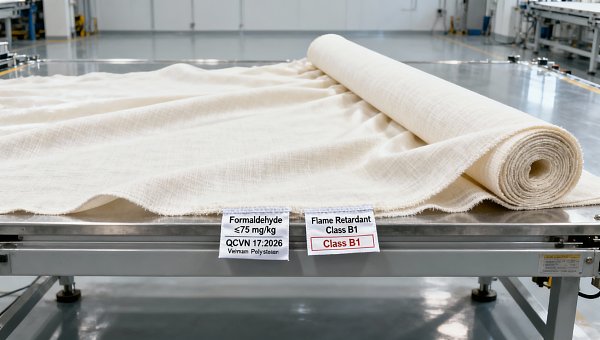
 Fabrics & YarnsVietnam Enforces QCVN 17:2026 for Wedding Photo BackdropsVietnam enforces QCVN 17:2026 for wedding photo backdrops—mandatory formaldehyde testing & B1 flame-retardant labeling. Ensure compliance now to avoid market access delays.Textile Industry AnalystMay 09, 2026
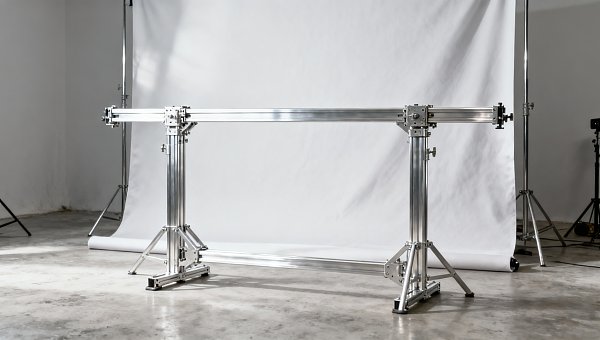
 Building HardwareIndia BIS Mandate: Aluminum Photo Backdrop Stands Must Pass Dual Testing by June 30, 2026Aluminum photo backdrop stands for wedding photography must pass BIS salt spray & load testing by June 30, 2026—secure certification now to avoid import bans in India.Tooling & Hardware LeadMay 09, 2026