Industry News
Curation by industry experts
Hot Articles
Popular Tags
EU Enforces EN IEC 62471:2025 for LED Ring Lights in Wedding Photography
As of 1 May 2026, the European Union has enforced the updated EN IEC 62471:2025 standard for LED ring lights, softboxes, and smart fill-light equipment used in wedding photography. This regulatory shift directly affects manufacturers, exporters, and distributors of professional lighting gear—particularly those based in China, where over 83% of such export-oriented lighting producers are located.
Event Overview
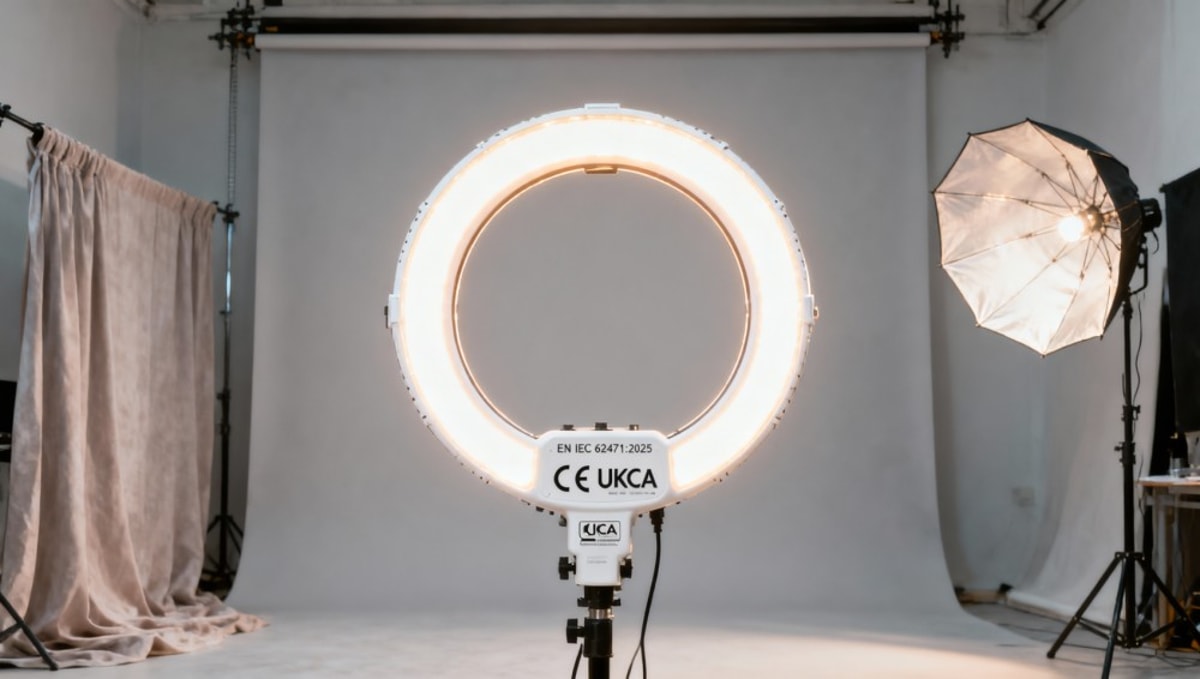
Effective 1 May 2026, the EU mandates compliance with EN IEC 62471:2025 for all imported LED ring lights, soft light panels, and intelligent supplementary lighting devices intended for bridal photography applications. Under this requirement, products must undergo photobiological safety testing to confirm classification as Risk Group 0 (RG0) or Risk Group 1 (RG1), and must bear both CE and UKCA markings. Non-compliant units will be detained or rejected at EU customs. Verification of test reports and technical documentation is now a prerequisite for importers and distributors.
Industries Affected
Direct Exporters & Trading Companies
These entities face immediate operational impact because customs clearance now hinges on verified photobiological safety certification. A lack of valid RG0/RG1 test reports—or incomplete technical files—will halt shipments, trigger rework delays, or lead to return costs. Documentation gaps may also affect contractual obligations with EU-based buyers.
Manufacturers & OEM/ODM Lighting Producers
Over 83% of global wedding-photography LED lighting exports originate from Chinese manufacturers. These firms must now integrate EN IEC 62471:2025 testing into their product development and QC workflows. The standard applies not only to finished ring lights but also to integrated modules (e.g., driver + LED array combinations) used in smart lighting systems.
Distributors & Importers in the EU/UK
EU- and UK-based distributors are now responsible for due diligence on supplier-provided documentation. They must verify that test reports include full spectral irradiance data, measurement conditions aligned with Clause 6 of EN IEC 62471:2025, and correct risk group assignment—not just generic ‘safe’ declarations. Failure to do so may expose them to liability under EU Market Surveillance Regulation (EU) 2019/1020.
Supply Chain Service Providers (Testing Labs, Certification Bodies, Technical Documentation Agencies)
Third-party service providers supporting lighting exporters are seeing increased demand for EN IEC 62471:2025-specific assessments. However, not all labs accredited under older editions (e.g., EN 62471:2006) are automatically authorized for the 2025 version—especially where updated measurement protocols for pulsed or dimmable LED sources apply.
What Enterprises and Practitioners Should Focus On Now
Confirm alignment of existing test reports with EN IEC 62471:2025’s updated scope and methodology
Analysis shows that EN IEC 62471:2025 introduces revised exposure limits for blue-light hazard (BLH) and near-UV emissions, particularly relevant for high-CCT (≥5000 K) LED ring lights with narrow spectral peaks. Reports issued before 2026 under prior versions may not satisfy current evaluation criteria—even if previously accepted.
Verify completeness of technical documentation beyond test reports
From industry perspective, compliance requires more than a pass/fail lab result. The EU requires a full technical file—including optical design schematics, LED binning data, driver control logic (for dimming/pulsing), and user instructions specifying safe operating distances and exposure durations. Incomplete files are a common cause of customs rejection.
Assess supply chain readiness for dual-marking (CE + UKCA)
Observably, many manufacturers still treat CE and UKCA as interchangeable. However, UKCA marking requires separate conformity assessment by a UK-recognized body—and cannot rely solely on EU-notified body reports post-Brexit. Firms supplying both markets must manage two parallel assessment tracks.
Prepare procurement contracts to include photobiological safety clauses
Current more suitable practice is to embed explicit warranty and verification terms in supplier agreements—requiring certified test reports dated after 1 May 2026, traceable to an ILAC-accredited lab, and covering the exact production batch and configuration shipped.
Editorial Perspective / Industry Observation
This enforcement is not merely a technical update—it signals a broader regulatory tightening around human-centric lighting safety in professional imaging environments. Analysis shows that EN IEC 62471:2025 reflects growing attention to cumulative retinal exposure risks during prolonged studio sessions, especially with high-luminance, close-range ring lights. It is best understood not as an isolated compliance checkpoint, but as an early indicator of future harmonized requirements across other visual-aids and broadcast lighting categories. Industry stakeholders should monitor whether similar photobiological safety thresholds emerge in non-EU markets (e.g., Australia’s RCM or Japan’s PSE frameworks) in coming years.
Conclusion
This regulation marks a definitive transition from voluntary safety guidance to enforceable market access condition for LED-based photographic lighting. Its practical effect is to raise the baseline for technical documentation rigor, testing specificity, and cross-border marking coordination. It is more accurately interpreted as an operational inflection point than a one-time deadline—indicating that photobiological safety is now a core, non-negotiable element of lighting product compliance in regulated professional markets.
Source Attribution
Main source: Official EU Commission notice on harmonised standards under Directive 2014/35/EU (Low Voltage Directive) and Regulation (EU) 2019/1020, published 2025-11-12; referenced standard EN IEC 62471:2025 (CENELEC adoption date: 2025-09-15).
Note: Ongoing monitoring is advised for potential amendments to Annex ZA of EN IEC 62471:2025, which defines applicability to specific lighting product families—currently under review by CENELEC TC 34.
Recommended News
 Eco PackagingBiodegradable Straws Wholesale: What to Verify Before Switching SuppliersBiodegradable straws wholesale: verify certifications, drink performance, packaging, and export reliability before switching suppliers to cut risk, protect compliance, and improve sourcing results.Packaging Supply ExpertMay 04, 2026
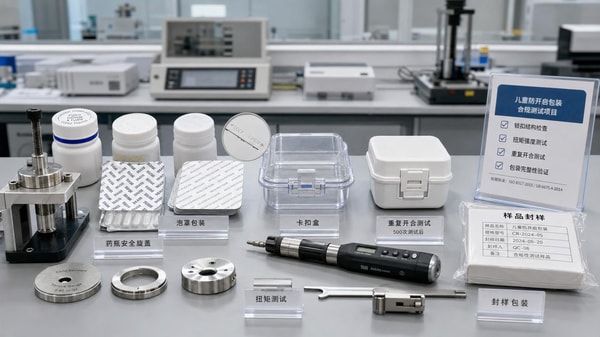
 Policy & RegulationsChild Resistant Packaging: Common Testing Failures and How to Prevent ThemChild resistant packaging failures often stem from weak locks, tolerance drift, or poor reclosure. Learn how to prevent test issues, reduce recall risk, and improve compliance readiness.May 04, 2026
 Policy & RegulationsThermal Paper Receipts: BPA Rules and Compliance Questions in 2026Thermal paper receipts face tougher BPA scrutiny in 2026. Learn the key compliance questions, supplier checks, and risk-reduction steps buyers and safety teams should act on now.May 04, 2026
 Office FurnitureWholesale A4 Copy Paper: GSM, Brightness, and Jam Rate ExplainedWholesale A4 copy paper buying made simple: learn how GSM, brightness, and jam rate affect print quality, machine uptime, and sourcing costs across offices, schools, and print shops.Interior Sourcing LeadMay 04, 2026