Industry News
Curation by industry experts
Hot Articles
Popular Tags
FDA Expands EMC Oversight to Wedding LED Lights
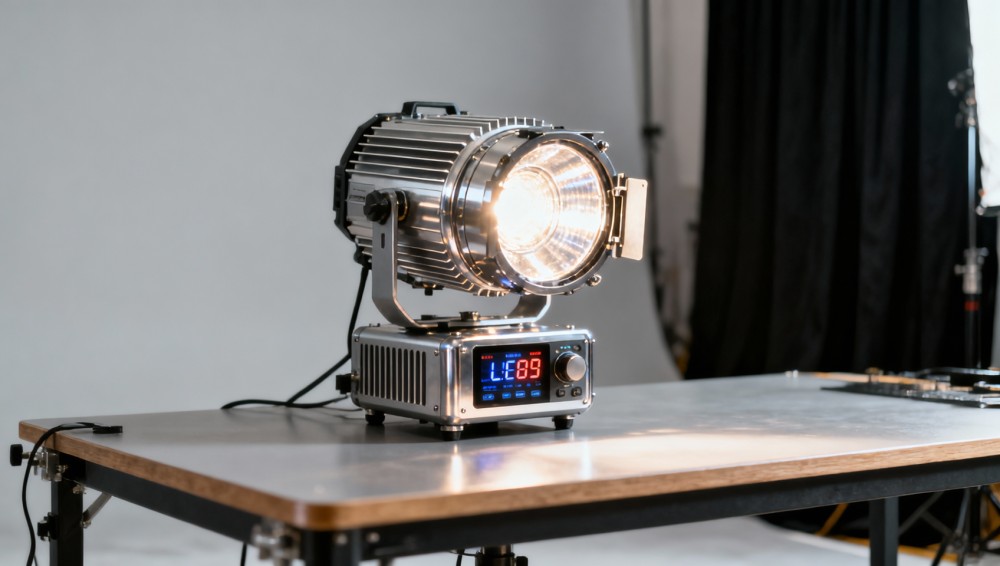
FDA’s May 2026 guidance draft signals a regulatory shift affecting U.S.-bound portable high-intensity LED lighting—particularly wedding photography lights—due to shared design features with medical auxiliary lighting. Manufacturers, exporters, and importers in the LED lighting supply chain must now assess compliance with electromagnetic compatibility (EMC) and photobiological safety standards.
Event Overview
On May 7, 2026, the U.S. Food and Drug Administration (FDA) released a non-binding guidance draft clarifying that ‘portable high-intensity LED light sources intended for use in medical auxiliary illumination’ fall under the quality system requirements of 21 CFR Part 820. The guidance notes that many commercially available LED wedding photography lights meet key technical criteria—including brightness ≥5000 lux, controllable flicker, and close-range operation—and often share design lineage with medical-grade products. FDA advises importers to verify whether existing CE or UL certifications include full test reports for EN 62471:2022 (photobiological safety) and EN 61000-6-3:2023 (radiated emissions).
Industries Affected
LED lighting manufacturers (OEM/ODM): Affected because their export-oriented wedding light products—though marketed for consumer photography—may now be subject to FDA quality system expectations if deemed functionally similar to medical auxiliary lighting. Impact includes potential re-evaluation of product classification, documentation practices, and factory-level quality controls aligned with 21 CFR Part 820.
U.S. importers and distributors: Directly responsible for pre-market verification under FDA guidance. Impact manifests in increased due diligence obligations: reviewing third-party test reports, confirming scope coverage of EN standards, and assessing whether product labeling or marketing materials could trigger medical device-related scrutiny.
Testing and certification service providers: Face rising demand for targeted EN 62471:2022 and EN 61000-6-3:2023 testing—especially full-spectrum radiated emissions assessments—not previously required for non-medical lighting. Impact includes workload shifts and need for updated test protocols aligned with FDA’s functional equivalence rationale.
Export-focused trade compliance teams: Must reconcile divergent regulatory frameworks—e.g., CE marking under the EU Lighting Equipment Directive vs. emerging FDA expectations—even for identical hardware. Impact centers on documentation traceability, risk-based product categorization, and cross-border labeling consistency.
What Relevant Enterprises or Practitioners Should Focus On
Monitor official status and finalization timeline
This is a non-binding guidance draft—not a regulation. Stakeholders should track FDA’s public comment period (open through August 2026) and any revisions before assuming enforceability. Final guidance may narrow or expand scope based on industry feedback.
Identify and isolate high-risk product categories
Focus initial review on LED lights with ≥5000 lux output, dimming/flicker control interfaces, and documented use cases near human subjects at distances ≤1 m—regardless of stated end-use. These are most likely to draw FDA attention under the ‘functional equivalence’ principle outlined in the draft.
Distinguish between policy signal and operational requirement
The guidance does not impose new mandatory testing or registration. However, it signals FDA’s intent to apply quality system expectations where product characteristics overlap with medical auxiliary lighting. Importers should treat this as a risk-informed expectation—not an immediate compliance deadline—but one requiring proactive documentation readiness.
Update internal technical file reviews and supplier communications
Verify current CE/UL reports explicitly list EN 62471:2022 and EN 61000-6-3:2023 (not just older editions). Initiate dialogue with testing labs and OEMs to confirm test conditions (e.g., worst-case configuration, operating modes) match FDA’s anticipated evaluation criteria.
Editorial Perspective / Industry Observation
Observably, this guidance reflects FDA’s increasing focus on functional use and design convergence—not just declared intent—as a basis for regulatory scope. Analysis shows the agency is applying a ‘risk-informed product continuum’ approach: devices sharing technical attributes with regulated medical equipment may face heightened scrutiny even without medical claims. From an industry perspective, this is currently a policy signal—not an enforcement action—but one with tangible implications for product development, certification strategy, and import documentation. It more closely resembles a calibration of FDA’s oversight lens than an abrupt regulatory expansion.
Current interpretation favors treating this as an early-stage alignment prompt: a cue to strengthen technical documentation rigor and harmonize testing across markets, rather than an indicator of imminent penalties or market access barriers.
Conclusion
This FDA guidance marks a subtle but consequential evolution in how regulators assess lighting products with dual-use potential. Its significance lies not in immediate legal force, but in clarifying a precedent: product design features—not just labeling or marketing—can influence regulatory classification pathways. For stakeholders, it is best understood as a forward-looking signal prompting documentation discipline, cross-standard test validation, and ongoing monitoring—not as a finalized compliance mandate.
Source Attribution
Main source: U.S. FDA Draft Guidance Document, “Classification and Quality System Considerations for Portable High-Intensity LED Light Sources Used in Medical Auxiliary Illumination,” issued May 7, 2026.
Noted for continued observation: Final version release date, public comment summary, and any subsequent FDA enforcement examples referencing this guidance.
Recommended News
 Export UpdatesNingbo Port Launches 'Green Export Index' for Wedding Photography GoodsWedding photography goods exporters: Ningbo Port’s new Green Export Index reveals 98.2% customs pass rate for OEKO-TEX®/GOTS fabrics & IEC 62471 LED lights — boost your sustainability credibility now.May 09, 2026
 Carton & PlasticsECHA Adds D-Limonene to SVHC List: Impact on Bridal Photo Spray ExportsBridal photo spray exporters: ECHA’s D-Limonene SVHC listing (May 2026) triggers urgent SDS & label updates for EU-bound hair and fabric sprays.Packaging Supply ExpertMay 09, 2026
 Fabrics & YarnsVietnam Enforces QCVN 17:2026 for Wedding Photo BackdropsVietnam enforces QCVN 17:2026 for wedding photo backdrops—mandatory formaldehyde testing & B1 flame-retardant labeling. Ensure compliance now to avoid market access delays.Textile Industry AnalystMay 09, 2026
 Building HardwareIndia BIS Mandate: Aluminum Photo Backdrop Stands Must Pass Dual Testing by June 30, 2026Aluminum photo backdrop stands for wedding photography must pass BIS salt spray & load testing by June 30, 2026—secure certification now to avoid import bans in India.Tooling & Hardware LeadMay 09, 2026