Industry News
Curation by industry experts
Hot Articles
Popular Tags
Vietnam Enforces QCVN 17:2026 for Wedding Backdrop Fabrics
On May 6, 2026, Vietnam’s Standardization, Metrology and Quality Authority (STAMEQ) implemented QCVN 17:2026 — the first national technical regulation mandating dual safety certification (formaldehyde emission ≤75 mg/kg and vertical flame retardancy Class B1) for photographic backdrop fabrics used in wedding studios. This update directly affects textile prop exporters, fabric converters, and supply chain stakeholders serving the Vietnamese market.
Event Overview
On May 6, 2026, STAMEQ officially enforced QCVN 17:2026 ‘Technical Regulation on Safety of Textiles’. The standard newly defines ‘decorative textiles for photography studios’ as a distinct category and imposes mandatory compliance requirements: formaldehyde content not exceeding 75 mg/kg (a 30% tightening versus the previous limit) and vertical flame resistance meeting Class B1 per GB/T 5455–2014 (equivalent). Enforcement is immediate; non-certified products are prohibited from import and retail sale in Vietnam. Over 120 Chinese manufacturers and exporters of fabric-based photography props are affected.
Industries Affected by Segment
Direct Exporters & Trading Enterprises
These enterprises face immediate customs clearance risks and shelf withdrawal if their existing inventory lacks valid QCVN 17:2026 certification. Impact manifests as halted shipments, retesting costs, and potential contract renegotiations with Vietnamese distributors.
Fabric Converters & Print/Finishing Factories
As background fabrics often undergo post-weaving treatments (e.g., resin finishing, flame-retardant coating), converters must verify whether current finishing processes meet both the tightened formaldehyde threshold and B1 flammability requirement. Process validation and lab testing become prerequisites before shipment.
Raw Material Suppliers (e.g., Base Fabric Mills)
Suppliers of base woven/knitted substrates may see revised purchase specifications from downstream converters. Though not directly regulated under QCVN 17:2026, their materials must be compatible with compliant finishing — prompting earlier engagement on traceability and pre-treatment test reports.
Distribution & E-commerce Platforms in Vietnam
Local platforms and studio equipment retailers must now verify certification documentation prior to listing or restocking backdrop products. Non-compliant items risk removal from shelves or online catalogs, triggering inventory audits and supplier qualification reviews.
What Relevant Enterprises or Practitioners Should Focus On Now
Confirm certification scope and lab accreditation
Verify that testing laboratories issuing QCVN 17:2026 reports are accredited by STAMEQ or recognized under Vietnam’s mutual recognition arrangements. Not all GB/T 5455–2014 or ISO 14184–1 test reports automatically satisfy QCVN 17:2026’s formaldehyde requirement — method, sample preparation, and reporting units must align precisely.
Review product SKUs by composition and finish type
Not all backdrop fabrics carry equal risk. Poly-cotton blends, vinyl-coated textiles, and digitally printed polyester backdrops require individual assessment. Prioritize SKU-level verification rather than blanket assumptions based on fiber content alone.
Update labeling and technical documentation
Certification is not self-declared. Exporters must affix Vietnamese-language compliance labels showing the QCVN number, lot/batch ID, and certified parameters. Accompanying technical files — including test reports, material declarations, and processing flowcharts — must be ready for STAMEQ spot checks at ports or warehouses.
Engage early with Vietnamese import agents or local representatives
Since QCVN 17:2026 enforcement is operational as of May 6, 2026, and no grace period is stipulated, importers bear legal responsibility for compliance. Proactive coordination with in-country partners on documentation handover, customs classification (HS Code 6307.90 for ‘other made-up textile articles’), and post-clearance audit readiness is critical.
Editorial Perspective / Industry Observation
Observably, QCVN 17:2026 signals Vietnam’s broader shift toward regulating niche textile applications beyond apparel and home textiles — especially those involving direct, prolonged human proximity in commercial settings. Analysis shows this is less an isolated product rule and more a precedent: similar categorization and dual-parameter mandates could extend to studio lighting gels, portable flooring, or acoustic drapery in future revisions. From an industry perspective, it reflects growing regulatory alignment with EU REACH and China’s GB 18401, albeit with localized thresholds and enforcement timing. Current enforcement appears operational — not transitional — meaning market access hinges on verifiable conformity, not intent or pending application.
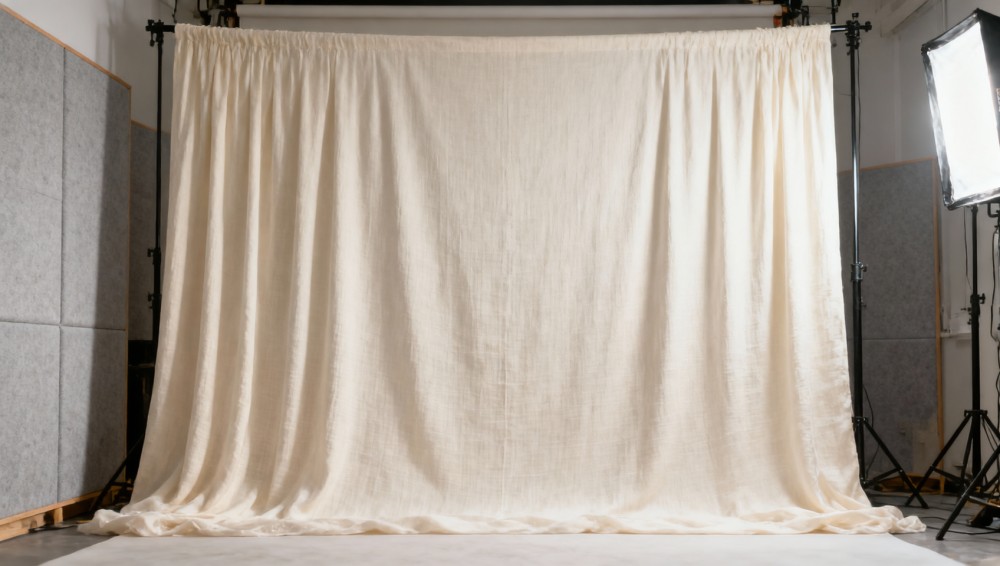
Concluding, QCVN 17:2026 represents a concrete compliance threshold for exporters supplying decorative textile goods to Vietnam’s photography services sector. It is not merely procedural but functionally binding, requiring technical verification, documentation rigor, and cross-border coordination. Currently, it is best understood as an active market access requirement — not a warning signal or draft proposal.
Source: Standardization, Metrology and Quality Authority of Vietnam (STAMEQ), official gazette notice on QCVN 17:2026, effective May 6, 2026. Note: Ongoing monitoring is advised for STAMEQ-issued interpretation guidelines or accredited laboratory updates, which have not yet been publicly released.
Recommended News
 Export UpdatesNingbo Port Launches 'Green Export Index' for Wedding Photography GoodsWedding photography goods exporters: Ningbo Port’s new Green Export Index reveals 98.2% customs pass rate for OEKO-TEX®/GOTS fabrics & IEC 62471 LED lights — boost your sustainability credibility now.May 09, 2026
 Carton & PlasticsECHA Adds D-Limonene to SVHC List: Impact on Bridal Photo Spray ExportsBridal photo spray exporters: ECHA’s D-Limonene SVHC listing (May 2026) triggers urgent SDS & label updates for EU-bound hair and fabric sprays.Packaging Supply ExpertMay 09, 2026
 Fabrics & YarnsVietnam Enforces QCVN 17:2026 for Wedding Photo BackdropsVietnam enforces QCVN 17:2026 for wedding photo backdrops—mandatory formaldehyde testing & B1 flame-retardant labeling. Ensure compliance now to avoid market access delays.Textile Industry AnalystMay 09, 2026
 Building HardwareIndia BIS Mandate: Aluminum Photo Backdrop Stands Must Pass Dual Testing by June 30, 2026Aluminum photo backdrop stands for wedding photography must pass BIS salt spray & load testing by June 30, 2026—secure certification now to avoid import bans in India.Tooling & Hardware LeadMay 09, 2026