Industry News
Curation by industry experts
Hot Articles
Popular Tags
FDA New Rule: LED Fill Lights for Wedding Photography Require 510(k)
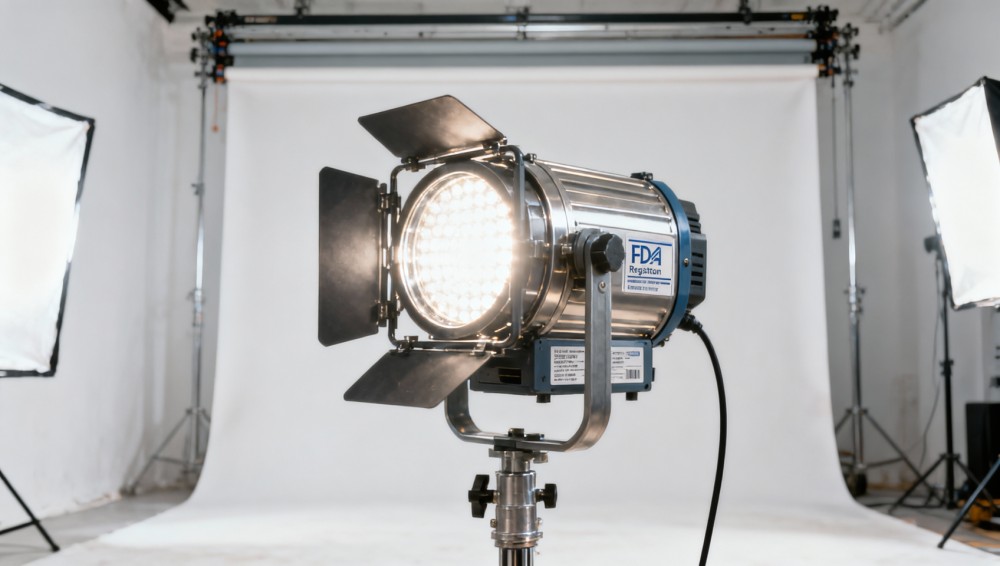
Starting May 8, 2026, the U.S. Food and Drug Administration (FDA) has formally classified high-brightness LED continuous light sources used in professional portrait photography—including wedding photography—under 21 CFR Part 890 as medical devices. This regulatory shift directly affects Chinese LED lighting manufacturers exporting to the U.S., importers, and procurement partners serving the North American photography market.
Event Overview
Effective May 8, 2026, the FDA has added LED continuous light units intended for professional human portrait imaging (including bridal photography) to the medical device classification under 21 CFR Part 890. Exporters must now obtain 510(k) premarket notification clearance and affix a valid FDA registration number on product labeling. Non-compliant units are subject to detention by U.S. Customs and Border Protection (CBP) at major entry points including the Ports of Los Angeles and New York.
Industries Affected
LED Lighting Manufacturers (OEM/ODM)
Manufacturers producing LED fill lights for portrait studios face new regulatory obligations. Because these products are now classified as medical devices—even when used solely for aesthetic imaging—their design, labeling, performance testing, and technical documentation must align with FDA requirements for Class II devices. Manufacturing facilities must also be registered with the FDA, and each device model requires separate 510(k) submission.
U.S.-Based Importers and Distributors
Importers assuming the role of U.S. Agent or Initial Importer are legally responsible for ensuring compliance. Under FDA regulations, they must verify that foreign manufacturers hold active FDA establishment registration and valid 510(k) clearances before shipment. Failure to do so may result in refusal of entry, administrative detention, or enforcement action—including import alerts.
Photography Equipment Procurement Teams
Professional photography studios, rental houses, and e-commerce platforms sourcing LED lighting from overseas suppliers must now validate FDA registration status and technical file completeness (e.g., substantial equivalence rationale, electrical safety reports, photobiological safety assessments per IEC 62471) prior to purchase. Contracts and POs may need updated compliance clauses to allocate regulatory responsibility.
What Stakeholders Should Monitor and Do Now
Confirm current FDA registration and 510(k) status of key SKUs
Exporters and importers should immediately audit whether existing LED fill light models intended for portrait use have been submitted for 510(k) clearance—and whether those submissions reference appropriate predicate devices (e.g., other FDA-cleared imaging illumination systems). Pending submissions should be prioritized ahead of anticipated CBP inspections.
Review product labeling, instructions for use, and marketing claims
Any language implying clinical, diagnostic, therapeutic, or patient-facing application—even indirectly—may trigger additional regulatory scrutiny. Labels must include the FDA registration number, manufacturer name/address, and statement of conformity with applicable standards. Marketing materials should avoid terms such as “medical-grade,” “clinical lighting,” or “diagnostic support” unless substantiated and cleared.
Prepare for CBP enforcement at key ports of entry
Given explicit mention of Los Angeles and New York ports in the FDA notice, stakeholders should ensure customs brokers are briefed on required documentation: FDA registration confirmation, 510(k) summary or clearance letter, and device listing number. Shipment records should include traceable links between model numbers and corresponding FDA submissions.
Assess supply chain exposure beyond direct exports
Even if a company does not directly export to the U.S., involvement in downstream distribution (e.g., supplying to a U.S. brand that rebrands the product) may create shared compliance obligations. Review contractual terms and consider updating supplier agreements to require FDA compliance warranties and indemnification clauses.
Editorial Perspective / Industry Observation
Observably, this rule reflects a broader FDA trend of expanding device classification to hardware that interfaces with human subjects in regulated contexts—even without therapeutic intent. While the agency cites “potential ocular and skin exposure risks from intense, unfiltered LED spectra” as justification, the inclusion of wedding photography gear suggests an interpretation focused on proximity, duration, and intensity of light exposure during imaging sessions. Analysis shows this is less a sudden policy pivot and more a formalization of enforcement posture already emerging in recent FDA warning letters to imaging equipment firms. From an industry standpoint, it signals that non-traditional medical-adjacent hardware—especially in aesthetics, wellness, and creative services—is increasingly subject to device-level oversight. Current enforcement appears targeted; however, sustained monitoring of FDA guidance documents and CBP inspection patterns will clarify whether scope expands further.
Conclusion: This regulation marks a material shift in market access requirements—not a technical adjustment. It does not represent a ban or phase-out, but rather a mandatory procedural threshold for continued U.S. market access. For affected businesses, the requirement is operational and document-driven, not conceptual. It is better understood as a compliance checkpoint than a strategic inflection point—yet one that demands immediate verification, documentation alignment, and cross-functional coordination across engineering, regulatory affairs, logistics, and procurement teams.
Source: U.S. FDA Final Rule Notice (effective May 8, 2026), referenced under 21 CFR Part 890; U.S. Customs and Border Protection enforcement bulletin (April 2026).
Note: Ongoing observation is recommended for FDA-issued guidance documents clarifying predicate device selection, exemption pathways, and transitional provisions for legacy models.
Recommended News
 Export UpdatesNingbo Port Launches 'Green Export Index' for Wedding Photography GoodsWedding photography goods exporters: Ningbo Port’s new Green Export Index reveals 98.2% customs pass rate for OEKO-TEX®/GOTS fabrics & IEC 62471 LED lights — boost your sustainability credibility now.May 09, 2026
 Carton & PlasticsECHA Adds D-Limonene to SVHC List: Impact on Bridal Photo Spray ExportsBridal photo spray exporters: ECHA’s D-Limonene SVHC listing (May 2026) triggers urgent SDS & label updates for EU-bound hair and fabric sprays.Packaging Supply ExpertMay 09, 2026
 Fabrics & YarnsVietnam Enforces QCVN 17:2026 for Wedding Photo BackdropsVietnam enforces QCVN 17:2026 for wedding photo backdrops—mandatory formaldehyde testing & B1 flame-retardant labeling. Ensure compliance now to avoid market access delays.Textile Industry AnalystMay 09, 2026
 Building HardwareIndia BIS Mandate: Aluminum Photo Backdrop Stands Must Pass Dual Testing by June 30, 2026Aluminum photo backdrop stands for wedding photography must pass BIS salt spray & load testing by June 30, 2026—secure certification now to avoid import bans in India.Tooling & Hardware LeadMay 09, 2026