Industry News
Curation by industry experts
Hot Articles
Popular Tags
EN IEC 62471:2026 Takes Effect: UV-Cured Wedding Backdrops Require Re-Testing
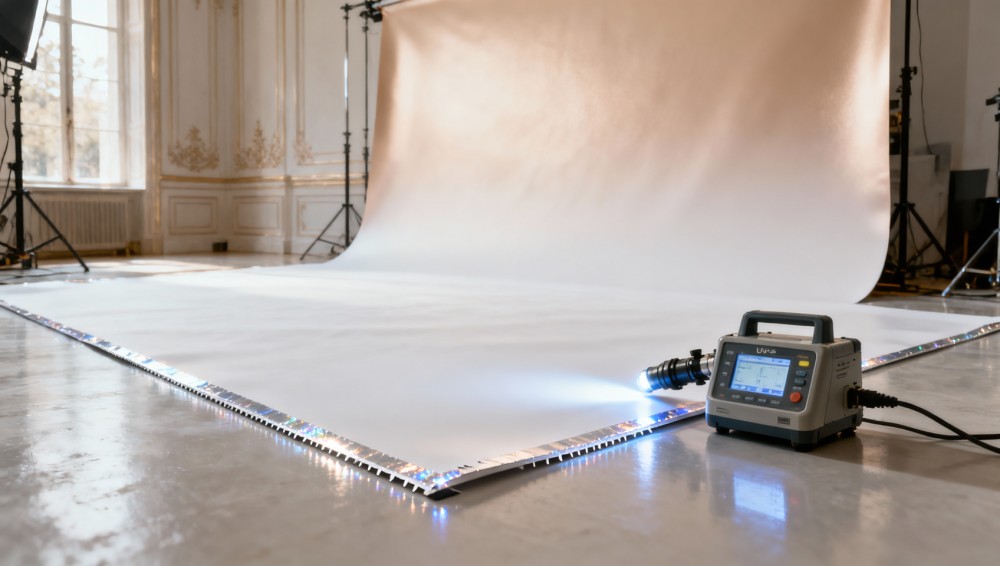
On 8 May 2026, the European Union enforced the updated photobiological safety standard EN IEC 62471:2026, introducing new exposure limits for prolonged UV-A radiation (315–400 nm). This change directly affects Chinese exporters of UV-cured acrylic backdrop panels, coated canvas substrates for digital printing, and LED-UV curing printing equipment—key components in the wedding photography supply chain. The revision carries immediate implications for CE marking compliance and EU market access, making it highly relevant for manufacturers, exporters, and procurement professionals in lighting, imaging, and event décor sectors.
Event Overview
The European Union mandated implementation of EN IEC 62471:2026 on 8 May 2026. The standard updates photobiological safety requirements, specifically adding time-weighted exposure limits for UV-A radiation (315–400 nm). Products falling under its scope—including UV-cured acrylic background panels, printed fabric substrates, and LED-UV printing systems—must now comply to obtain CB certification and affix the CE marking. As of June 2026, non-compliant shipments risk customs rejection at EU ports.
Industries Affected by the Update
Direct Exporters & Trading Companies: These entities face direct regulatory gatekeeping. Non-compliant products cannot be legally placed on the EU market post-8 May 2026, and failure to secure updated CB certification may trigger shipment delays or returns starting in June. CE documentation must reflect testing against EN IEC 62471:2026—not earlier versions.
Material Suppliers & Substrate Manufacturers: Producers of UV-curable acrylic sheets, coated polyester or PVC fabrics, and UV-reactive coatings are impacted because their materials form integral parts of final products subject to the standard. Their technical datasheets and safety data must now align with the revised UV-A exposure thresholds, especially when used in applications involving repeated or extended human proximity (e.g., photo studio backdrops).
LED-UV Equipment Makers & Integrators: Manufacturers of UV-curing lamps and hybrid LED-UV printers must verify that their output spectra and irradiance profiles—particularly within the 315–400 nm range—do not exceed the newly defined permissible exposure durations under EN IEC 62471:2026. System-level re-evaluation may be required where end-use involves operator or subject exposure.
Distribution & Channel Partners: EU-based importers and B2B distributors handling wedding photography gear must confirm updated compliance documentation from suppliers before clearing goods through customs. Inventory received prior to May 2026 may require retrospective verification if resold after the enforcement date.
Key Points for Enterprises and Practitioners
Verify CB Certification Status Against EN IEC 62471:2026
Confirm whether existing CB test reports explicitly reference EN IEC 62471:2026—and not EN IEC 62471:2006 or EN 62471:2008. Reports issued before May 2026 using older editions do not satisfy the new requirement, even if technically valid under prior rules.
Prioritise Suppliers with TÜV Rheinland or Equivalent Updated Test Reports
As noted in official guidance, buyers should give preference to suppliers who have already completed third-party evaluation per EN IEC 62471:2026—particularly those holding verified test reports from accredited bodies such as TÜV Rheinland. This reduces lead-time risk ahead of June 2026 customs enforcement.
Review Product Use Cases for UV-A Exposure Duration Scenarios
EN IEC 62471:2026 introduces time-dependent limits for UV-A. Enterprises should assess typical deployment conditions—e.g., duration of photographer/subject exposure near illuminated backdrops—to determine whether classification (Exempt, Risk Group 1–3) changes under the new criteria. This is distinct from spectral-only assessments used previously.
Update Technical Files and Declaration of Conformity
Manufacturers placing products on the EU market must revise their technical documentation, including risk assessments and test summaries, to reflect EN IEC 62471:2026. The EU Declaration of Conformity must cite the 2026 edition explicitly; referencing outdated versions invalidates CE marking validity.
Editorial Perspective / Industry Observation
Analysis shows this update is less a sudden disruption and more a calibrated tightening of photobiological safety governance—consistent with broader EU trends in product stewardship and occupational health alignment. Observably, the inclusion of time-weighted UV-A limits signals a shift toward real-world usage conditions rather than static spectral measurements alone. From an industry perspective, this reflects growing scrutiny of cumulative exposure in consumer-facing professional environments like studios and event venues. Current enforcement timing suggests it functions primarily as a compliance checkpoint—not yet a market barrier—but its operational impact escalates rapidly after June 2026, particularly for inventory in transit or pending customs clearance. It is better understood as a procedural milestone requiring documentation and testing alignment, rather than a fundamental redesign trigger for most affected products.
Conclusion: EN IEC 62471:2026 marks a formalisation of UV-A exposure accountability in photobiological safety assessment—not a wholesale technical overhaul, but a consequential administrative and certification inflection point. For stakeholders, it underscores the importance of synchronising test protocols, supply chain communication, and regulatory documentation well ahead of enforcement deadlines. At present, the update is best interpreted as a mandatory documentation and verification step, not evidence of emerging technical obsolescence or broad product incompatibility.
Source Information:
• Official EU implementation notice dated 8 May 2026
• Standard text: EN IEC 62471:2026 (CENELEC/IEC adoption)
• Guidance note on CB Scheme applicability for UV-cured visual products (TÜV Rheinland, April 2026)
Note: Ongoing monitoring is advised for potential CENELEC interpretations or national transposition clarifications, which are not yet publicly available.
Recommended News
 Export UpdatesNingbo Port Launches 'Green Export Index' for Wedding Photography GoodsWedding photography goods exporters: Ningbo Port’s new Green Export Index reveals 98.2% customs pass rate for OEKO-TEX®/GOTS fabrics & IEC 62471 LED lights — boost your sustainability credibility now.May 09, 2026
 Carton & PlasticsECHA Adds D-Limonene to SVHC List: Impact on Bridal Photo Spray ExportsBridal photo spray exporters: ECHA’s D-Limonene SVHC listing (May 2026) triggers urgent SDS & label updates for EU-bound hair and fabric sprays.Packaging Supply ExpertMay 09, 2026
 Fabrics & YarnsVietnam Enforces QCVN 17:2026 for Wedding Photo BackdropsVietnam enforces QCVN 17:2026 for wedding photo backdrops—mandatory formaldehyde testing & B1 flame-retardant labeling. Ensure compliance now to avoid market access delays.Textile Industry AnalystMay 09, 2026
 Building HardwareIndia BIS Mandate: Aluminum Photo Backdrop Stands Must Pass Dual Testing by June 30, 2026Aluminum photo backdrop stands for wedding photography must pass BIS salt spray & load testing by June 30, 2026—secure certification now to avoid import bans in India.Tooling & Hardware LeadMay 09, 2026