Industry News
Curation by industry experts
Hot Articles
Popular Tags
India BIS to Include LED Soft Lights for Bridal Photography in Mandatory Certification
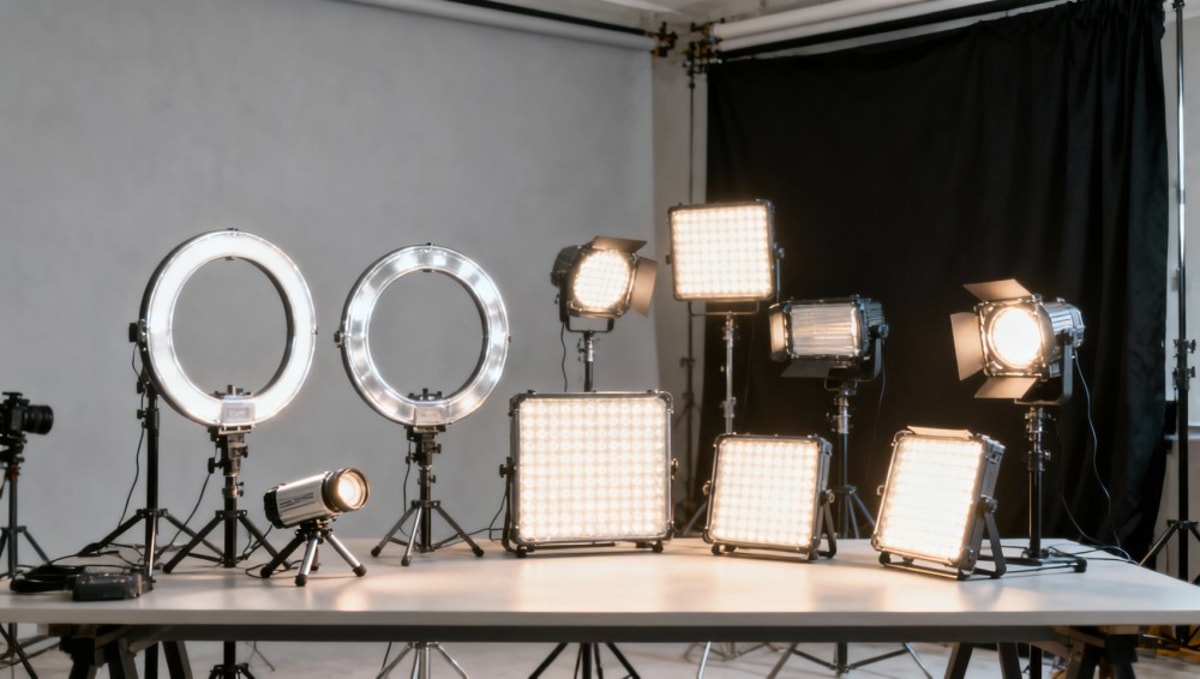
India’s Bureau of Indian Standards (BIS) has proposed including LED soft lights — such as ring lights, panel lights, and portable fill lights used in bridal photography — under mandatory certification under IS 13252(Part 1):2023, effective from 2 August 2026. Announced on 2 May 2026, the draft notice triggers a 90-day compliance window for exporters, particularly impacting manufacturers and traders supplying these products to the Indian market.
Event Overview
On 2 May 2026, the Bureau of Indian Standards (BIS) published a draft notification proposing the inclusion of LED soft lights — specifically those used in bridal photography, including ring lights, panel lights, and portable fill lights — into the scope of mandatory BIS certification under standard IS 13252(Part 1):2023. The draft is open for public comments until 1 June 2026. If approved, the requirement will enter into force on 2 August 2026. Exporters must complete BIS registration and submit test samples within 90 days of implementation to retain market access.
Which Sub-Sectors Are Affected
Direct Exporters and Trading Companies
Companies exporting LED soft lights from China (and other non-BIS-registered countries) to India face immediate regulatory exposure. Since IS 13252(Part 1):2023 applies to electrical safety of information technology equipment — now extended to include these lighting products — exporters without active BIS licenses will be unable to clear customs after 2 August 2026.
LED Lighting Manufacturers (OEM/ODM)
Manufacturers producing ring lights, panel lights, or portable fill lights intended for bridal or studio photography must ensure their product designs meet IS 13252(Part 1):2023 requirements — including electrical insulation, temperature rise limits, and mechanical stability. Product retesting and documentation alignment may be needed even if equivalent IEC or UL reports exist.
Supply Chain and Logistics Providers
Freight forwarders, customs brokers, and warehousing partners handling consignments of LED soft lights destined for India must verify BIS compliance status before shipment. Non-compliant goods risk detention or rejection at Indian ports post-implementation, increasing demurrage, rework, and inventory holding costs.
What Relevant Enterprises or Practitioners Should Focus On — And How to Respond
Monitor Official Updates Through BIS Portals and Notified Bodies
Track the final gazette notification via the official BIS website and authorized Indian representatives. Drafts may undergo minor revisions during the comment period; confirmation of exact scope (e.g., power thresholds, exclusions for battery-only devices) remains pending.
Prioritize Sample Submission and Testing for High-Volume SKUs
Given the 90-day window post-implementation, initiate testing with an accredited BIS-approved lab now — especially for best-selling models in the bridal photography segment. Prioritization should reflect export volume, not just product count.
Distinguish Between Regulatory Signal and Operational Readiness
The draft represents a formal regulatory signal, not yet enforceable law. However, procurement cycles, lead times for lab testing (often 4–6 weeks), and BIS application processing (typically 4–8 weeks) mean practical readiness requires action before 2 August 2026 — not after.
Engage Local BIS Authorised Representatives Early
BIS mandates appointment of an India-based authorised representative for foreign applicants. Engaging one early helps avoid delays in document submission, sample coordination, and communication with BIS officials during evaluation.
Editorial Perspective / Industry Observation
Observably, this move signals BIS’s expanding focus beyond traditional IT hardware toward adjacent consumer electronics with integrated power supplies and user-facing interfaces — especially where safety risks are heightened by prolonged close-proximity use (e.g., ring lights near faces). Analysis shows it is less a sudden shift than a logical extension of IS 13252(Part 1):2023’s scope, now explicitly capturing lighting products marketed for professional imaging. From an industry standpoint, it reflects tightening harmonisation between product safety expectations and real-world usage contexts — not just technical classification. Current attention should centre on whether similar extensions may follow for other LED-based studio gear (e.g., continuous video lights, RGB panels) under future amendments.
Conclusion
This proposal marks a targeted regulatory development — not a broad-sector overhaul — but carries concrete operational consequences for exporters and manufacturers of specific LED lighting products serving India’s wedding and portrait photography markets. It is best understood not as a distant policy change, but as a time-bound compliance milestone requiring coordinated technical, logistical, and administrative preparation. For affected stakeholders, proactive verification and phased implementation — rather than wait-and-see — align more closely with current enforcement patterns observed under BIS’s recent certification expansions.
Source: Bureau of Indian Standards (BIS) Draft Notification, issued 2 May 2026; IS 13252(Part 1):2023 — Information Technology Equipment — Safety Requirements. Note: Final scope and enforcement details remain subject to official gazette publication and are under active observation.
Recommended News
 Eco PackagingBiodegradable Straws Wholesale: What to Verify Before Switching SuppliersBiodegradable straws wholesale: verify certifications, drink performance, packaging, and export reliability before switching suppliers to cut risk, protect compliance, and improve sourcing results.Packaging Supply ExpertMay 04, 2026
 Policy & RegulationsChild Resistant Packaging: Common Testing Failures and How to Prevent ThemChild resistant packaging failures often stem from weak locks, tolerance drift, or poor reclosure. Learn how to prevent test issues, reduce recall risk, and improve compliance readiness.May 04, 2026
 Policy & RegulationsThermal Paper Receipts: BPA Rules and Compliance Questions in 2026Thermal paper receipts face tougher BPA scrutiny in 2026. Learn the key compliance questions, supplier checks, and risk-reduction steps buyers and safety teams should act on now.May 04, 2026
 Office FurnitureWholesale A4 Copy Paper: GSM, Brightness, and Jam Rate ExplainedWholesale A4 copy paper buying made simple: learn how GSM, brightness, and jam rate affect print quality, machine uptime, and sourcing costs across offices, schools, and print shops.Interior Sourcing LeadMay 04, 2026