Industry News
Curation by industry experts
Hot Articles
Popular Tags
Outdoor Lighting LED Brightness Drops Sooner Than Expected
When outdoor lighting LED systems lose brightness sooner than expected, buyers need to look beyond the fixture itself. From outdoor lighting solar powered setups and outdoor lighting motion sensor designs to smart lighting system integration, early lumen decline often signals deeper issues in chips, drivers, heat control, or supplier quality. For procurement teams and distributors, understanding these factors is essential to evaluating performance, reducing replacement costs, and selecting decorative lighting for home and commercial projects with confidence.
Why does outdoor lighting LED brightness drop earlier than the quoted service life?
A common misunderstanding in the lighting market is to treat rated life and brightness stability as the same thing. They are not. An LED fixture may still turn on after 20,000 to 50,000 hours, yet its usable light output can decline much sooner if thermal management, driver quality, optical design, or ingress protection is weak. For buyers comparing outdoor lighting solutions, lumen maintenance matters more than a simple lifespan claim.
In practical procurement, brightness loss often appears within the first 6 to 18 months in low-cost products installed in demanding outdoor conditions. This is especially visible in decorative lighting for home gardens, perimeter walls, pathways, parking areas, and mixed-use commercial sites where lights operate 8 to 12 hours per night. If the driver overheats or the LED junction temperature remains too high, lumen depreciation accelerates even when no total failure is visible.
The issue becomes more complex in outdoor lighting solar powered products. In these systems, the drop in visible brightness may come not only from the LED package itself, but also from battery aging, insufficient charging, controller mismatch, or unstable discharge curves. A buyer who focuses only on wattage and ignores battery chemistry, charging time, and local sunlight conditions may overestimate long-term output.
For distributors and sourcing managers, early lumen decline is not just a technical nuisance. It affects warranty cost, project acceptance, brand reputation, and reorder confidence. This is why a proper evaluation should cover at least 4 core dimensions: LED chip consistency, driver durability, heat dissipation design, and environmental sealing for rain, dust, and temperature fluctuations.
Key technical causes buyers should check first
- Poor thermal path design, where heat from the LED board cannot move efficiently into the housing, causing faster lumen depreciation.
- Low-grade drivers with unstable current output, especially in areas with voltage fluctuation or long nightly runtime.
- Inadequate IP sealing that allows moisture ingress, condensation, or corrosion around electrical parts and optics.
- Optical cover yellowing or lens degradation caused by UV exposure over 12 to 24 months in harsh outdoor environments.
Which components usually cause premature brightness loss in outdoor lighting systems?
For professional evaluation, it helps to separate the fixture into subsystems rather than discuss “quality” in vague terms. In most outdoor lighting LED products, brightness decline is tied to one or more weak components. The LED package, driver, lens, gasket, heat sink, and power management system each influence output stability over time. Procurement teams should ask for test logic by component, not only a finished product photo or a broad warranty statement.
The table below highlights common failure points and what they usually mean in sourcing practice. This is useful when comparing outdoor lighting motion sensor models, wall lights, pathway fixtures, floodlights, and solar garden lights from different suppliers.
The procurement lesson is clear: brightness stability is a system result, not a single-material promise. If a supplier can explain thermal path, power conversion, optical aging, and environmental protection in a consistent way, the offer is usually more credible than one based only on lumen claims and a low unit price.
Why driver quality is often underestimated
Many buyers inspect chip origin carefully but overlook the driver. In outdoor projects, the driver is often the first stress point because it must handle heat, power variation, and long operating cycles. A fixture running 10 hours every night reaches roughly 3,650 operating hours per year. Under that schedule, weak driver design can show instability long before the LED package reaches its nominal life threshold.
This becomes even more relevant in smart lighting system installations where dimming, sensors, or control nodes create additional electrical complexity. If the control integration is not matched to the driver design, dimming curves may drift, low-end output may become unstable, and users may interpret control issues as LED brightness loss.
A quick screening checklist
- Ask whether the supplier can separate LED lumen depreciation from driver-related output instability.
- Request operating temperature range and suggested installation environment.
- Check whether surge protection and outdoor sealing match the destination market conditions.
- Confirm whether motion sensing, dimming, or solar charging logic has been validated at system level.
How should buyers compare outdoor lighting types when brightness retention matters?
Different outdoor lighting formats face different degradation patterns. A decorative garden bollard, a solar pathway light, a motion sensor floodlight, and a smart commercial facade fixture may all use LEDs, but their brightness retention depends on different risk factors. Buyers should compare them by operating profile, power architecture, and maintenance access rather than by appearance alone.
The next table compares typical outdoor lighting categories from a sourcing perspective. It is especially useful for distributors balancing residential decorative lighting for home with commercial and semi-public projects.
This comparison shows why brightness complaints should always be tied to application. A solar product with 2 to 3 cloudy days in a row may dim for energy reasons, while a wired floodlight dimming after 9 months often points to heat or driver stress. The same symptom can have different root causes.
For commercial buyers, the lowest-risk route is usually to define performance expectations by scenario. For example, pathway lighting may prioritize 6 to 10 hours of stable nightly output, while security lighting may prioritize fast activation and surge tolerance. This avoids overbuying in low-risk areas and under-specifying in high-demand zones.
Scenario-based procurement thinking
- Residential decorative projects usually care about visual consistency, finish durability, and low return rates over 12 to 24 months.
- Commercial perimeter and entrance projects care more about runtime, maintenance intervals, and control compatibility.
- Distribution buyers often need one platform that covers small-batch retail demand and medium-batch project demand without excessive SKU fragmentation.
What should procurement teams ask before placing an order?
If brightness retention is a decision factor, procurement should move beyond generic catalog review. A disciplined supplier assessment can reduce claims, replacements, and field service costs over the first 12 to 36 months. In lighting and displays sourcing, teams that ask more precise pre-order questions often make better long-cycle decisions, especially when managing multiple countries, installers, or channel partners.
A practical evaluation framework usually includes 5 checkpoints: component transparency, environmental suitability, control compatibility, maintenance plan, and commercial support. This approach helps information researchers and business evaluators compare offers on evidence instead of relying on packaging claims.
Five procurement questions that reveal real product stability
- What are the operating conditions assumed for the quoted life, such as ambient temperature, nightly runtime, and dimming profile?
- Which components are replaceable, and which require full fixture replacement if brightness drops or electronics fail?
- For solar models, what autonomy range is expected after a full charge, and under what sunlight assumptions?
- For motion sensor or smart lighting system products, how has switching or control compatibility been validated?
- What is the usual sample lead time and project order lead time, such as 7–15 days for samples or 3–6 weeks for production, depending on configuration?
GSR supports this evaluation style by focusing on actionable sourcing intelligence rather than broad product descriptions. For procurement directors, distributors, and commercial reviewers, that means easier comparison across supply options, clearer risk mapping, and better alignment between technical selection and market expectations.
Common mistakes that increase replacement cost
- Choosing by initial lumen value alone without reviewing lumen maintenance behavior over time.
- Using one outdoor lighting specification across coastal, humid, dry, and high-heat environments without adjustment.
- Ignoring after-sales handling, spare component availability, and return logistics for cross-border distribution.
- Treating solar, sensor, and smart lighting system products as equivalent simply because they share similar appearance or wattage labels.
How do standards, environment, and maintenance affect real-world LED brightness?
Outdoor performance depends heavily on installation environment. A fixture in a covered residential courtyard does not face the same stress as one mounted on an exposed wall near traffic dust, salt air, or heavy rain. Over a 12-month cycle, dirt accumulation, heat retention, and moisture ingress can all reduce perceived brightness even if the LED engine itself remains functional.
This is why buyers should review not only product claims but also relevant general compliance considerations. Depending on destination market and product type, teams often review electrical safety, electromagnetic compatibility, ingress protection, and material suitability. Specific required documentation varies by market, but the sourcing principle is stable: compliance and durability should support the intended use case, not sit as a separate checklist after ordering.
Maintenance planning also matters. In many projects, simple cleaning every 3 to 6 months can recover a noticeable portion of lost apparent brightness by removing dust, insects, and surface contamination from lenses. For solar products, periodic panel cleaning and battery health checks can be just as important as the original LED quality.
For sourcing teams, the practical message is that brightness stability should be specified as an operating outcome. Ask how the fixture performs across heat, rain, dust, switching cycles, and installation height. If that answer is unclear, the risk of post-installation disappointment rises sharply.
A simple field review framework
- Inspect light output after installation, after 30 days, and again after one seasonal change to identify early instability.
- Record environmental exposure, including direct sun, standing water risk, dust, and switching frequency.
- For project sites with mixed fixture types, compare brightness consistency by zone rather than relying on one overall impression.
FAQ: What do buyers and distributors ask most about LED brightness decline?
Is early dimming always caused by poor LED chips?
No. Poor chips can be one reason, but many outdoor lighting failures come from driver stress, insufficient heat dissipation, optical aging, moisture ingress, or battery decline in solar systems. In practice, buyers should investigate at least 4 linked areas before blaming the chip alone: thermal path, power stability, environmental sealing, and operating conditions.
Are outdoor lighting solar powered products less reliable than wired fixtures?
Not necessarily. They are simply more sensitive to charging conditions, battery quality, seasonal sunlight, and controller design. In low-cabling or decorative lighting for home applications, they can be very effective. But if the project requires guaranteed high output for 8 to 12 hours every night regardless of weather, wired options often provide more predictable brightness retention.
What matters most when buying outdoor lighting motion sensor fixtures?
Focus on sensor range, detection angle, switching frequency tolerance, and driver compatibility. Repeated switching itself is not always a problem, but weak electronics can degrade faster when the fixture cycles many times per night. For security zones, buyers should also check activation speed and low-temperature operation.
How can distributors reduce return rates related to brightness complaints?
Segment the product line by scenario instead of selling one “universal” outdoor fixture. Keep separate evaluation criteria for decorative lighting for home, solar garden lights, motion sensor security lights, and smart lighting system products. Pair that with sample validation, clearer runtime guidance, and realistic maintenance instructions. This often reduces expectation gaps between seller and end user.
Why work with a sourcing intelligence partner when evaluating outdoor lighting performance?
In cross-border B2B lighting procurement, the challenge is rarely finding suppliers. The real challenge is distinguishing between visually similar products that behave very differently after 6, 12, or 24 months in the field. That is where a structured intelligence-led approach adds value. Instead of reviewing listings one by one, buyers can compare suppliers, technical claims, market positioning, and sourcing risks in a more disciplined way.
Global Supply Review supports procurement directors, sourcing managers, business evaluators, and channel partners with sector-focused insights across lighting and displays. For teams assessing outdoor lighting LED performance, this means faster shortlisting, clearer comparison logic, and stronger alignment between technical needs and commercial execution.
If you are reviewing outdoor lighting solar powered options, outdoor lighting motion sensor products, smart lighting system integration, or decorative lighting for home and commercial projects, the most useful next step is to clarify your project parameters before negotiation. That usually includes application area, required runtime, installation environment, quantity range, certification destination, and preferred delivery window.
You can consult GSR for practical support on parameter confirmation, product selection, sample evaluation, supplier comparison, expected lead times, compliance considerations, and quotation planning. This is especially valuable when you need to balance brightness retention, cost control, channel suitability, and long-term replacement risk across multiple outdoor lighting categories.
Recommended News
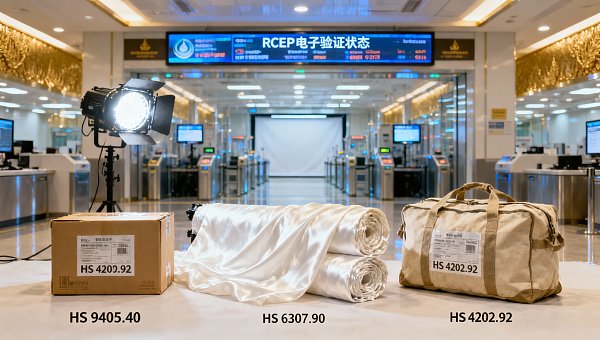
 Export UpdatesThailand Launches RCEP Origin Verification for Chinese Wedding Photo PropsRCEP origin verification for Chinese wedding photo props is live in Thailand—unlock zero tariffs & faster clearance for HS 9405.40, 4202.92, 6307.90 exports now.Apr 23, 2026
 Fabrics & YarnsTurkey TSE Mandates AATCC 100-2024 for Antibacterial Wedding BackdropsAATCC 100-2024 is now mandatory for antibacterial wedding backdrops entering Turkey — ensure compliance, avoid customs delays, and secure market access before 1 June 2026.Textile Industry AnalystApr 23, 2026
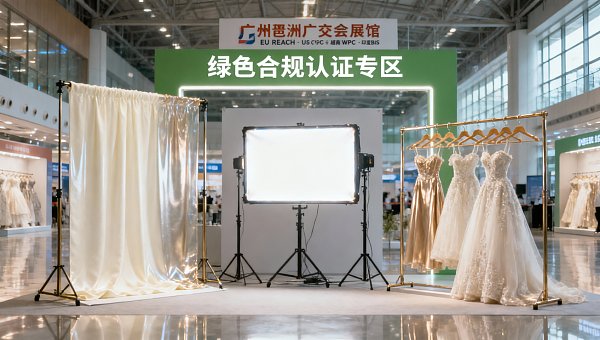
 Export UpdatesCanton Fair Phase II 2026 Launches Green Compliance Zone for Wedding Photo PropsGreen Compliance Zone launched at Canton Fair 2026 for wedding photo props — EU REACH, US CPSC & more. Get certification-ready now!Apr 23, 2026
 Garment MfgIndia BIS Mandate for Wedding Apparel: IS 15620:2026 Effective July 2026India BIS mandates IS 15620:2026 for wedding apparel — bridal gowns, veils & formal wear must meet safety testing by July 2026. Act now to avoid port delays!Textile Industry AnalystApr 23, 2026