Industry News
Curation by industry experts
Hot Articles
Popular Tags
Outdoor Lighting Motion Sensor Range Is Longer Than You Need
When specifying outdoor lighting motion sensor solutions, many buyers discover that a longer detection range is not automatically better. In practice, excessive range can trigger lights beyond the intended zone, increase unnecessary energy use, create complaints from end users, and complicate installation planning. For procurement teams evaluating outdoor lighting solar powered products, outdoor lighting LED fixtures, and smart lighting system options, the right question is not “What is the maximum range?” but “What range is appropriate for the site, traffic pattern, and control strategy?” In most commercial and residential projects, a well-matched sensor range delivers better security, lower operating cost, and a more predictable user experience than an oversized specification.
Why a longer motion sensor range can become a project problem
Buyers often assume that a wider or longer sensing distance improves outdoor performance. That is only partly true. A motion sensor that reaches farther than the real use area may detect pedestrians, vehicles, trees, animals, or adjacent property activity that should not activate the light. This creates three common business issues.
First, it increases unwanted activations. In parking edges, walkways, loading areas, garden boundaries, and perimeter zones, over-sensitive detection can switch luminaires on too often. That reduces the intended energy-saving benefit of occupancy-based control.
Second, it reduces targeting accuracy. If the fixture responds to movement outside the protected area, users may lose confidence in the system. For distributors and project evaluators, this can translate into more after-sales questions, parameter adjustment requests, and avoidable service calls.
Third, it can complicate compliance with customer expectations. Some projects prioritize security coverage, while others need controlled, selective activation for hospitality, residential, or premium decorative lighting for home environments. In these cases, excessive range may feel disruptive rather than intelligent.
The key decision is not maximum reach, but usable detection performance under actual installation conditions.
What procurement teams and specifiers should evaluate before selecting range
For sourcing teams, the best purchase decision comes from matching sensor behavior to the application instead of comparing headline range numbers alone. The most important questions are practical.
What is the target zone?
A pathway, gate, facade, garden, warehouse exterior, and parking lot all require different detection geometry. A 12-meter to 15-meter sensor may be suitable for some access roads, but too aggressive for a small entrance or residential courtyard.
What kind of movement needs to be detected?
Sensors react differently to lateral movement across the detection field versus direct approach toward the fixture. A long quoted range may look strong on paper but perform differently depending on how people or vehicles actually move through the area.
What is the mounting height?
Higher mounting can widen coverage but may weaken fine targeting near the edge of the zone. Lower mounting can improve localized detection but may reduce total area. Buyers should always assess range together with installation height.
What is the surrounding environment?
Outdoor lighting products face wind, rain, temperature shifts, reflective surfaces, vegetation movement, and nearby traffic. These factors can create false triggers or dead zones. Real-world stability matters more than laboratory maximums.
Can the range be adjusted?
Adjustable sensitivity, detection distance, hold time, and daylight threshold are highly valuable, especially for distributors serving diverse project types. Flexibility reduces SKU risk and makes one platform suitable for more end-use scenarios.
How to decide the right sensor range for different outdoor applications
Different applications call for different priorities. Buyers should segment by use case rather than treat all outdoor lighting motion sensor products the same.
Commercial entrances and building perimeters
These projects usually need reliable activation for approaching users without triggering from public roads or neighboring areas. Medium-range detection with directional control is often more effective than very long range.
Parking lots and logistics zones
Larger spaces may justify longer detection distances, especially when integrated with outdoor lighting LED systems and networked controls. Even here, however, range should align with traffic lanes and security zones, not simply be maximized.
Pathways, campuses, and community areas
Consistent user experience matters. Overlapping coverage between fixtures can be useful, but too much overlap may cause lights to remain on continuously. A controlled, moderate range usually supports better energy performance.
Outdoor lighting solar powered installations
In solar applications, unnecessary triggering has a direct impact on battery autonomy and nighttime runtime. This makes proper range tuning especially important. A solar fixture with moderate, well-managed detection can outperform one with excessive reach that drains stored energy too quickly.
Premium decorative lighting for home
Residential and high-end decorative environments often prioritize comfort and subtle automation. Long-range activation can feel intrusive if lights respond to street traffic or neighbor movement. Shorter, more precise sensing usually creates a better experience.
Why range should be evaluated together with LED efficiency and control logic
Sensor range alone does not determine project value. The better procurement approach is to assess the full control package: sensor performance, LED efficacy, dimming behavior, timing logic, and communication capability.
For example, an outdoor lighting LED fixture with high efficiency but poor sensor targeting may still waste energy through excessive activations. By contrast, a slightly shorter-range sensor paired with step-dimming, standby mode, or daylight harvesting may deliver stronger total savings.
This is especially important in smart lighting system deployments. In connected projects, motion sensing can trigger grouped luminaires, send occupancy data, support scheduled dimming, or integrate with security workflows. In these systems, overextended sensing can amplify inefficiency across multiple nodes, not just one fixture.
Buyers should therefore consider:
- whether the sensor supports adjustable sensitivity and detection area
- whether the fixture offers dim-to-low or dim-to-off behavior
- whether daylight threshold settings prevent unnecessary daytime activation
- whether network controls allow zoning and scene-based logic
- whether the supplier provides reliable parameter documentation and commissioning support
From a business perspective, control quality often matters more than raw sensor distance.
Common sourcing mistakes when comparing outdoor lighting motion sensor products
Many purchasing decisions become harder because product comparisons are based on incomplete specification review. Several mistakes appear repeatedly in outdoor lighting sourcing.
Choosing by maximum range only
A longer figure in a catalog can look competitive, but it does not reveal detection shape, stability, false-trigger resistance, or adjustability.
Ignoring installation context
The same sensor may perform very differently at 3 meters and 6 meters mounting height, or in an open yard versus a landscaped property edge.
Overlooking solar energy limitations
In outdoor lighting solar powered products, high trigger frequency can undermine the practical value of the system even if the sensor specification appears impressive.
Not asking for field-test data
Procurement and business evaluation teams should request application examples, test conditions, and adjustment ranges. This helps separate robust commercial products from generic commodity offerings.
Failing to assess after-sales tuning requirements
If a sensor requires frequent on-site adjustment, total project cost rises. Distributors and contractors benefit from products that are predictable and easy to commission.
What to ask suppliers before making a purchase decision
To reduce risk, buyers should ask more detailed questions during supplier evaluation. A useful shortlist includes:
- What is the rated detection range under specific mounting heights and ambient conditions?
- Is the range adjustable, and by how much?
- What sensing technology is used, and how does it perform in outdoor environments?
- How does the product handle moving vegetation, roadside traffic, or thermal interference?
- Can the supplier provide commissioning guidance for commercial, solar, or residential decorative applications?
- What are the hold-time, daylight threshold, and dimming options?
- Is the fixture suitable for integration into a smart lighting system?
- Are there project references for similar use cases?
These questions help procurement teams move from simple price comparison to total suitability assessment.
The practical buying conclusion: match the range to the job
For most buyers, the best outdoor lighting motion sensor is not the one with the longest range, but the one with the most suitable range for the intended environment. Well-calibrated detection improves energy efficiency, reduces nuisance activations, supports better user experience, and lowers post-installation adjustment costs.
Whether you are sourcing outdoor lighting LED solutions for commercial sites, outdoor lighting solar powered products for energy-conscious projects, or connected products for a smart lighting system, sensor range should be evaluated as part of a complete performance strategy. The strongest specification is a balanced one: enough reach to deliver safety and convenience, but enough control to avoid wasted light and wasted power.
In short, longer than needed is not an advantage. For procurement teams, distributors, and business evaluators, the real value lies in precise sensing, adjustable control, and application-fit performance.
Recommended News
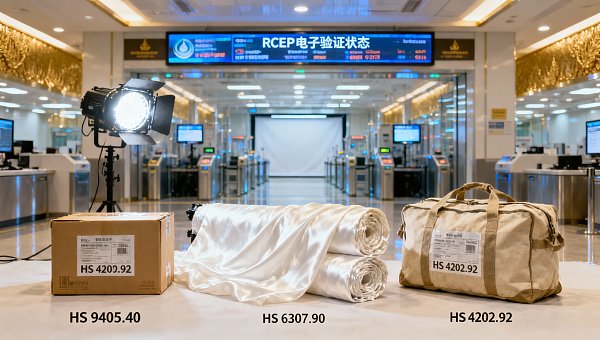
 Export UpdatesThailand Launches RCEP Origin Verification for Chinese Wedding Photo PropsRCEP origin verification for Chinese wedding photo props is live in Thailand—unlock zero tariffs & faster clearance for HS 9405.40, 4202.92, 6307.90 exports now.Apr 23, 2026
 Fabrics & YarnsTurkey TSE Mandates AATCC 100-2024 for Antibacterial Wedding BackdropsAATCC 100-2024 is now mandatory for antibacterial wedding backdrops entering Turkey — ensure compliance, avoid customs delays, and secure market access before 1 June 2026.Textile Industry AnalystApr 23, 2026
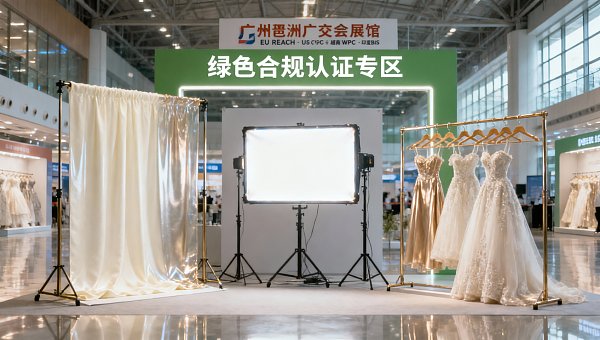
 Export UpdatesCanton Fair Phase II 2026 Launches Green Compliance Zone for Wedding Photo PropsGreen Compliance Zone launched at Canton Fair 2026 for wedding photo props — EU REACH, US CPSC & more. Get certification-ready now!Apr 23, 2026
 Garment MfgIndia BIS Mandate for Wedding Apparel: IS 15620:2026 Effective July 2026India BIS mandates IS 15620:2026 for wedding apparel — bridal gowns, veils & formal wear must meet safety testing by July 2026. Act now to avoid port delays!Textile Industry AnalystApr 23, 2026