Industry News
Curation by industry experts
Hot Articles
Popular Tags
Cupcake Boxes Wholesale: How to Avoid Weak Corners and Window Fogging
When sourcing cupcake boxes wholesale, quality control teams often face two costly issues: weak corners that collapse under stacking pressure and window fogging that undermines product visibility and food safety perception. This guide explains what causes these defects, how to evaluate material and production consistency, and which inspection points help reduce complaints, protect transport performance, and maintain packaging reliability across large-volume orders.
Understanding the quality risks behind cupcake packaging
In the packaging and printing sector, cupcake boxes wholesale is not simply a matter of finding the right size and price. For quality control and safety management personnel, the box is a performance component that affects transport stability, shelf presentation, hygiene perception, and end-customer satisfaction. A box with weak corner strength may deform before it reaches the bakery counter. A clear window with persistent fogging may cause buyers to question freshness, storage conditions, or material suitability, even when the cupcakes themselves are safe and well made.
These failures matter because cupcake packaging operates at the intersection of structure, moisture management, food-contact safety, and production consistency. In high-volume international sourcing, small defects often scale into major losses: damaged goods, repacking labor, shipment rejection, customer complaints, and weakened brand trust. This is why cupcake boxes wholesale should be evaluated as a controlled packaging system rather than a basic commodity.
Why weak corners and window fogging draw industry attention
Across global supply chains, bakery packaging has become more demanding. Buyers now expect attractive display windows, recyclable board grades, food-safe adhesives, and reliable stacking performance during transport. At the same time, sustainability targets have pushed many suppliers toward lighter board weights, water-based coatings, and redesigned structures. These changes can improve environmental performance, but they may also expose weaknesses if design validation and process control are not strong enough.
For cupcake boxes wholesale, two defects are especially visible. Corner weakness is a structural problem that becomes apparent during forming, filling, stacking, and last-mile delivery. Window fogging is a visibility and condensation problem that can be triggered by the interaction between product heat, internal humidity, ventilation design, and film surface behavior. Both issues affect product acceptance immediately, which is why they are common escalation points in quality audits and supplier reviews.
What weak corners usually indicate
Weak corners in cupcake boxes wholesale rarely come from one single cause. In most cases, they reflect a combination of structural design limits and production variation. Common root factors include insufficient paperboard caliper, low compression strength, poor crease depth control, inaccurate die-cutting, weak adhesive bonding, and lock-tab geometry that does not hold shape under load. If the box includes a large viewing window, board area removed from the panel can further reduce rigidity, especially near fold lines and vertical edges.
Corner collapse may also be linked to environmental exposure. Paperboard absorbs ambient moisture, and if storage humidity is high, stiffness can drop before the boxes are even assembled. In export conditions, temperature cycling and extended warehousing can amplify this problem. Quality teams should therefore avoid judging structural strength only from pre-shipment appearance. A flat, neat bundle may still perform poorly after conversion and stacking.
Why window fogging happens in bakery boxes
Window fogging in cupcake boxes wholesale is often misunderstood as a film defect alone. In reality, it is usually a moisture and temperature management issue. Freshly baked cupcakes may still release heat and vapor after packing. If the internal air cools against a relatively cold plastic window, condensation can form as microdroplets, creating a hazy appearance. This is more likely when packaging lines are fast, cooling time is inconsistent, or the box design limits ventilation.
Film selection still matters. Different window films vary in anti-fog performance, surface energy, thickness stability, and sealing compatibility. Some transparent films remain visually clear under moderate humidity, while others haze quickly. Surface scratches, static dust attraction, and coating transfer can make fogging appear worse than it is. From a safety management perspective, even non-hazardous fogging can influence customer perception of sanitation and freshness, which makes preventive control important.
Key packaging elements that influence performance
To evaluate cupcake boxes wholesale effectively, teams should look beyond the finished sample and review the main technical variables that drive repeatability. The table below summarizes the most relevant elements.
Application value for quality control and safety teams
For QC and safety professionals, stronger control over cupcake boxes wholesale delivers value far beyond appearance. First, it improves transport reliability by reducing crush damage in stacked cartons and retail handling. Second, it protects the consumer-facing presentation of decorated bakery products, where visual clarity directly affects purchase confidence. Third, it supports compliance by helping ensure that films, inks, coatings, and adhesives are appropriate for indirect or direct food-contact expectations in the target market.
There is also a documentation advantage. Packaging failures are often blamed on storage, shipping, or handling unless inspection criteria are defined in advance. A strong specification for cupcake boxes wholesale creates an evidence base for supplier management. It allows teams to distinguish between design weakness, process instability, and improper downstream use. This is particularly useful for multinational sourcing operations that need consistent acceptance rules across factories and regions.
Typical sourcing scenarios and their risk profiles
Not all cupcake boxes wholesale projects face the same risk level. Product style, fulfillment speed, climate exposure, and retail channel all influence what should be prioritized during approval.
Practical inspection points before mass approval
A reliable control plan for cupcake boxes wholesale should combine document review, sample testing, and process observation. On the documentation side, verify material specifications, food-contact declarations, migration-related statements where applicable, adhesive data, and board source consistency. Request actual lot data rather than relying only on generic technical sheets.
For physical evaluation, inspect flat blanks and formed boxes separately. Flat blanks reveal die-cut precision, fiber cracking at creases, print registration, and window patch alignment. Formed boxes reveal real structural behavior. Assemble multiple units from different bundle positions, then check corner squareness, tab retention, and resistance to moderate manual compression. A common mistake is approving only the supplier’s best pre-folded sample instead of random production output.
For window performance, conduct a practical fogging assessment using the actual packing environment if possible. Observe clarity after filling with products at realistic temperatures and after a controlled cooling period. Record whether condensation disappears naturally, persists, or leaves a visible film. This type of functional test often identifies issues that static laboratory review misses.
Process controls that reduce repeat defects
Once a design is approved, ongoing process discipline becomes the main defense against variation in cupcake boxes wholesale. Suppliers should control board conditioning, die maintenance, adhesive application volume, and window patch placement. Inconsistent crease pressure can produce sharp-looking boxes that fail under load because fibers were overbroken during converting. Similarly, excessive adhesive near the window can create haze, odor concerns, or cosmetic streaking.
Safety teams should also pay attention to storage practices. Finished boxes stored in uncontrolled humidity may lose stiffness, while film surfaces exposed to dust or abrasion may appear fogged before use. A good supplier management program includes warehouse condition review, lot coding, and clear segregation of conforming and nonconforming stock. These basic controls are often more effective than adding cost through unnecessary over-specification.
Balancing sustainability with structural and visual reliability
Many buyers of cupcake boxes wholesale want lower material usage and improved recyclability. Those goals are valid, but they must be validated against actual use conditions. Reducing board weight without redesigning panel geometry can weaken corners. Switching to a different transparent film may improve recycling compatibility but worsen fogging if surface behavior changes. Sustainable packaging is most successful when environmental claims are supported by performance data, not assumptions.
For this reason, teams should compare alternatives through controlled trials that include transport simulation, humidity exposure, and real product packing. A lower-cost or greener option is only a true improvement if it preserves structural integrity, visibility, and food safety confidence throughout the intended distribution cycle.
A practical framework for supplier evaluation
When reviewing suppliers of cupcake boxes wholesale, quality teams can use a simple framework: design capability, material consistency, process control, and verification transparency. Design capability asks whether the supplier can explain why the corner structure works and how the window area affects load paths. Material consistency checks whether the same board and film quality are maintained from pilot to mass production. Process control examines how converting variables are monitored. Verification transparency asks whether test records, certificates, and corrective actions are timely and traceable.
This framework aligns well with modern B2B sourcing expectations highlighted by data-driven platforms such as Global Supply Review, where technical credibility and trust signals increasingly shape supplier selection. In other words, the strongest packaging partner is not always the one with the lowest quoted unit price, but the one that can consistently demonstrate packaging fitness for purpose.
Conclusion and next-step guidance
For teams managing cupcake boxes wholesale, weak corners and window fogging should be treated as measurable packaging risks, not unavoidable annoyances. Both defects usually result from understandable interactions among material choice, box design, process stability, and packing conditions. By defining clearer specifications, testing formed-box performance, reviewing food-contact and material data, and validating real-use moisture behavior, quality control and safety personnel can reduce complaint rates and improve packaging reliability across large orders.
If your organization is benchmarking cupcake boxes wholesale suppliers, start with a structured evaluation sheet that combines structural checks, window clarity assessment, compliance review, and storage-condition verification. That approach creates better sourcing decisions, stronger shipment outcomes, and more trustworthy bakery packaging performance in competitive global markets.
Recommended News
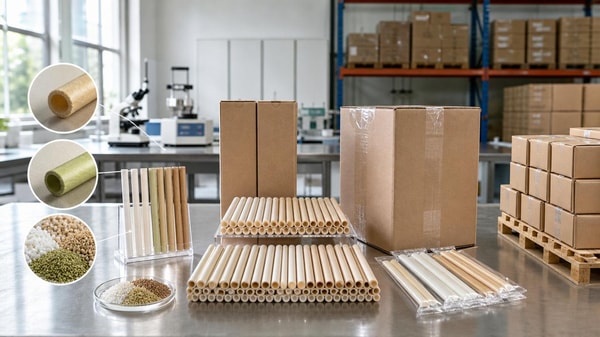
 Eco PackagingBiodegradable Straws Wholesale: What to Verify Before Switching SuppliersBiodegradable straws wholesale: verify certifications, drink performance, packaging, and export reliability before switching suppliers to cut risk, protect compliance, and improve sourcing results.Packaging Supply ExpertMay 04, 2026
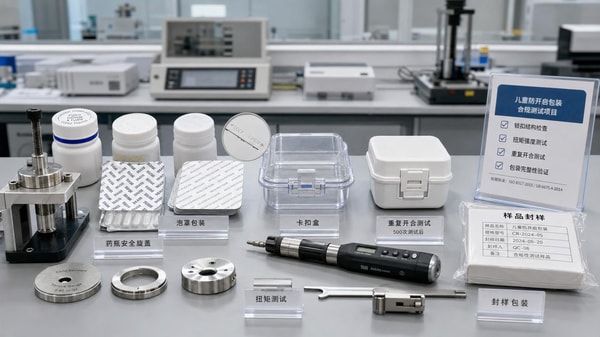
 Policy & RegulationsChild Resistant Packaging: Common Testing Failures and How to Prevent ThemChild resistant packaging failures often stem from weak locks, tolerance drift, or poor reclosure. Learn how to prevent test issues, reduce recall risk, and improve compliance readiness.May 04, 2026
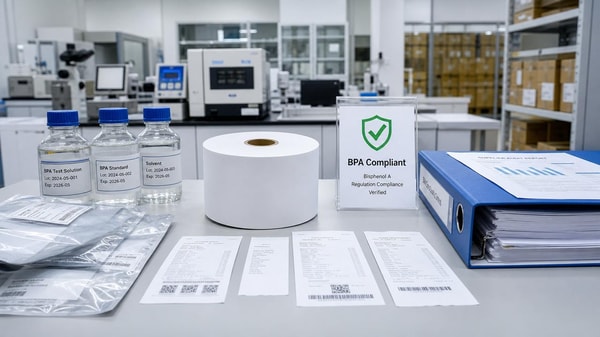
 Policy & RegulationsThermal Paper Receipts: BPA Rules and Compliance Questions in 2026Thermal paper receipts face tougher BPA scrutiny in 2026. Learn the key compliance questions, supplier checks, and risk-reduction steps buyers and safety teams should act on now.May 04, 2026
 Office FurnitureWholesale A4 Copy Paper: GSM, Brightness, and Jam Rate ExplainedWholesale A4 copy paper buying made simple: learn how GSM, brightness, and jam rate affect print quality, machine uptime, and sourcing costs across offices, schools, and print shops.Interior Sourcing LeadMay 04, 2026