Industry News
Curation by industry experts
Hot Articles
Popular Tags
US CPSC Recall: Chinese Wedding Backdrops with Formaldehyde Excess
On April 22, 2026, the U.S. Consumer Product Safety Commission (CPSC) issued Recall Notice #2026-117 concerning PVC-laminated wood-based wedding photography backdrops manufactured in China and imported into the U.S. and Canada. The recall affects 12 batches shipped between Q3 2025 and Q1 2026. This development is especially relevant for exporters, OEM manufacturers, importers, and retailers of decorative interior props — particularly those engaged in cross-border trade of photo studio products, event décor, and low-VOC-certified furnishings.
Event Overview
On April 22, 2026, the U.S. CPSC published Recall Notice #2026-117, initiating a voluntary recall of 12 batches of PVC-coated wooden wedding photography backdrops exported from China to the U.S. and Canada during Q3 2025–Q1 2026. Testing confirmed formaldehyde emissions at 0.12 mg/m³ — 2.4 times higher than the ANSI/AHAM AC-1-2020 limit. The notice explicitly names seven OEM factories located in Guangdong and Zhejiang provinces. Importers are instructed to immediately remove affected units from sale and verify VOC test reports across their supply chain.
Which Subsectors Are Affected
Direct Trading Enterprises (U.S./Canada Importers)
Importers distributing these backdrops face immediate compliance risk. The CPSC notice mandates removal from shelves and requires documentation of VOC testing — meaning past shipments without validated third-party reports may now be subject to customs holds or retailer rejection. Liability exposure increases if downstream claims arise from indoor air quality concerns.
Processing & Manufacturing Firms (OEM/ODM Suppliers)
The seven named OEM facilities in Guangdong and Zhejiang are directly implicated. Their production lines, material sourcing, and QC protocols for laminated wood substrates are now under regulatory scrutiny. Even non-named suppliers serving similar clients may experience intensified audit requests from buyers seeking assurance of formaldehyde compliance.
Raw Material Procurement Entities
Suppliers of PVC films, adhesives, and engineered wood panels used in backdrop manufacturing may see revised specification demands. Buyers are likely to require updated VOC test data — especially formaldehyde — tied to specific lot numbers and applied lamination processes, not just generic material certifications.
Distribution & Retail Channel Operators
North American photo studio equipment distributors and e-commerce platforms selling wedding décor must now assess inventory traceability. The CPSC notice signals potential future tightening of pre-shipment inspection requirements for this category — including mandatory on-site VOC testing prior to customs clearance.
What Relevant Businesses or Practitioners Should Monitor and Do Now
Track official updates on CPSC’s enforcement posture
Monitor CPSC’s public docket for #2026-117, especially any follow-up guidance on acceptable test methods (e.g., ASTM D6007 vs. ISO 16000-9), reporting deadlines, or expansion to other substrate types (e.g., MDF-only or foam-core variants).
Review VOC documentation for current and recent backdrop shipments
Importers and brand owners should retrieve and validate existing formaldehyde test reports — confirming they cover the exact construction (substrate + film + adhesive), test conditions (temperature, humidity, chamber volume), and duration per ANSI/AHAM AC-1-2020. Reports older than 12 months or lacking lot-specific traceability may no longer suffice.
Prepare for enhanced pre-shipment verification in North America
Anticipate that major U.S./Canadian photo equipment retailers may soon require formaldehyde test results as part of standard PO terms — possibly with third-party lab accreditation (e.g., A2LA) and chamber-testing protocols aligned with ANSI/AHAM AC-1-2020 Annex B.
Engage proactively with OEM partners on material substitution feasibility
For brands managing private-label backdrops, initiate technical discussions with OEMs on alternatives to conventional PVC lamination — such as water-based coatings or certified low-emission films — and assess lead-time and cost implications before new orders are placed.
Editorial Perspective / Industry Observation
From an industry perspective, this recall is less an isolated product failure and more a signal of maturing regulatory expectations for indoor décor items sold in health-conscious consumer markets. It reflects a shift from post-market incident response toward proactive chemical compliance in mid-tier decorative goods — a category previously subject to lighter oversight than children’s products or furniture. Analysis来看, the specificity of the cited standard (ANSI/AHAM AC-1-2020) and the explicit naming of OEM facilities suggest CPSC is building a precedent for supply-chain accountability beyond the importer level. Current更值得关注的是 whether this triggers coordinated action by Health Canada or adoption of similar thresholds by U.S. state-level regulators — particularly in California, where formaldehyde remains tightly regulated under Proposition 65.
It is更适合理解为 a procedural escalation rather than an immediate market-wide disruption: no fines or penalties have been announced, and the recall remains voluntary. However, its operational impact is tangible — especially for firms relying on standardized VOC test reports without lot-level validation or process-specific chamber testing.
Conclusion
This CPSC recall underscores how evolving indoor air quality standards increasingly extend to decorative commercial products — not just residential furniture or building materials. For stakeholders in the photo studio, event décor, and interior prop supply chain, it serves as a timely reminder that formaldehyde compliance is no longer optional for North American-bound goods. The appropriate stance is neither alarm nor dismissal, but structured readiness: verifying documentation integrity, aligning test protocols with cited standards, and treating supplier-level chemical management as a core component of quality governance — not just a compliance checkbox.
Information Sources
Main source: U.S. Consumer Product Safety Commission (CPSC), Recall Notice #2026-117, published April 22, 2026.
Areas requiring ongoing observation: Potential alignment of Health Canada’s guidance, updates to ASTM or ISO test method references in CPSC communications, and retailer-specific policy announcements regarding pre-shipment VOC verification for décor categories.
Recommended News
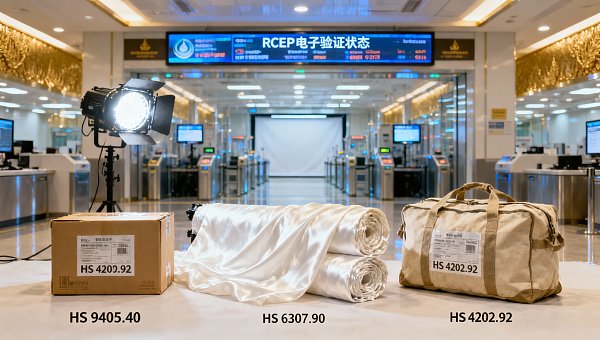
 Export UpdatesThailand Launches RCEP Origin Verification for Chinese Wedding Photo PropsRCEP origin verification for Chinese wedding photo props is live in Thailand—unlock zero tariffs & faster clearance for HS 9405.40, 4202.92, 6307.90 exports now.Apr 23, 2026
 Fabrics & YarnsTurkey TSE Mandates AATCC 100-2024 for Antibacterial Wedding BackdropsAATCC 100-2024 is now mandatory for antibacterial wedding backdrops entering Turkey — ensure compliance, avoid customs delays, and secure market access before 1 June 2026.Textile Industry AnalystApr 23, 2026
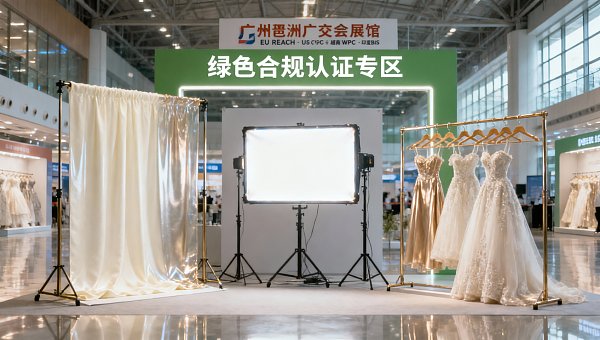
 Export UpdatesCanton Fair Phase II 2026 Launches Green Compliance Zone for Wedding Photo PropsGreen Compliance Zone launched at Canton Fair 2026 for wedding photo props — EU REACH, US CPSC & more. Get certification-ready now!Apr 23, 2026
 Garment MfgIndia BIS Mandate for Wedding Apparel: IS 15620:2026 Effective July 2026India BIS mandates IS 15620:2026 for wedding apparel — bridal gowns, veils & formal wear must meet safety testing by July 2026. Act now to avoid port delays!Textile Industry AnalystApr 23, 2026