Industry News
Curation by industry experts
Hot Articles
Popular Tags
What to Ask Before Choosing a Textile Manufacturing Company
Choosing the right textile manufacturing company requires more than comparing prices. Buyers and sourcing teams must evaluate quality systems, production capacity, compliance standards, and supply chain reliability before making a decision. For global procurement professionals researching trusted partners across sectors like smart lighting controls, eco friendly packaging for cosmetics, and office furniture, asking the right questions early helps reduce risk, improve supplier fit, and support long-term business growth.
In the lighting and illumination industry, textiles are not a peripheral input. They influence diffuser performance, decorative shade consistency, acoustic lighting integration, fire behavior, and even brand positioning in hospitality, retail, and commercial interiors. Whether a buyer is sourcing lamp shade fabrics, blackout textiles for architectural lighting, reflective linings, or woven materials for illuminated display systems, the wrong manufacturing partner can create delays, color variation, safety issues, and costly rework.
For procurement teams, distributors, and business evaluators, the most effective approach is to ask better questions before onboarding a supplier. The answers reveal not only whether a textile manufacturing company can produce to specification, but also whether it can support long lead-time projects, mixed-SKU orders, compliance documentation, and quality stability across 6, 12, or 24 months of repeat purchasing.
Start with Product Fit for Lighting Applications
The first question is simple but often overlooked: does the textile manufacturer understand lighting applications, or does it mainly serve apparel and general home décor? A fabric that works for curtains may fail in pendant shades, backlit panels, or decorative wall sconces. Lighting textiles must often meet tighter requirements for light transmission, dimensional stability, heat resistance, and visual consistency under warm white or neutral white LED output.
Buyers should ask for application-specific samples, not just a generic swatch book. A useful sample review should cover at least 4 dimensions: color under 2700K and 4000K lighting, texture visibility at 1-2 meters, lamination or bonding behavior, and edge performance after cutting. If the supplier cannot discuss these points clearly, it may not be the right partner for lighting-grade textile production.
It is also important to confirm whether the manufacturer can handle different substrate types used in lighting products. Common categories include woven polyester for lampshades, cotton-linen blends for decorative fixtures, flame-retardant fabrics for commercial interiors, and acoustic textiles for office and hospitality lighting systems. Each comes with different finishing requirements, MOQ thresholds, and testing expectations.
Key questions to ask about application suitability
- Which lighting-related products do you currently supply, such as drum shades, wall lamp covers, backlit panels, or acoustic luminaires?
- What is the typical fabric width, weight range, and coating option available for illumination use?
- Can you provide small-batch prototypes within 7-10 days before full production?
- How do you control shade variation across repeat orders larger than 3,000-5,000 meters?
A supplier with real experience in lighting textiles will usually answer with specific ranges, process constraints, and material trade-offs. That level of precision matters because lighting products are judged at close viewing distance, where minor defects become visible fast.
The table below can help procurement teams compare textile requirements across common lighting applications before shortlisting manufacturers.
This comparison makes one point clear: lighting buyers should qualify textile suppliers by end use, not by price list alone. A good product fit at the start reduces failed samples, engineering changes, and customer complaints later in the sales cycle.
Evaluate Quality Control, Testing, and Process Stability
Once product fit is confirmed, the next question is how the manufacturer controls quality from yarn or base fabric to finished roll or cut part. In lighting, consistency is critical because textiles interact directly with illumination. A slight shift in density, coating thickness, or color can change the final appearance of a fixture across an entire installation of 50, 200, or 1,000 units.
Procurement teams should ask what the supplier inspects during production and how often. A capable textile manufacturing company should be able to describe at least 3 stages of control: incoming material inspection, in-process checks, and final shipment review. It should also explain acceptable tolerance levels for width, weight, color, shrinkage, and visible defects.
What quality questions matter most
Ask whether the manufacturer uses lot-based traceability. For lighting projects, traceability over 6-12 months is important when the same fabric must be reordered for project extensions or replacement parts. If the factory cannot link finished goods back to dye lot, finishing batch, or weaving date, repeatability becomes a risk.
It is equally useful to understand their defect response process. For example, how do they handle issues such as roll-to-roll color drift, surface contamination, or coating inconsistency? A strong supplier should define response time, corrective action steps, and whether replacement or rework can happen within 7-14 days.
Core checkpoints for lighting textile inspections
- Color review under at least 2 lighting environments, such as 3000K showroom light and 5000K inspection light.
- Dimensional testing for width, shrinkage, and tension behavior after cutting or laminating.
- Surface inspection for weaving flaws, marks, coating streaks, or visible pinholes.
- Functional review for flame resistance, bonding, diffusion, or abrasion, depending on use case.
Not every project requires advanced testing, but every project needs process stability. If a supplier can show repeatable inspection routines and practical tolerance control, it is far more likely to support long-term sourcing without performance surprises.
A structured quality review is easier when teams use a comparison table during supplier assessment meetings.
The goal is not to force every supplier into the same process. It is to confirm whether the manufacturer’s control system is detailed enough for lighting-grade output, where appearance, repeatability, and installation timing all matter.
Check Capacity, Lead Time, and Supply Chain Resilience
A textile manufacturing company may produce attractive samples but still fail at scale. That is why buyers should ask about monthly capacity, production scheduling, raw material dependency, and contingency planning. In the lighting industry, demand can swing sharply around project cycles, retail launches, or hospitality renovations. A supplier that can handle 300 meters for a sample order may not be ready for 8,000 meters over 30-45 days.
Capacity discussions should go beyond a single number. Ask whether capacity is shared across product lines, what percentage is reserved for long-term customers, and how quickly the factory can add a second shift or subcontract non-critical steps. These questions help determine whether the supplier can support both stable replenishment and urgent project-based demand.
Lead time reliability is equally important. For lighting fixtures, textile delays often slow final assembly, packaging, and outbound shipping. Procurement teams should ask for standard timelines for sampling, lab dips or color approvals, bulk production, and export documentation. A realistic supplier will usually provide a range such as 5-7 days for sample development, 20-35 days for bulk production, and 3-7 days for final packing and release.
Questions that reveal supply chain strength
- What are your top 3 raw material dependencies, and do you have backup sources?
- How often do lead times change during peak season, and by how many days?
- Can you separate urgent lighting projects from regular textile runs?
- What is your process if one finishing line goes offline for 48-72 hours?
These operational details matter to distributors and sourcing managers because missed delivery windows do not only affect one component. They can delay full luminaire shipments, showroom launches, and contractor handovers.
Common capacity warning signs
Be cautious if a supplier cannot define MOQ by material type, gives the same lead time for every order size, or avoids discussing backup planning. Those are often signs of weak scheduling discipline. In global sourcing, especially across multiple time zones, even a 5-day surprise delay can create cascading problems for a lighting product rollout.
Verify Compliance, Safety, and Documentation Readiness
In lighting and illumination, textiles may need to meet safety, environmental, and customer-specific documentation requirements. For example, fabrics used in hospitality fixtures, office acoustic lighting, or public-space decorative luminaires may require flame-retardant performance, restricted substance controls, or traceable material declarations. Buyers should never assume a supplier understands these needs without asking directly.
A good starting point is to ask which standards or test reports the manufacturer can normally support for interior applications. The answer may vary by destination market and product category, but the supplier should at least be familiar with the documentation workflow, sample submission timing, and retest implications if a material finish changes.
Documentation readiness also affects commercial speed. If a supplier needs 2-3 weeks just to compile basic declarations, technical data sheets, or batch references, project approval can stall. In contrast, an organized manufacturer will already have a document package format for procurement review, especially for repeat materials used in commercial lighting or decorative OEM production.
Compliance topics to clarify early
Ask whether the textile manufacturer can maintain material consistency after approval. A compliant sample is only useful if bulk goods follow the same construction and finish. Any shift in coating chemistry, backing, or flame-retardant treatment may require new validation. This is especially important for distributors supplying projects with tender specifications or architect-driven approval processes.
You should also confirm how the supplier handles change notification. If a raw material source changes, buyers need advance notice, not a surprise after shipment. A formal change notice period of 30-60 days is often more manageable for companies coordinating lighting assemblies, certifications, and channel inventory.
The table below summarizes the documentation areas most relevant when textiles are used in lighting-related products.
For business evaluation teams, documentation quality is often a strong predictor of supplier maturity. A factory that responds clearly on compliance and change control is usually easier to manage in long-term lighting procurement programs.
Assess Communication, Commercial Terms, and Long-Term Supplier Value
Even technically capable textile manufacturers can become difficult partners if communication is slow, quotation logic is unclear, or problem-solving is reactive. In B2B lighting supply chains, communication quality directly affects engineering alignment, sample approvals, shipment planning, and after-sales resolution. Buyers should evaluate not only the factory floor, but also the account management process behind it.
Start by asking how quotations are structured. Do they clearly separate fabric cost, finishing cost, sampling fees, packaging options, and shipping terms? Transparent pricing helps buyers compare suppliers on a like-for-like basis. It also reduces disputes when a lighting product moves from development into mass production and specifications change by 5%, 10%, or more.
Response speed is another useful signal. A supplier that takes 4-5 business days to answer a technical question during pre-sales may be even slower when a shipment issue appears. For international sourcing, many buyers prefer partners that can acknowledge critical requests within 24 hours and provide a workable update within 48-72 hours.
Commercial points worth clarifying before approval
- MOQ by color, finish, or backing type, especially for decorative lighting collections with multiple SKUs.
- Sample fee policy and whether development cost can be credited against bulk orders.
- Payment terms for first orders versus repeat orders over 6-12 months.
- Claim handling process for visible defects discovered before or after fixture assembly.
Long-term value also includes the supplier’s willingness to support new product development. Lighting brands and distributors often refresh collections every season or every 12-18 months. A textile manufacturing company that can propose alternative textures, sustainable material options, or more efficient finishing methods may contribute more value than one offering only low initial pricing.
FAQ for sourcing teams in lighting
How many suppliers should a buyer compare before selection? For most lighting textile projects, comparing 3-5 qualified suppliers gives enough range on price, technical fit, and service quality without slowing the sourcing process too much.
Is the cheapest quote usually the best option? Not for lighting applications. If a lower-cost fabric creates color inconsistency, failed approvals, or slower assembly, the total cost can rise quickly through rework and missed delivery dates.
When should audits or site reviews happen? For strategic or repeat purchasing programs, an audit before first bulk order is often useful. For small projects, a remote process review plus approved sampling may be enough, provided lead time and documentation are clear.
The best supplier relationship is not purely transactional. It is a partnership built on realistic lead times, stable quality, fast issue resolution, and a shared understanding of what lighting products require in the market.
Choosing a textile manufacturing company for lighting applications means looking beyond unit cost and asking sharper operational, technical, and commercial questions. Buyers should verify application fit, quality controls, capacity, documentation, and communication standards before committing to production. That approach lowers sourcing risk and improves supplier alignment across decorative, commercial, and architectural lighting programs.
For procurement professionals, distributors, and business evaluators seeking better visibility across textiles, lighting components, packaging, and related light manufacturing sectors, Global Supply Review provides decision-ready insight that supports stronger supplier selection. To explore tailored sourcing guidance, compare qualified manufacturing capabilities, or review more industry-specific solutions, contact us today and get a more informed path to your next supplier decision.
- textile manufacturing
- eco friendly packaging
- textile manufacturing company
- eco friendly packaging for cosmetics
- textile manufacturers
- commercial lighting
- smart lighting
- architectural lighting
- lighting controls
- lighting systems
- decorative lighting
- hospitality lighting
- office furniture
- smart lighting controls
Recommended News
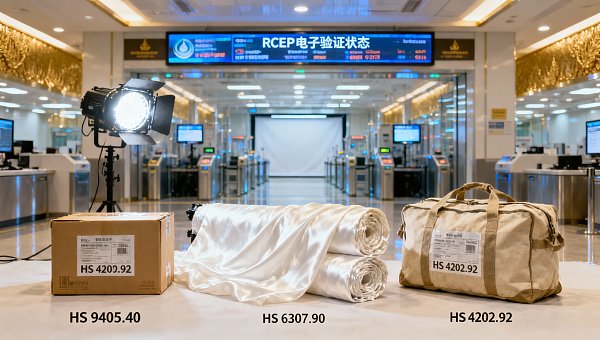
 Export UpdatesThailand Launches RCEP Origin Verification for Chinese Wedding Photo PropsRCEP origin verification for Chinese wedding photo props is live in Thailand—unlock zero tariffs & faster clearance for HS 9405.40, 4202.92, 6307.90 exports now.Apr 23, 2026
 Fabrics & YarnsTurkey TSE Mandates AATCC 100-2024 for Antibacterial Wedding BackdropsAATCC 100-2024 is now mandatory for antibacterial wedding backdrops entering Turkey — ensure compliance, avoid customs delays, and secure market access before 1 June 2026.Textile Industry AnalystApr 23, 2026
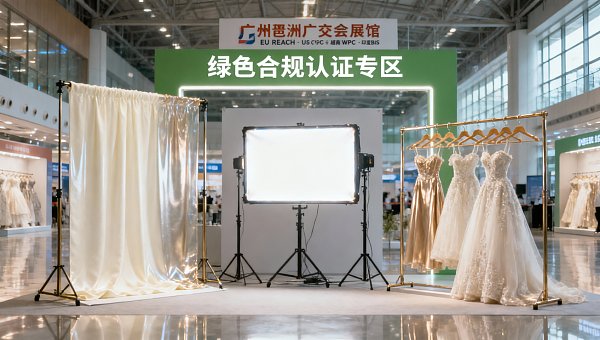
 Export UpdatesCanton Fair Phase II 2026 Launches Green Compliance Zone for Wedding Photo PropsGreen Compliance Zone launched at Canton Fair 2026 for wedding photo props — EU REACH, US CPSC & more. Get certification-ready now!Apr 23, 2026
 Garment MfgIndia BIS Mandate for Wedding Apparel: IS 15620:2026 Effective July 2026India BIS mandates IS 15620:2026 for wedding apparel — bridal gowns, veils & formal wear must meet safety testing by July 2026. Act now to avoid port delays!Textile Industry AnalystApr 23, 2026