Industry News
Curation by industry experts
Hot Articles
Popular Tags
How to Choose a Fabric Calendering Machine for Stable Surface Finish
Choosing the right fabric calendering machine is critical for technical evaluators who need stable surface finish, repeatable quality, and efficient production performance. From roll configuration and pressure control to temperature stability and fabric compatibility, the right decision affects both product consistency and long-term operating cost. This guide outlines the key factors to assess before selecting a machine for demanding textile applications.
What a Fabric Calendering Machine Does and Why It Matters
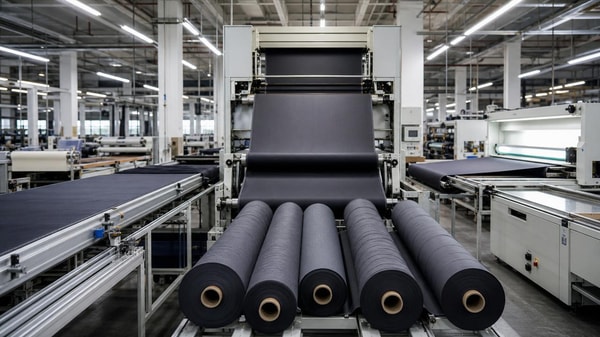
A fabric calendering machine is a finishing system that passes textile material through heated and pressurized rollers to modify surface appearance, thickness, smoothness, luster, density, or hand feel. In practical production, it is used to create uniform surface finish, improve visual quality, enhance downstream printability, and support end-use requirements such as coating adhesion, wrinkle control, or dimensional consistency.
For technical evaluation teams, the machine is not simply a finishing asset. It is a process stability tool. A poor machine choice can cause shade variation, gloss inconsistency, fabric distortion, uneven compression, roll marking, or energy waste. A well-matched fabric calendering machine, by contrast, supports repeatable operating windows across shifts, product lots, and material grades.
This is why the topic draws attention across the wider light manufacturing and sourcing ecosystem. In sectors where appearance and consistency are commercially decisive, surface finish is not cosmetic alone. It directly affects product acceptance, conversion efficiency, and claims risk.
Why Stable Surface Finish Has Become a Higher-Priority Industry Issue
Global textile supply chains now serve buyers who demand narrower tolerances, faster approvals, and stronger traceability. A mill may process woven cotton for apparel, polyester blends for technical lining, or coated fabrics for industrial use, yet across these categories one expectation remains constant: the finished surface must be consistent from sample to bulk production.
Several market forces explain this shift. First, quality expectations are rising in export markets, where visual uniformity and hand feel strongly influence buyer approval. Second, energy and maintenance costs have increased, so machinery must deliver more predictable output with less waste. Third, advanced finishing lines now connect more closely with digital process control, which means the fabric calendering machine must fit broader quality assurance systems rather than operate as an isolated unit.
For organizations that work with strategic sourcing intelligence, this makes machine selection a cross-functional decision involving engineering, operations, procurement, and commercial teams. Stable finish is no longer only a plant issue; it is a supply reliability issue.
Core Evaluation Criteria for a Fabric Calendering Machine
A technical evaluator should begin with process intent rather than machine marketing language. The same fabric calendering machine cannot be assumed to perform equally well across gloss finishing, compacting, embossing, or soft compression applications. The right assessment framework includes the following factors.
Roll configuration and contact mechanics
The number, material, and arrangement of rollers determine pressure distribution and finishing behavior. Steel rolls, cotton-filled rolls, elastic rolls, and engraved rolls each serve different functions. Technical teams should review whether the machine is designed for simple smoothing, friction calendering, embossing, or multi-nip precision finishing. More nips may improve control, but only if alignment and roll deflection are well managed.
Temperature stability
Surface finish consistency depends heavily on thermal uniformity. Uneven roll temperature can create gloss bands, variable shrinkage, or inconsistent handle. Evaluate heating method, warm-up time, thermal response, sensor placement, and temperature deviation across roll width. For heat-sensitive synthetics and blended fabrics, precise control is especially important.
Pressure control and line load uniformity
A fabric calendering machine should maintain stable pressure under real production speeds, not only under empty trial conditions. Look at hydraulic or pneumatic loading system design, cross-width consistency, and whether the machine compensates for roll bending. Pressure repeatability is often the dividing line between acceptable and premium finish quality.
Speed range and dwell balance
High speed is valuable only when matched with finish stability. Evaluators should compare production speed range against target fabrics, expected dwell time, and required finish effect. Some materials require slower, more controlled treatment to avoid distortion or over-polishing.
Fabric tension management
Unstable tension before, within, or after the nip can create skew, elongation, width variation, or edge defects. A capable fabric calendering machine should integrate tension monitoring and synchronized drive control with upstream and downstream units.
Control system and data visibility
Modern evaluation should include human-machine interface design, recipe storage, alarm logic, trend monitoring, and process data export. If a mill serves international buyers, documented repeatability matters. The ability to save and recover validated settings reduces startup waste and operator dependence.
Industry Overview: How Application Needs Change the Selection Standard
Not every finishing line requires the same machine architecture. The best fabric calendering machine is the one that matches product portfolio, quality target, and operational discipline. The table below summarizes common evaluation priorities by application area.
How to Match Machine Design to Fabric Characteristics
Material behavior should guide equipment choice. Cotton, viscose, polyester, nylon, blends, and functional fabrics do not respond identically to heat and compression. A technical evaluator should review fiber sensitivity, yarn structure, weave or knit construction, fabric weight, moisture behavior, and previous finishing history.
Lightweight woven fabrics often need precise low-pressure handling to avoid over-compaction or shine marks. Synthetic fabrics may require tighter thermal control because surface response changes quickly within a narrow temperature range. Heavier industrial textiles may tolerate stronger nip forces but demand robust frames and drive systems to maintain even performance across width.
If the production mix changes frequently, flexibility matters more than peak output. In that case, a fabric calendering machine with broad recipe capability, fast roll temperature adjustment, and predictable cleaning or maintenance access may deliver better total value than a higher-speed but less adaptable system.
Operational Value Beyond Surface Appearance
Stable finishing improves more than looks. It can reduce rework, improve downstream cutting or sewing behavior, and support better print or coating results. For export-oriented manufacturers, consistency also helps shorten buyer approval cycles because lab samples and bulk lots remain closer in finish profile.
From an operational standpoint, the right fabric calendering machine may improve line efficiency through lower startup waste, fewer manual corrections, and more stable production planning. This is particularly relevant in a global sourcing environment where buyers evaluate suppliers on reliability, not only price. A machine that holds finish targets consistently can strengthen a manufacturer’s credibility in long-term supply programs.
For organizations informed by B2B intelligence platforms such as Global Supply Review, this has a strategic implication: machinery capability becomes part of a supplier’s trust signal. Demonstrated process control is increasingly linked to authority, quality confidence, and sourcing attractiveness.
Practical Assessment Checklist for Technical Evaluators
When comparing options, evaluators should move beyond brochure specifications and test how the fabric calendering machine behaves under realistic mill conditions. A practical review usually includes these checkpoints:
- Confirm the target finish effect for each main fabric category rather than using one generic requirement.
- Request cross-width temperature and pressure uniformity data at production speed.
- Review roll material life, resurfacing needs, and maintenance intervals.
- Assess ease of cleaning, access to bearings, seals, heating elements, and control cabinets.
- Verify compatibility with existing stenters, coaters, unwinders, and inspection systems.
- Check recipe recall, operator permissions, audit trail, and process data export capability.
- Run trials on representative fabrics, including difficult constructions and edge-case temperatures.
- Estimate total cost of ownership, including utilities, downtime exposure, spares, and local technical support.
Common Selection Mistakes to Avoid
One common mistake is selecting a fabric calendering machine based mainly on maximum speed. If the process window is narrow, the machine may achieve nameplate output but fail to hold acceptable finish quality. Another mistake is underestimating the importance of roll quality and alignment. Even advanced controls cannot fully compensate for weak mechanical precision.
Technical teams also sometimes evaluate only current products and ignore future mix changes. If the business plans to expand into coated textiles, recycled fibers, or higher-value apparel grades, the selected machine should have enough flexibility to support that path. Finally, inadequate operator training can undermine even a strong investment. Stable finish depends on both machine capability and disciplined process management.
Final Considerations for a Reliable Decision
The best fabric calendering machine is not necessarily the most complex one. It is the system that can deliver the required surface finish consistently across the actual fabrics, speeds, and production conditions that matter to the business. Technical evaluators should balance mechanical design, thermal and pressure stability, automation quality, maintenance practicality, and supplier support before making a final recommendation.
In a competitive global market, stable finishing performance supports more than plant efficiency. It strengthens quality assurance, improves buyer confidence, and helps manufacturers present a more credible sourcing profile. For teams responsible for equipment assessment, a structured evaluation of the fabric calendering machine is therefore an investment in both process control and commercial resilience.
If your organization is reviewing textile finishing capabilities for sourcing, expansion, or supplier benchmarking, use a criteria-based approach and validate every claim with production-relevant data. That is the most dependable way to secure stable surface finish and long-term operational value.
Recommended News
 Home DecorBlackout Curtain Manufacturer Comparison: Lead Times, Coating Quality, and RiskBlackout curtain manufacturer comparison guide: evaluate lead times, coating quality, compliance, and sourcing risk to choose reliable suppliers and avoid costly delays.Interior Sourcing LeadMay 02, 2026
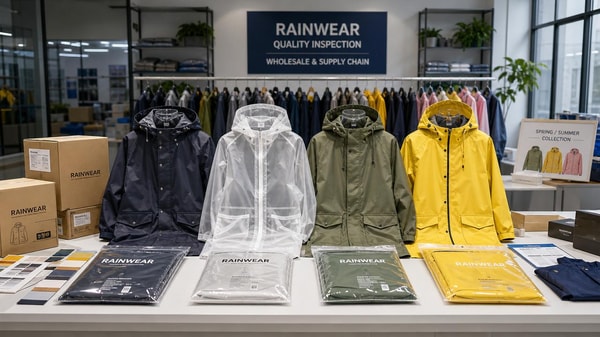
 Garment MfgWholesale Raincoats: What to Review Before Expanding a Seasonal Product LineWholesale raincoats buyers: review materials, sizing, compliance, supplier reliability, and margins before expanding your seasonal product line. Reduce risk and choose smarter.Textile Industry AnalystMay 02, 2026
 Eco PackagingCustom Garment Bags: Materials and Print Choices That Shape Brand PerceptionCustom garment bags shape brand perception through material and print choices. Discover how to balance quality, sustainability, cost, and sourcing for stronger B2B packaging decisions.Packaging Supply ExpertMay 02, 2026
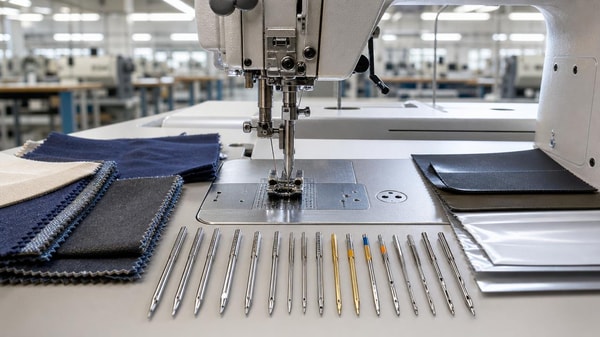
 Garment MfgIndustrial Sewing Needles: Small Specification Changes That Cause Big DowntimeIndustrial sewing needles can cause major downtime when point, size, coating, or length is mismatched. Learn how to spot hidden issues faster and reduce costly line stops.Textile Industry AnalystMay 02, 2026