Industry News
Curation by industry experts
Hot Articles
Popular Tags
2026 Shanghai Wedding Imaging Expo Expands with Cross-Border Tech Matching Zone for Textile & Printing Machinery
The 2026 Shanghai Wedding Imaging Expo (Shanghai Wedding Imaging Expo) will expand its scope to include a dedicated cross-border technology matching zone — the first of its kind — focusing on textile and printing machinery integration for wedding imaging applications. The exact event date was not specified in the original announcement, though the exhibition is scheduled for October 22–25, 2026. This development reflects evolving technical and supply chain requirements across global wedding apparel and visual production sectors.

Confirmed Expansion: New 'Smart Manufacturing & Print-Integration' Zone Announced
On May 25, the Shanghai Wedding Photography Association officially confirmed that the 2026 Shanghai Wedding Imaging Expo will launch a new 'Smart Manufacturing & Print-Integration' zone. The zone will spotlight equipment critical to modern wedding imaging workflows: digital direct-to-fabric inkjet printers, AI-powered cutting tables, waterless transfer printing systems (Textile Machinery), as well as high-precision UV flatbed printers and integrated hot-stamping & die-cutting equipment (Printing Equipment). Overseas buyer pre-registration is now open, with targeted outreach to bridal retail chains and localized print service providers in Southeast Asia, the Middle East, and Latin America for B2B technical matchmaking.
Impact Across Supply Chain Roles
Direct Exporters & Trading Companies
These entities face heightened relevance as the new zone explicitly prioritizes cross-border technical alignment. Their role shifts from general product distribution to facilitating specification-based equipment matching — requiring deeper familiarity with regional operational standards, certification expectations (e.g., CE, UL), and local after-sales infrastructure readiness.
Raw Material & Component Suppliers
Suppliers supporting textile machinery (e.g., specialty inks, heat-transfer films, UV-curable media) and printing equipment (e.g., precision nozzles, servo motors, substrate handling modules) must anticipate demand signals tied to regional adoption patterns — particularly in markets where local print service providers are scaling up digital customization capabilities for bridal wear.
Equipment Manufacturers & Integrators
Manufacturers must prepare technical documentation aligned with international interoperability expectations — including bilingual operation manuals, safety compliance summaries, and interface specifications compatible with common workflow software used in wedding imaging studios. Certification readiness (e.g., CE marking for EU-bound units, GCC conformity for Middle East) becomes a prerequisite for participation in official matchmaking sessions.
Supply Chain Service Providers
Logistics partners, customs brokers, and technical training vendors need to adapt to tighter coordination windows. The B2B matchmaking model implies compressed evaluation cycles — meaning faster turnaround for equipment commissioning support, multilingual technician deployment, and localized warranty claim processing frameworks.
Key Priorities for Participating Enterprises
Prepare Technical Documentation for Cross-Market Alignment
Participating manufacturers and integrators should verify that equipment specifications, safety certifications, and interface protocols meet baseline expectations of invited regional buyers — especially those from markets where regulatory enforcement of electrical safety, chemical compliance (e.g., REACH, RoHS), and data privacy in connected devices is intensifying.
Validate Regional Certification & Compliance Pathways
Before pre-registration closes, enterprises must confirm whether their equipment qualifies for key regional marks (e.g., SIRIM for Malaysia, SASO for Saudi Arabia, INMETRO for Brazil). Absence of required certifications may exclude participation in formal matchmaking or limit procurement eligibility.
Align with Localized Printing & Apparel Production Workflows
Since the zone targets end-use integration — not just standalone hardware — suppliers should map how their equipment interfaces with common fabric handling, color management, and studio workflow platforms used by bridal retailers and print-on-demand service providers in target regions.
Secure Pre-Event Technical Coordination Capacity
Given the emphasis on B2B technical pairing, companies must allocate bilingual technical staff capable of demonstrating real-time compatibility testing — including substrate compatibility trials, RIP software integration, and maintenance protocol handover — during the event.
Industry Observation: Beyond Exhibition Space — A Signal of Workflow Standardization
Analysis shows this expansion reflects more than logistical growth; it signals an emerging industry-wide effort to harmonize technical specifications across the wedding imaging value chain. Observably, the deliberate coupling of textile and printing machinery categories suggests growing recognition that garment personalization (e.g., embroidered names, photo-printed veils, custom lace motifs) relies on tightly coordinated hardware ecosystems — not isolated devices. What deserves closer attention is how this may accelerate demand for modular, API-accessible equipment and standardized digital asset handoff protocols between design, print, and cut stages. It is more appropriate to understand this as an early indicator of de facto interoperability benchmarks forming outside formal standardization bodies.
Strategic Implication: Integration Readiness as a Competitive Threshold
This initiative does not introduce binding regulation or mandatory certification — but it establishes a visible, high-profile platform where market access increasingly depends on integration readiness, not just product availability. For global suppliers, success hinges less on feature parity and more on demonstrable compatibility, localized compliance, and responsive technical engagement capacity. The event functions as both a marketplace and a de facto technical gatekeeper — making early preparation essential, yet outcomes remain contingent on actual buyer engagement and post-event follow-up discipline.
Source Attribution & Verification Notes
This article is generated exclusively from the user-provided input: title, unspecified event timing, and summary details released by the Shanghai Wedding Photography Association on May 25. Specific official source links were not provided in the input and should be verified continuously. Stakeholders are advised to monitor forthcoming announcements regarding zone-specific participation criteria, buyer qualification thresholds, technical documentation requirements, and regional regulatory updates issued by trade promotion agencies and industry associations in target markets.
Recommended News
 Home DecorHow order size affects wholesale prices for round linen tableclothsBuying round linen tablecloths wholesale? Discover how order size, freight, and inventory costs affect pricing—and choose the right quantity to maximize real savings.Interior Sourcing LeadOct 14, 2026
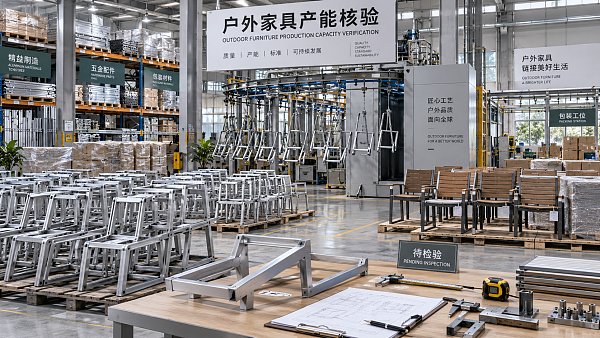
 Outdoor FurnitureHow to verify outdoor furniture manufacturers' production capacityCan outdoor furniture manufacturers deliver on time? Learn how to verify production capacity, uncover bottlenecks, and validate supplier commitments before placing your next order.Interior Sourcing LeadOct 13, 2026
 Commercial DisplaysWhat makes an outdoor digital signage display manufacturer reliable?Discover how to choose a reliable outdoor digital signage display manufacturer with proven weather protection, quality control, smart visibility, and responsive after-sales support.Commercial Tech EditorOct 12, 2026
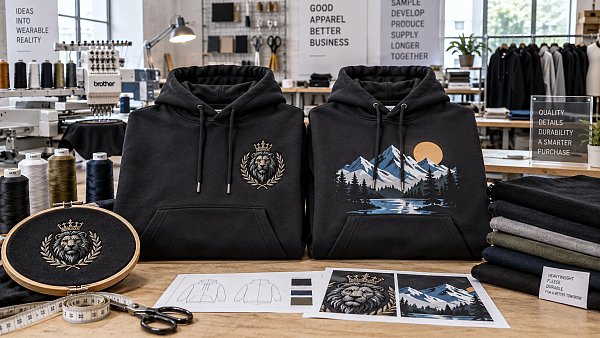
 Garment MfgWhen do bulk embroidered hoodies offer better value than printed ones?Bulk embroidered hoodies deliver lasting value for uniforms and premium branding. Compare durability, design, comfort, and cost to choose the right decoration.Textile Industry AnalystOct 11, 2026