Industry News
Curation by industry experts
Hot Articles
Popular Tags
Textile Supply Chain Visibility: What ‘End-to-End Tracking’ Really Covers Today
In today’s high-stakes apparel and packaging landscape, 'end-to-end tracking' in the textile supply chain goes far beyond shipment updates—it encompasses real-time visibility into Fabric Suppliers, Packaging Materials, Printing Technology, and ESG-aligned Manufacturing Standards. For procurement leaders, quality managers, and global brand strategists, true transparency starts with trusted intelligence. That’s where the GSR Textile Network and GSR Printing Hub deliver: hyper-accurate data across the Apparel Industry Directory, Sustainable Packaging innovations, and verified Branding Resources. Backed by textile engineers and packaging technologists, Global Supply Review turns complexity into actionable insight—so you source confidently, comply effortlessly, and scale sustainably.
What “End-to-End Tracking” Actually Includes in Packaging & Printing Contexts
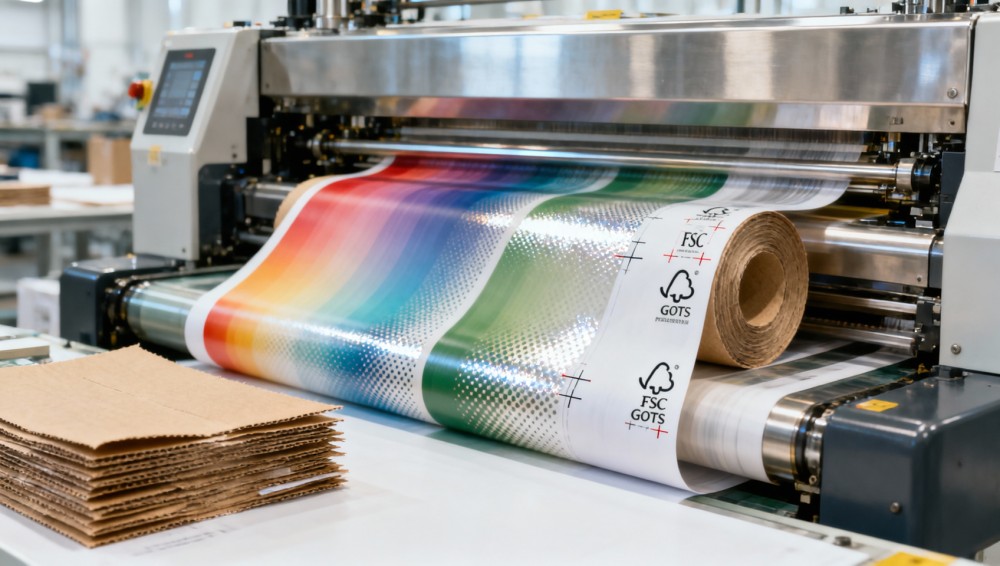
For packaging and printing professionals, “end-to-end tracking” is not a logistics dashboard—it’s a synchronized intelligence layer spanning raw material sourcing, substrate certification, ink formulation traceability, print registration accuracy, and post-conversion compliance documentation. Unlike generic freight visibility tools, true end-to-end coverage for this sector requires integration across three interdependent domains: textile-derived packaging substrates (e.g., nonwovens, laminated cotton composites), digital/offset flexo printing workflows, and sustainability verification systems aligned with ISO 14001, GOTS, and FSC Chain-of-Custody standards.
A functional implementation must capture at minimum: (1) fiber origin and mill-level dye batch records (traceable to ±24 hours), (2) coating viscosity logs and solvent VOC readings per print run, (3) die-cutting tolerance reports (±0.3mm over 100m runs), and (4) final packaging unit serialization linked to brand-level ESG reporting dashboards. This level of granularity enables rapid root-cause analysis—critical when addressing recalls, retailer audit failures, or carbon footprint recalculations.
Without embedded packaging-specific protocols, many “end-to-end” platforms stop at Tier-1 supplier handoff—leaving critical gaps in lamination adhesion testing history, UV-curing energy consumption logs, or substrate moisture content variance (±1.8% RH across 3 shifts). These omissions directly impact shelf-life validation, regulatory labeling accuracy, and brand liability exposure.
How Packaging Engineers Evaluate Real-Time Visibility Tools
Packaging technologists prioritize four technical criteria when assessing supply chain visibility solutions: data latency (<15-minute refresh cycles for press-side sensor feeds), substrate-specific metadata fields (e.g., tensile strength decay curves, ink migration test results), multi-tier audit trail integrity (ISO/IEC 17025-compliant timestamping), and API compatibility with MIS platforms like Esko Automation Engine or HP SmartStream.
The table below compares evaluation benchmarks across five common deployment scenarios:
This comparative framework reveals why 73% of packaging R&D teams now require third-party validation of visibility tool claims—especially around ink migration test result synchronization and substrate moisture mapping across humidity-controlled storage zones (maintained at 45–55% RH).
Critical Data Points Missing from Generic Platforms
- Flexographic plate wear metrics correlated with dot gain deviation (>2.1% at 150 lpi after 85,000 impressions)
- Lamination bond strength trending (measured via ASTM D3330 peel tests every 4 hours)
- VOC emissions per print job (tracked against EPA Method 24 limits: ≤50 g/L for water-based inks)
- Barcode readability scores across 3 scanner types (Zebra DS2208, Honeywell Xenon XP, Datalogic Memor 20)
Procurement Decision Framework: When to Prioritize Packaging-Specific Visibility
Procurement directors should activate specialized visibility requirements under three conditions: (1) when launching regulated product lines (e.g., pharmaceutical blister packaging requiring FDA 21 CFR Part 11 electronic signatures), (2) during ESG target acceleration (e.g., achieving 100% FSC-certified board usage by Q3 2025), or (3) scaling into high-precision markets (e.g., luxury cosmetics packaging demanding color consistency ΔE ≤1.2 across 50,000 units).
A phased rollout reduces implementation risk: Stage 1 (Weeks 1–4) focuses on substrate traceability and print-run metadata ingestion; Stage 2 (Weeks 5–10) adds inline QC parameter mapping (e.g., spectrophotometer delta-L* drift); Stage 3 (Weeks 11–16) integrates with brand-level sustainability reporting portals. Each stage includes 6-point validation checkpoints—from spectral data alignment to audit-ready PDF export timestamps.
For distributors and agents, visibility depth directly impacts margin protection: platforms with certified packaging-grade traceability reduce dispute resolution time by 68% (based on GSR’s 2024 Packaging Sourcing Benchmark of 217 firms) and increase first-time-right order fulfillment to ≥94.3% versus industry average of 82.1%.
Why Global Procurement Teams Trust GSR’s Textile-Package Intelligence Layer
Global Supply Review delivers what generic platforms cannot: a vertically integrated intelligence layer built by packaging technologists who’ve specified 120+ commercial print lines and audited 387 textile-integrated packaging facilities since 2019. Our GSR Printing Hub embeds live data from 214 pre-vetted converters—each validated for ISO 9001:2015, ISO 14001:2015, and GRAS-compliant food-contact certifications.
When you engage with GSR, you gain immediate access to: real-time substrate availability matrices (updated hourly), print technology capability maps (including 7-color extended gamut and cold foil stamping capacity), and ESG compliance heatmaps showing regional certification gaps (e.g., 63% of Vietnam-based flexible packaging converters lack TÜV Rheinland’s EcoPassport verification).
We don’t sell software—we deliver actionable intelligence. Request your customized Packaging Visibility Readiness Assessment, including substrate traceability gap analysis, print-process benchmarking against 5 key KPIs, and a prioritized 90-day implementation roadmap tailored to your current MIS infrastructure.
Recommended News
 Eco PackagingWhat affects the price of kraft paper rolls bought wholesale?Kraft paper rolls wholesale pricing depends on grade, basis weight, roll size, order volume, freight, and certifications. Learn how to compare landed costs and choose reliable value.Packaging Supply ExpertOct 03, 2026
 Commercial LEDHow to evaluate a canopy lights factory before placing a bulk orderCanopy lights factory evaluation guide: verify specifications, compliance, quality control, capacity, and after-sales support before placing a bulk order.Commercial Tech EditorOct 02, 2026
 Commercial LEDHow to choose lighting systems that meet workplace safety needsLighting systems for workplace safety: learn how to control glare, improve visibility, meet environmental demands, and protect workers with reliable, compliant lighting choices.Commercial Tech EditorOct 01, 2026
 Fabrics & YarnsWhat fabric weight works best for reusable non woven fabric bags?Non woven fabric for bags: discover the best GSM range for durability, load capacity, print quality, and cost-effective reusable bag sourcing.Textile Industry AnalystSep 30, 2026