Industry News
Curation by industry experts
Hot Articles
Popular Tags
SGS Launches 7-Day Fast-Track Certification for Compostable Cardboard for Wedding Gift Boxes
On 1 June 2026, SGS—the global testing, inspection, and certification company—launched a dedicated fast-track certification service for compostable cardboard used in wedding gift boxes across three key export hubs in China: Shenzhen, Ningbo, and Dongguan. This initiative responds to tightening international sustainability requirements for packaging materials, particularly in the EU and US markets, where compliance with updated compostability standards has become a critical trade prerequisite.

Fast-Track Certification Service Now Live
Effective 1 June 2026, SGS introduced an accelerated certification pathway specifically for compostable cardstock intended for wedding gift boxes. The service combines laboratory testing and report issuance within seven working days. It aligns with the latest revisions of EN 13432:2026 (EU) and ASTM D6400-26 (US), and is tailored for Chinese box printers, packaging exporters, and OEM suppliers serving overseas bridal brands. Certified clients receive English-language reports directly and optional pre-assessment support for CE and UKCA marking.
Impact Across the Packaging Supply Chain
Export-Oriented Packaging Manufacturers
These enterprises face tighter time-to-market pressure when fulfilling orders for EU/US bridal retailers. With compressed certification cycles now available, they can accelerate product launch timelines—but must ensure raw material traceability and batch consistency to avoid retesting delays.
Raw Material Suppliers
Suppliers of compostable pulp, coatings, or laminates must verify that their formulations meet EN 13432:2026 and ASTM D6400-26 revision criteria—not just legacy versions. Documentation such as resin certificates, additive declarations, and biodegradation test summaries will be increasingly scrutinized during client audits.
Printing and Finishing Facilities
Processes like lamination, foil stamping, or aqueous coating may compromise compostability if non-compliant adhesives or topcoats are used. Facilities must validate process compatibility with certified substrates and retain evidence for certification renewal.
Logistics and Compliance Support Providers
Third-party consultants and lab coordination services are seeing rising demand for bilingual (EN/CN) documentation review, CE/UKCA marking guidance, and pre-submission technical alignment—especially for SMEs unfamiliar with the revised test protocols under EN 13432:2026.
Key Operational Considerations for Affected Businesses
Align substrate specifications with updated standard requirements
Confirm that all base papers, binders, inks, and surface treatments comply with the 2026 editions of EN 13432 and ASTM D6400—not earlier versions. Retrospective validation against older standards no longer satisfies market access conditions in leading import jurisdictions.
Leverage localized fast-track labs to reduce certification lead time
Utilize SGS’s Shenzhen, Ningbo, and Dongguan facilities to avoid cross-border sample shipping delays and customs-related hold-ups. Pre-booking slots is recommended during peak wedding season (Q3–Q4).
Prepare for bilingual reporting and regulatory pre-review
Ensure internal technical files—including material declarations, processing records, and stability data—are structured to support both English report generation and CE/UKCA conformity assessment. Early engagement with SGS’s marking advisory team helps identify labeling gaps ahead of formal submission.
Industry Observation: Acceleration Reflects Broader Regulatory Shifts
Analysis shows this 7-day certification window is not merely a service upgrade—it signals a structural shift toward shorter compliance cycles in sustainable packaging. Observably, regulators and brand owners are treating compostability verification less as a one-time certification and more as an embedded quality gate in procurement workflows. From an industry perspective, the compression of turnaround time increases pressure on upstream material suppliers to maintain real-time compliance visibility, while also lowering the barrier for smaller converters to enter regulated markets—provided they invest in documentation discipline and process controls. What deserves closer attention is how rapidly these accelerated pathways may become de facto minimum expectations across other decorative packaging segments, such as festive or luxury cosmetics boxes.
Toward Faster, More Transparent Sustainable Packaging Compliance
This initiative marks a pragmatic response to mounting commercial and regulatory urgency around end-of-life packaging performance. While it does not relax technical requirements, it significantly reduces administrative latency—supporting faster innovation cycles and more responsive supply chains. Its long-term value hinges on consistent application of the 2026 standards and transparent communication between certifiers, manufacturers, and brand partners.
Source Information and Verification Notes
This article was generated exclusively from the provided title, event date (1 June 2026), and summary. Specific official source links were not provided in the input and should be verified continuously. Stakeholders are advised to monitor updates to EN 13432 implementation guidelines from CEN, ASTM subcommittee D20.96 bulletins, and SGS’s regional advisories for further detail on scope interpretation, sampling protocols, and CE/UKCA marking eligibility criteria.
Recommended News
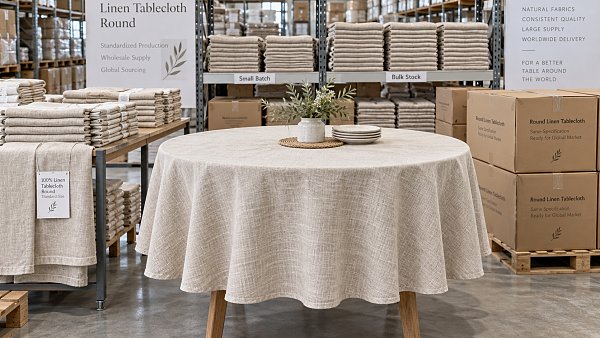
 Home DecorHow order size affects wholesale prices for round linen tableclothsBuying round linen tablecloths wholesale? Discover how order size, freight, and inventory costs affect pricing—and choose the right quantity to maximize real savings.Interior Sourcing LeadOct 14, 2026
 Outdoor FurnitureHow to verify outdoor furniture manufacturers' production capacityCan outdoor furniture manufacturers deliver on time? Learn how to verify production capacity, uncover bottlenecks, and validate supplier commitments before placing your next order.Interior Sourcing LeadOct 13, 2026
 Commercial DisplaysWhat makes an outdoor digital signage display manufacturer reliable?Discover how to choose a reliable outdoor digital signage display manufacturer with proven weather protection, quality control, smart visibility, and responsive after-sales support.Commercial Tech EditorOct 12, 2026
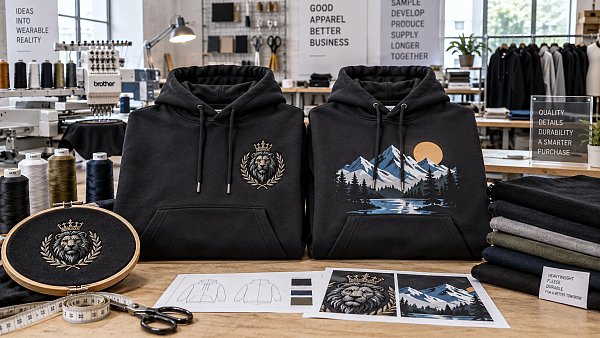
 Garment MfgWhen do bulk embroidered hoodies offer better value than printed ones?Bulk embroidered hoodies deliver lasting value for uniforms and premium branding. Compare durability, design, comfort, and cost to choose the right decoration.Textile Industry AnalystOct 11, 2026