Industry News
Curation by industry experts
Hot Articles
Popular Tags
Vietnam Mandates Dual FSC & PEFC Certification for Wooden Outdoor Prop Packaging
Starting 1 June 2026, Vietnam’s Ministry of Industry and Trade and the General Department of Vietnam Customs will require all imported wooden outdoor photography props—including church models, archways, and floral stands—to use packaging materials certified under both FSC and PEFC standards. This regulation directly affects Chinese exporters supplying Vietnamese wedding photography studios, travel photography businesses, and film prop distributors—and signals a tightening of sustainability compliance at the packaging level.
Event Overview
Effective 1 June 2026, Vietnam’s Ministry of Industry and Trade and the General Department of Vietnam Customs jointly implement a new requirement: all wooden outdoor photography props imported into Vietnam must be packaged using materials holding both FSC (Forest Stewardship Council) and PEFC (Programme for the Endorsement of Forest Certification) certifications. The rule applies to the full supply chain—from Chinese manufacturers and exporters to Vietnamese end-users. Non-compliant shipments arriving at Ho Chi Minh City or Hai Phong ports face full rejection or mandatory rectification.
Industries Affected by Segment
Direct Exporters (China-based)
These enterprises ship finished wooden props to Vietnam and are responsible for ensuring packaging compliance. They face customs clearance delays, financial penalties, and reputational risk if packaging fails verification—even when the prop itself is not made of wood. Impact manifests in increased pre-shipment documentation checks, potential cargo holds, and added coordination with packaging suppliers.
Wooden Prop Manufacturers (China-based)
Manufacturers sourcing or specifying packaging—especially corrugated boxes, wooden crates, or pallets—must now verify dual certification status of those materials. This adds a layer of supplier vetting and traceability requirements previously not mandated for non-structural packaging components.
Distribution & Wholesalers (Vietnam-based)
Local distributors and import agents handling consignments for bridal studios or film production services bear de facto responsibility for customs compliance. Under current procedures, they may be required to submit certification documents prior to release—making them operational bottlenecks if upstream suppliers lack verified documentation.
Logistics & Packaging Suppliers (Cross-border)
Suppliers providing certified packaging to Chinese exporters must now align with dual-standard verification—not just one. This may affect pricing, lead time, and minimum order quantities, particularly for small-batch or custom-packaged props.
What Enterprises and Practitioners Should Monitor and Do Now
Confirm certification scope and validity with packaging vendors
Verify whether existing packaging suppliers hold active, transferable FSC and PEFC chain-of-custody certificates covering the exact material grades and formats used (e.g., solid wood pallets vs. recycled fiberboard). Certificates must include the vendor’s legal name matching commercial invoices.
Map high-risk SKUs and port entry points
Prioritize verification for best-selling items—such as modular arches or portable chapel replicas—that frequently ship via Ho Chi Minh City or Hai Phong. These ports are explicitly named in enforcement guidance and likely to apply stricter on-site checks.
Distinguish regulatory signal from immediate operational impact
The rule takes effect 1 June 2026, but implementation details—including accepted evidence formats, grace periods for transitional stock, and third-party verification protocols—remain unannounced. Current guidance does not specify whether partial certification (e.g., FSC-only) qualifies for conditional release.
Update internal documentation workflows ahead of Q2 2025
Begin integrating dual-certification verification into purchase orders, supplier scorecards, and shipping checklists no later than April 2025. Allow buffer time for supplier audits and certificate renewal cycles, which often require 6–8 weeks.
Editorial Perspective / Industry Observation
Observably, this requirement reflects Vietnam’s broader alignment with EU-aligned due diligence frameworks—notably Regulation (EU) 2023/1115—by extending forest certification expectations beyond primary timber products to ancillary packaging. Analysis shows it is less a standalone trade barrier and more a procedural escalation targeting traceability discipline across the value chain. From an industry perspective, it functions primarily as a compliance signal rather than an immediate market access restriction—its real impact depends on how rigorously customs authorities enforce documentation thresholds post-implementation. Continued monitoring of official circulars from Vietnam’s Ministry of Industry and Trade remains essential, as interpretation and enforcement leeway may vary across regional customs offices.

Conclusion
This regulation marks a formal step toward embedding dual-forest-certification requirements into Vietnam’s import controls for niche creative-sector goods. It does not ban imports nor mandate certification for the props themselves—but elevates packaging from an operational detail to a regulated compliance component. Currently, it is more appropriately understood as a forward-looking procedural benchmark than a sudden disruption. Stakeholders should treat it as a calibrated signal of tightening environmental accountability in ASEAN import markets—particularly where visual media and lifestyle sectors intersect with sustainable sourcing expectations.
Source Disclosure:
Main source: Official joint notice issued by Vietnam’s Ministry of Industry and Trade and the General Department of Vietnam Customs (publicly announced, effective date confirmed as 1 June 2026).
Items under ongoing observation: Implementation guidelines, acceptable evidence formats, and port-level enforcement consistency—no official updates published as of the announcement date.
Recommended News
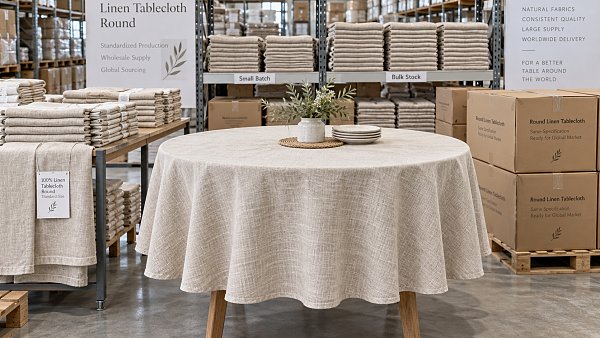
 Home DecorHow order size affects wholesale prices for round linen tableclothsBuying round linen tablecloths wholesale? Discover how order size, freight, and inventory costs affect pricing—and choose the right quantity to maximize real savings.Interior Sourcing LeadOct 14, 2026
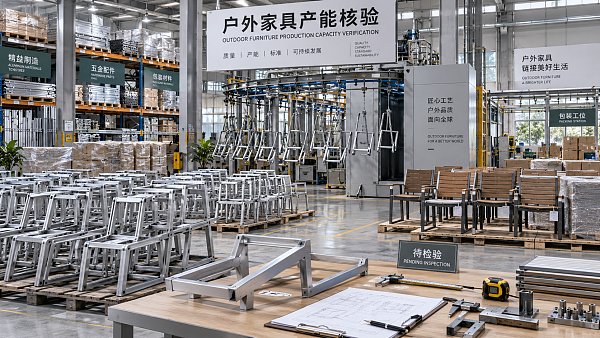
 Outdoor FurnitureHow to verify outdoor furniture manufacturers' production capacityCan outdoor furniture manufacturers deliver on time? Learn how to verify production capacity, uncover bottlenecks, and validate supplier commitments before placing your next order.Interior Sourcing LeadOct 13, 2026
 Commercial DisplaysWhat makes an outdoor digital signage display manufacturer reliable?Discover how to choose a reliable outdoor digital signage display manufacturer with proven weather protection, quality control, smart visibility, and responsive after-sales support.Commercial Tech EditorOct 12, 2026
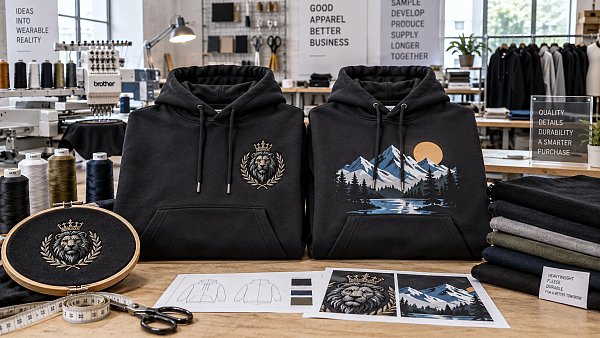
 Garment MfgWhen do bulk embroidered hoodies offer better value than printed ones?Bulk embroidered hoodies deliver lasting value for uniforms and premium branding. Compare durability, design, comfort, and cost to choose the right decoration.Textile Industry AnalystOct 11, 2026